
A tea that tastes great in a sample cup can still fail the moment it hits real service. The bag tears, the brew runs weak, the carton arrives late, or the price stops making sense once volume grows. That is why an organic teabag supplier review should go beyond flavor alone. For cafés, restaurants, offices, and even serious home buyers, the right supplier is the one that keeps quality steady, ordering simple, and cost predictable.
What an organic teabag supplier review should actually cover
Most buyers start with the tea itself, and that is reasonable. If the cup is flat, dusty, or overly astringent, nothing else matters. But supplier performance is bigger than the blend inside the sachet. Organic claims, pack consistency, shipping reliability, minimum order requirements, and response time all affect whether a supplier is worth keeping.
A strong review process looks at the full buying experience. That includes product quality, but also how well the supplier supports repeated purchasing. If you are buying for a café, the tea has to hold up across dozens or hundreds of cups, not just one tasting. If you are buying for home use, convenience and freshness may matter more than wholesale flexibility. The right benchmark depends on your use case.
Start with the tea, but do not stop there
Leaf grade and cup quality
Organic labeling gets attention, but customers taste the cup before they notice the certification story. Ask whether the teabags are filled with whole leaf, broken leaf, fannings, or dust. There is no single right answer. A premium pyramid bag with larger leaf often gives better aroma and clarity, while a more conventional cut may brew faster and suit high-volume service better.
What matters is whether the result matches your operation. In a café, speed matters. In a hotel breakfast setup, consistency matters even more. At home, some buyers will gladly trade a slightly longer steep for a cleaner cup. Review suppliers by testing across realistic brewing times, not ideal ones.
Origin and blend transparency
Good suppliers can explain what is inside the bag. You do not always need single-origin storytelling, but you should expect clear product information. Is it pure green tea, black tea, peppermint, chamomile, or a flavored herbal blend? Are ingredients listed clearly? Is the flavor profile consistent from batch to batch?
Transparency is a trust signal. It also helps with menu writing and customer questions. If a supplier is vague about what is in the teabag, that usually creates bigger problems later.
Organic standards are important, but practical verification matters too
A supplier does not become reliable just because the packaging says organic. In any organic teabag supplier review, look for how clearly the supplier presents certification details, sourcing practices, and product documentation. If you are buying for retail resale or foodservice compliance, this becomes even more important.
That said, certification alone should not override operational fit. Some suppliers are excellent on paper but weak on availability, communication, or packing standards. Others may offer well-documented products with better day-to-day service. The best choice is usually the supplier that combines verifiable standards with dependable execution.
Packaging quality affects the final cup
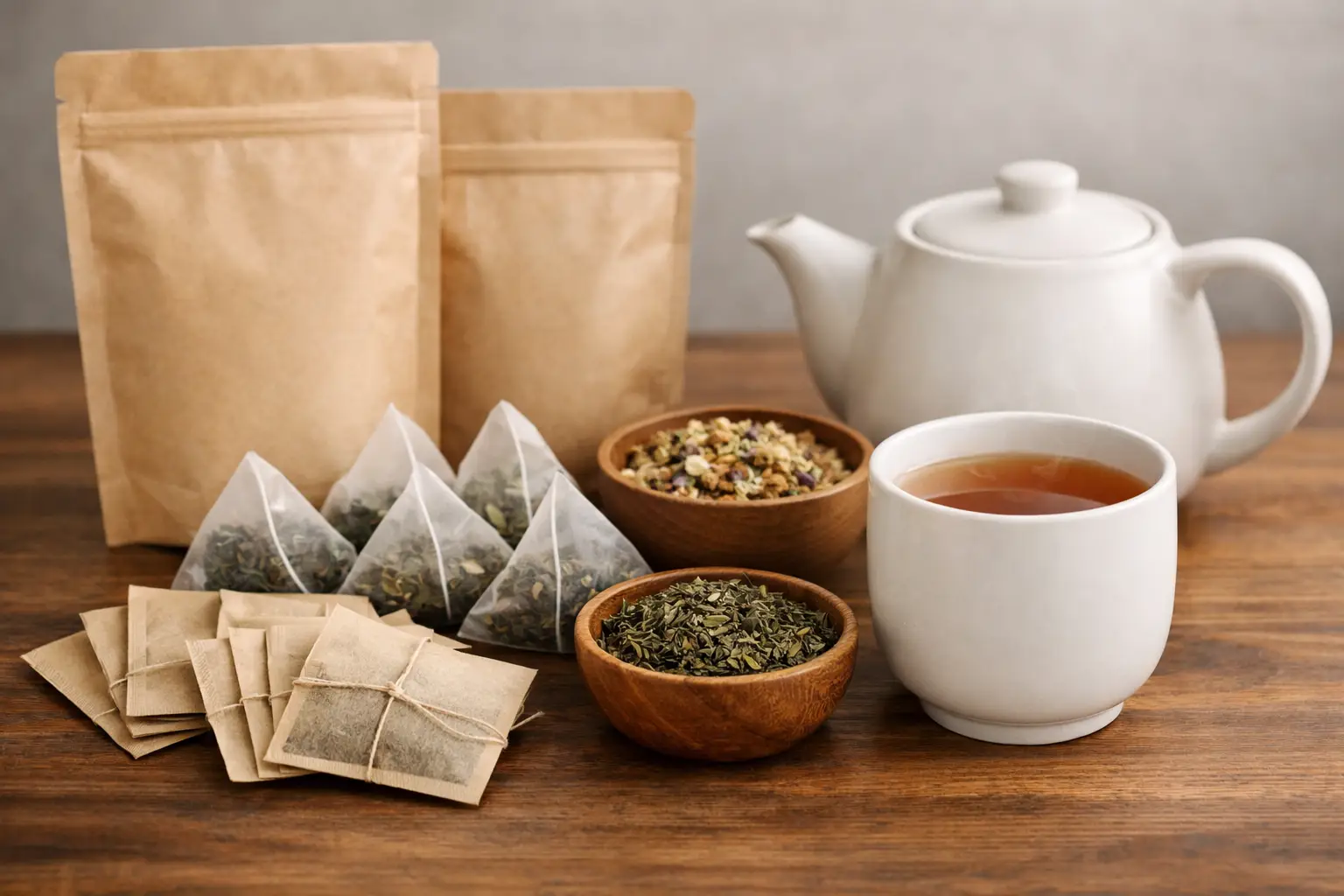
Teabags are sensitive to storage conditions, moisture, and handling. Individually wrapped teabags may cost more, but they often make sense for hospitality, office pantry setups, and lower-turnover environments. Bulk inner packs can be more economical for busy cafés that move product quickly.
Review the packaging with real usage in mind. Does the wrapper protect aroma? Are cartons easy to store? Does labeling show batch or best-by information clearly? If a teabag supplier gets packaging wrong, quality can drop before the tea ever reaches the cup.
Price matters, but only in context
Cheaper tea is not always cheaper to run. A low-cost teabag that brews weak may lead staff to double-bag servings or field more customer complaints. A higher-cost tea that delivers stronger flavor, better presentation, and fewer issues may be the better value.
This is where many buyers make the wrong comparison. They look at price per box instead of cost per acceptable cup. A proper review compares serving strength, wastage, and customer acceptance. For wholesale buyers, it also means checking whether price breaks are realistic and whether the supplier can support growth without sudden jumps in cost.
Minimum orders and replenishment rhythm
Some suppliers look attractive until you reach the fine print. Large minimum orders can tie up cash and storage space. On the other hand, very small order flexibility may come with weaker pricing. The right balance depends on your volume.
For a single café or a small office, moderate pack sizes and easy reordering often beat aggressive bulk commitments. For multi-site operators, stable volume pricing and planned replenishment matter more. A dependable supplier understands that ordering rhythm is part of the service.
Reliability is where good suppliers separate themselves
You can forgive one delayed shipment. You cannot build a beverage program around recurring uncertainty. Lead times, stock consistency, and order accuracy are core review points, especially if tea is part of your regular menu rather than a side item.
Reliable supply has a direct effect on customer experience. Running out of a core English breakfast or green tea line creates more disruption than many operators expect. Staff start substituting, menu consistency slips, and regular customers notice. Strong suppliers reduce that risk through good stock discipline and clear communication when issues appear.
Responsiveness still matters after the first order
Plenty of suppliers are attentive before the sale. The better test is what happens after you start ordering regularly. Do they answer product questions quickly? Can they recommend alternatives if one line is out of stock? Are they able to advise on what works for café service versus retail shelves versus office use?
This support matters because tea buying is not always static. Menus change. Seasonal demand shifts. Customer preferences move toward caffeine-free options, cleaner labels, or more premium presentation. A supplier who can guide those decisions is more useful than one who only processes invoices.
Reviewing suppliers for café use versus home use
The same supplier may perform differently depending on who is buying. A home buyer may prioritize flavor range, low commitment, and freshness in smaller quantities. A café buyer usually needs consistency, speed of service, and pricing that holds up over repeat orders.
For business use, test teabags in actual service conditions. Brew them in your standard cup size, with your normal water temperature, and with staff following realistic timing. For home use, convenience might carry more weight. Individually wrapped bags, approachable flavor profiles, and easy online ordering can matter just as much as technical leaf detail.
This is where a curated supplier can be useful. Companies that already serve both retail and wholesale buyers often understand these differences better and organize choices around them. That saves time, especially for smaller operators that do not want to manage several specialty vendors.
Red flags that should lower a supplier score
Some problems show up early if you know where to look. One is inconsistent product information. Another is a supplier who cannot explain steeping guidance, origin basics, or packaging details. Poor carton condition, unclear stock status, and slow communication are also warning signs.
Watch for a mismatch between branding and actual product performance. Premium language is easy to print on a box. It means less if the aroma is dull, the tag strings detach, or the tea tastes different from one order to the next. Reviews should reward consistency, not just first impressions.
A practical scoring approach
If you are comparing several options, score them across five areas: cup quality, packaging, pricing, supply reliability, and support. Weight those categories based on your needs. A restaurant group may rank reliability and price highest. A specialty retail buyer may give more weight to flavor distinction and packaging presentation.
Keep the scoring simple enough to use again after a few months. The best supplier at launch is not always the best supplier at scale. Reviewing performance over time gives you a more honest picture than one sample session ever will.
Where the best choice usually lands
In most cases, the best supplier is not the one with the broadest tea catalog or the lowest headline price. It is the one that gives you a dependable organic range, clear product information, fair pricing, and repeatable service. For buyers in Malaysia and Singapore, this often means working with a beverage-focused supplier that already understands both retail convenience and wholesale expectations. That kind of setup can simplify sourcing across tea, coffee, and café ingredients instead of splitting orders across multiple vendors.
A good supplier review should leave you with more than a shortlist. It should give you confidence that the tea will taste right, arrive on time, and keep making sense as your needs change.