

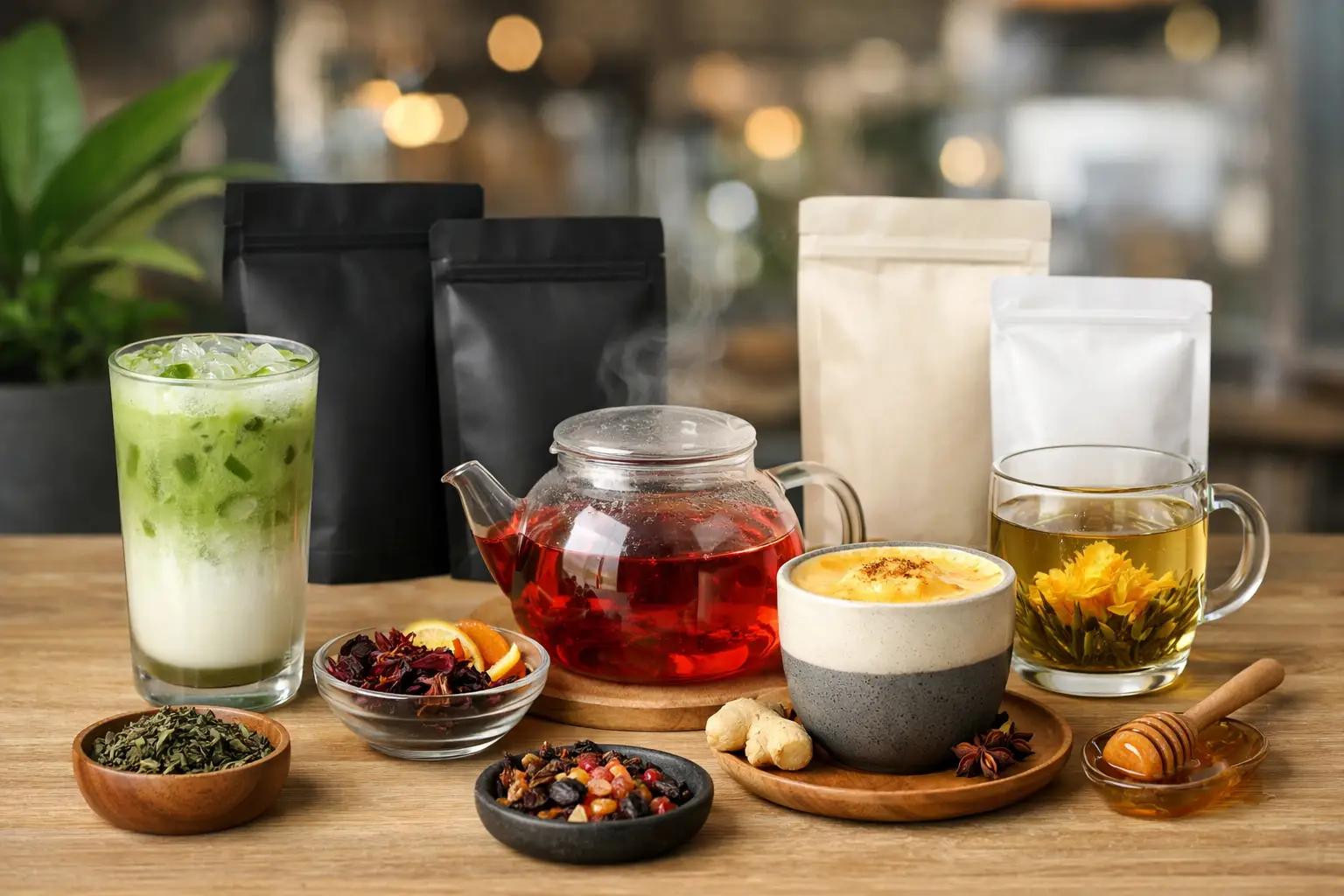
A tea menu that looked fresh two years ago can feel dated fast. Customer expectations have shifted, margins are tighter, and the most effective specialty tea menu trends now balance flavor, visual appeal, speed of service, and ingredient efficiency. For cafés and beverage businesses, that means tea can no longer sit in the corner as a polite alternative to coffee. It needs a clear role on the menu and a reason for customers to order it.
The good news is that tea has become much easier to merchandise well. Consumers already understand matcha, chai, fruit-forward iced teas, and wellness-led flavors. What they want now is better execution. That is where a smart tea program can stand out without becoming complicated to run.
Why specialty tea menu trends matter right now
Tea is one of the few beverage categories that can stretch across dayparts. A customer might want a hot hojicha latte in the morning, a sparkling citrus tea in the afternoon, and a caffeine-light herbal option in the evening. That range gives operators more room to serve different preferences without overbuilding inventory.
It also gives home users and smaller businesses more flexibility when buying. A few well-chosen products can support multiple drinks, which matters when you are watching storage space, prep time, and cost per cup. The strongest menus are not the ones with the most options. They are the ones where each ingredient works harder.
1. Matcha stays strong, but customers expect more than a basic latte
Matcha is still one of the clearest winners in specialty tea. What has changed is the baseline. A plain matcha latte still sells, but it is no longer enough to define a tea program on its own.
Customers now look for variations in sweetness, milk choice, and flavor pairing. Strawberry matcha, coconut matcha, yuzu matcha, and dirty matcha have all gained traction because they keep a familiar base while offering something that feels current. For cafés, this is useful because matcha powder can anchor both signature drinks and simple seasonal specials.
The trade-off is consistency. Matcha is easy to market and easy to get wrong. If the powder quality is weak or the drink is oversweetened, repeat orders drop quickly. A better approach is to treat matcha like a premium core ingredient, not a novelty add-on.
2. Hojicha is moving from niche item to menu staple
One of the most practical specialty tea menu trends is the rise of hojicha. Its roasted profile gives customers something tea-based that still feels familiar to coffee drinkers. That makes it a strong crossover beverage, especially for people who want less bitterness, lower caffeine, or a warmer, toastier flavor.
Hojicha works especially well in lattes, blended drinks, and desserts-inspired builds. It pairs naturally with milk, brown sugar, vanilla, and even chocolate. For operators, it can fill a gap between traditional tea and espresso-based comfort drinks.
This is also where menu strategy matters. Hojicha does not need a long explanation if the description is clear. Customers respond better to flavor-led wording like roasted, nutty, or caramel-like than technical tea language. When the menu makes the drink easy to understand, trial improves.
3. Fruit tea is getting cleaner and less syrup-heavy
Fruit tea is not new, but the style is changing. The older model leaned heavily on bright colors, sweetness, and layered toppings. The current shift is toward cleaner profiles with more tea character and more believable fruit flavor.
That means better black, green, or jasmine tea bases paired with citrus, peach, berry, mango, or passion fruit in a way that still tastes like tea. Customers still want refreshing drinks, especially iced ones, but many are moving away from overly candy-like builds.
For beverage businesses, this creates a useful middle ground. A fruit tea can stay highly approachable while feeling more premium. It also tends to support better menu segmentation. You can offer one playful option and one more refined version without needing a completely separate prep system.
Where this trend works best
This style performs well in warm-weather markets and in stores that already do strong iced beverage volume. It also works for businesses that want visual drinks without relying entirely on coffee-led products. The key is balance. If the tea disappears under sugar, the drink loses its specialty value.
4. Functional cues are selling, but only when flavor comes first
Customers are paying more attention to what a drink is meant to do. Energy, calm, digestion, focus, and caffeine-light positioning all show up more often on tea menus now. Herbal teas, adaptogen-inspired blends, and botanical ingredients benefit from that interest.
But there is a catch. Most customers will not reorder a drink just because it sounds healthy. They reorder because it tastes good and fits their routine. That is why the strongest functional tea offerings lead with flavor and support with benefit, not the other way around.
A peppermint herbal blend for an evening menu, a ginger-citrus tea for a refreshing hot option, or a lighter green tea for daytime drinking can all work well. Just avoid making the menu read like a supplement label. Clear, credible, and enjoyable is the better direction.
5. Specialty tea menu trends are becoming more seasonal
Seasonality has long shaped coffee menus, but tea is catching up. This is one of the most commercially useful specialty tea menu trends because it creates urgency without requiring a full menu overhaul.
A café can rotate a few tea drinks through the year using a stable base of core ingredients. In cooler months, spiced chai, hojicha, and black tea lattes with maple or brown sugar make sense. In warmer months, sparkling tea, citrus green tea, and fruit-forward iced teas feel more relevant.
Seasonal tea also gives businesses a chance to test new drinks with lower risk. If a limited item performs well, it can move into the permanent menu. If it does not, the product cycle ends naturally. This keeps the menu feeling active while protecting operational simplicity.
6. Customization matters, but too many options slow service
Milk choice, sweetness level, temperature, and toppings all influence tea orders now. Customers appreciate flexibility, especially with matcha and chai. At the same time, every added choice can create friction during rush periods.
The smart move is controlled customization. Offer the changes that genuinely affect purchase decisions and skip the ones that complicate execution without adding much value. For many stores, that means a few milk options, adjustable sweetness, and one or two approved add-ons instead of a long build-your-own format.
This matters at home too. Consumers buying tea powders, loose-leaf tea, or teabags increasingly want products that can work across more than one preparation style. A blend that works hot, iced, or as a latte has stronger value than one with only a single use case.
Menu design should support faster decisions
When customization is available, the menu should still guide the customer. Signature combinations help. Instead of asking people to invent a drink from scratch, give them a clear starting point, such as iced strawberry matcha or roasted hojicha latte, then allow small changes from there.
7. Better tea programs are being built around fewer, stronger ingredients
This may be the most important shift of all. The best tea menus are not expanding endlessly. They are becoming more intentional.
Operators are looking for ingredients that can support multiple drinks across hot and cold formats. A quality chai blend can become a latte, a shaken iced drink, or a seasonal special. A strong loose-leaf black tea can work in classic hot service, fruit tea builds, or sparkling tea. Matcha and hojicha powders can anchor both standard menu items and limited-time drinks.
That approach improves inventory control, training, and consistency. It also supports better purchasing decisions because each product has a clearer role. For businesses managing cost pressure, that matters more than chasing every micro-trend.
What to watch before changing your tea menu
Not every trend fits every business. A high-volume café may need drinks that can be built quickly with repeatable results. A smaller concept may have more room for hand-crafted loose-leaf service. A home enthusiast may care more about quality and flexibility than visual presentation.
It helps to ask three simple questions. Does this drink fit our customer base? Can our team execute it consistently? Does the ingredient earn its shelf space? If the answer to any of those is no, the trend may be interesting but not commercially useful.
For buyers sourcing tea, powders, or café ingredients, the goal is not to chase novelty for its own sake. It is to build a program that feels current, tastes excellent, and stays practical to run. That is where a reliable supplier relationship becomes valuable, especially when you need quality options across matcha, hojicha, chai, herbal teas, loose-leaf teas, and teabags without juggling multiple sources.
A strong tea menu does not need to be complicated to feel special. It just needs the right products, clear positioning, and enough discipline to keep what sells. The best next step is usually small – one smarter seasonal launch, one better base ingredient, or one tea drink that earns a permanent place because customers come back for it.