

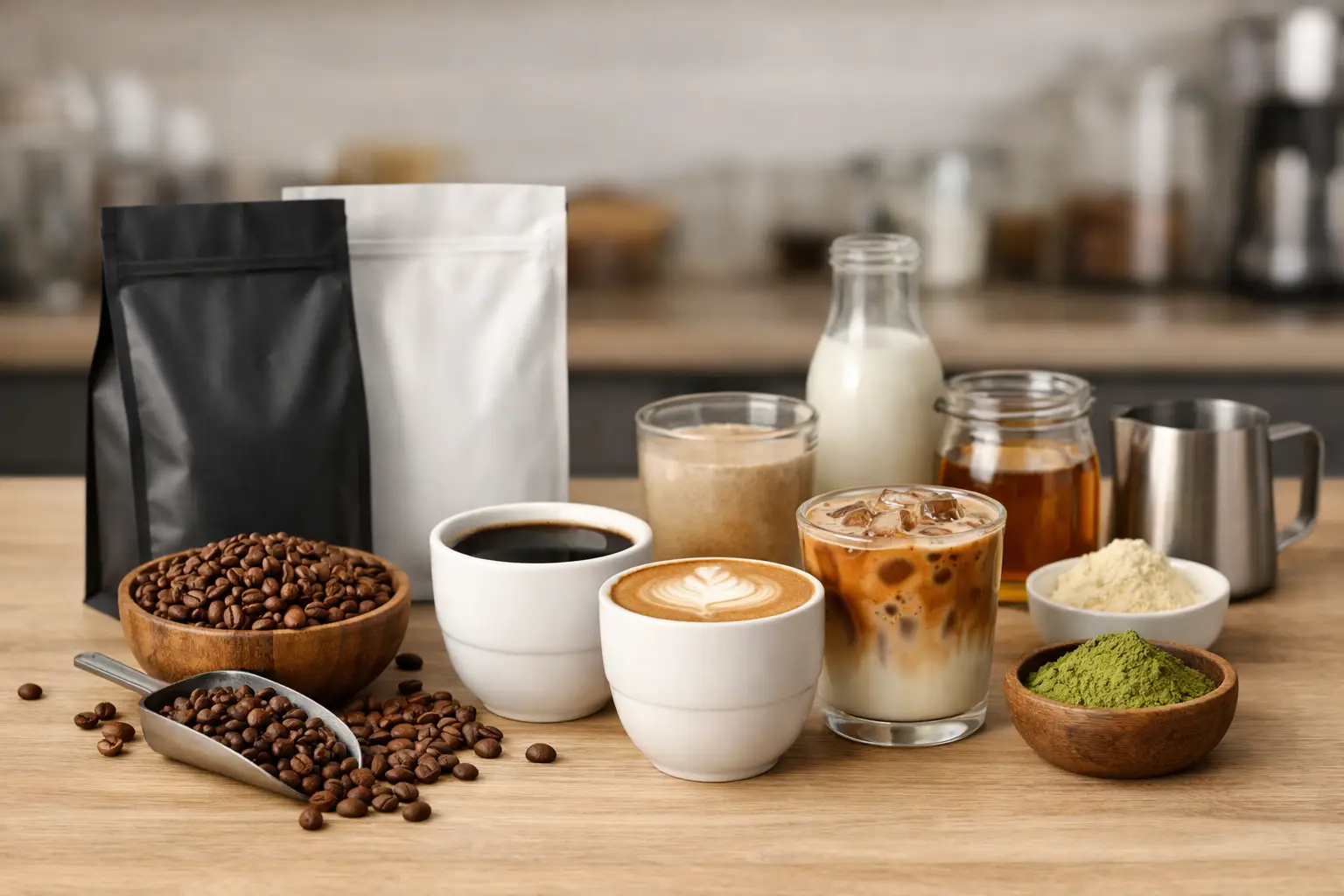
A cafe beverage sourcing guide should start where most menu problems actually begin – not at the espresso machine, but at the buying stage. If your beans arrive inconsistent, your matcha clumps, your chai runs too sweet, or your supplier goes quiet when stock gets tight, the customer feels it in the cup. Good sourcing is not just procurement. It is menu quality, speed of service, margin control, and whether regulars come back.
For café owners and beverage operators, the challenge is rarely finding products. It is finding the right mix of products, pricing, support, and supply reliability without creating a messy network of separate vendors. The strongest beverage programs are usually built on a simple principle: source with intention, not by habit.
What a cafe beverage sourcing guide should help you solve
A practical cafe beverage sourcing guide is not a shopping list. It should help you make better decisions across four areas: taste consistency, cost control, operational fit, and customer demand.
Taste consistency matters because customers remember the second cup more than the first. A coffee that tasted excellent on a sample table but behaves unpredictably during a busy morning rush can do more harm than good. The same goes for tea, chocolate, and powdered beverage mixes. If preparation varies too much from staff member to staff member, your sourcing choice may be adding friction instead of value.
Cost control goes beyond unit price. A cheaper bag of beans that produces more waste, channels badly, or stales too quickly is not necessarily a better buy. A drink powder with a higher upfront cost may still be the smarter choice if it delivers stronger flavor at a lower serving dosage. Real sourcing value lives in cup cost, shelf life, labor efficiency, and reorder predictability.
Operational fit is where many menus either become profitable or become difficult. A beautiful single-origin espresso may not be the right backbone for a milk-heavy menu. A ceremonial-style matcha may be impressive, but if your store mostly sells sweetened iced lattes, a culinary-grade product designed for mixing could be the better business decision. What works in a tasting session does not always work in service.
Start with your menu, not the catalog
Before comparing suppliers, look at what your menu is trying to do. Are you building a coffee-first program with strong espresso throughput? Are you growing a broader beverage menu with tea, hojicha, chocolate, and chai to increase afternoon sales? Are you trying to appeal to customers who want café-quality drinks without overly niche flavor profiles?
Your menu mix should shape your sourcing priorities. A café with a high-volume latte business needs dependable espresso blends, milk-friendly flavor development, and grinders that can hold calibration through rush periods. A concept with a wider non-coffee audience may need greater attention on matcha quality, tea format, and chocolate consistency.
This is also where customer base matters. If your guests are adventurous, rotating guest roasters and seasonal teas can create excitement. If your business depends on repeat office traffic, consistency may matter more than novelty. There is no universally correct sourcing strategy. It depends on the kind of loyalty you are trying to build.
Coffee sourcing: balance identity with reliability
Coffee often gets the most attention, and for good reason. It anchors the brand perception of a café. But sourcing coffee well is not only about scoring the most interesting roast.
Start by deciding what role your coffee needs to play. For espresso, think in terms of sweetness, body, and milk compatibility. Coffees with bright acidity can be excellent, but they may become polarizing in milk-based drinks if the profile turns sharp. For batch brew or hand brew, you have more room to showcase origin character, but you still need predictable roast development and dependable freshness.
A smart buying approach often includes both core products and selective variety. Your core espresso blend should be stable, easy to dial in, and available on a dependable reorder cycle. Limited releases or guest roasters can sit around that core to keep the menu interesting. That gives your business personality without risking your daily sales foundation.
If you are sourcing for Malaysia or Singapore, imported specialty roasters can add differentiation, but freight costs and lead times can complicate purchasing. That is why a supplier that curates both local and international roasters can be especially useful. You get more range without carrying the full operational burden of managing multiple overseas orders.
Tea, matcha, chai, and chocolate deserve the same discipline
Many cafés treat non-coffee beverages as secondary. Customers do not. For some stores, matcha, chocolate, and chai are essential revenue drivers, especially among groups where not everyone drinks coffee.
Tea sourcing should reflect service style. Loose-leaf tea can deliver a premium experience, but it requires training, storage discipline, and consistent steeping routines. Teabags can be the better option in faster service environments where labor efficiency matters. Organic tea may appeal to a quality-conscious audience, but only if the flavor holds up and pricing still works for your menu.
Matcha and hojicha powders need careful selection based on use case. A product that tastes excellent straight may be wasted in a heavily sweetened latte format. On the other hand, a lower-grade powder may disappear entirely under milk. The right choice comes down to recipe design, target price point, and the flavor intensity your customers expect.
Chai latte blends and drinking chocolate powders should be judged on more than ingredient list or branding. Look at solubility, sweetness level, spice balance, and how easily staff can reproduce the drink under pressure. A great powder for a quiet café may become frustrating in a high-speed bar if it clumps, settles too quickly, or needs too many preparation steps.
Evaluate suppliers like operational partners
Products matter, but supplier behavior matters just as much. A strong beverage supplier should make your operation easier, not just fill your shelves.
Responsiveness is a practical advantage. When you need advice on roast selection, grinder pairing, or alternative products during stock gaps, quick support saves time and protects service quality. Transparent stock visibility is also valuable. It helps you plan reorders instead of reacting late.
Range can be another major advantage if it is curated well. Working with one sourcing partner for beans, teas, powders, and equipment reduces admin work and can improve buying consistency. But breadth only helps when quality is controlled. A large catalog with weak curation just moves the selection burden back onto you.
Social proof has value here too. Ratings, repeat buyer feedback, and visible best sellers can reveal what performs well in real service settings. That should not replace your own testing, but it does help reduce guesswork.
Don’t separate ingredients from equipment decisions
Beverage sourcing and equipment sourcing should be connected. The grinder, brewer, and espresso machine all affect whether an ingredient performs the way it should.
A café can buy excellent beans and still serve disappointing coffee if the grinder lacks consistency or the machine cannot maintain stability during rush periods. Likewise, a tea or chocolate menu can slow down service if your setup does not support the workflow. Sourcing decisions should account for your team’s skill level, drink volume, and maintenance capacity.
This is where practical thinking beats aspiration. The best machine is not always the most advanced one. The right machine is the one your team can use consistently, maintain properly, and justify financially. The same logic applies to grinders. Precision matters, but uptime matters too.
Build a sourcing system, not a series of one-off purchases
The most profitable cafés usually have a sourcing rhythm. They know what their core products are, what their backup options are, and how early they need to reorder. They test intentionally instead of changing products randomly.
A useful system includes regular quality checks, recipe reviews, and supplier communication. If a coffee starts tasting flatter, ask whether roast development changed or storage is the issue. If a matcha latte is underperforming, check whether the product is wrong for the recipe before cutting it from the menu. Small sourcing corrections can often fix what looks like a bigger menu problem.
It also helps to review sales by category. If chocolate and chai deliver strong margins with lower equipment demand, they may deserve more attention in your sourcing plan. If a premium filter coffee gets praise but barely sells, it may belong as a weekend feature rather than a daily menu item. Buying strategy should follow actual demand, not assumptions.
Auresso’s model works well for operators who want that balance of specialty quality, practical range, and simpler buying across coffee, tea, powders, and equipment. For growing cafés, that kind of sourcing setup can remove a lot of unnecessary friction.
The best beverage programs are rarely the most complicated. They are the ones built on products that taste right, price out cleanly, and show up when needed. When sourcing gets easier, menu decisions get sharper, staff confidence improves, and the customer gets a better cup every time. That is usually where growth starts.