

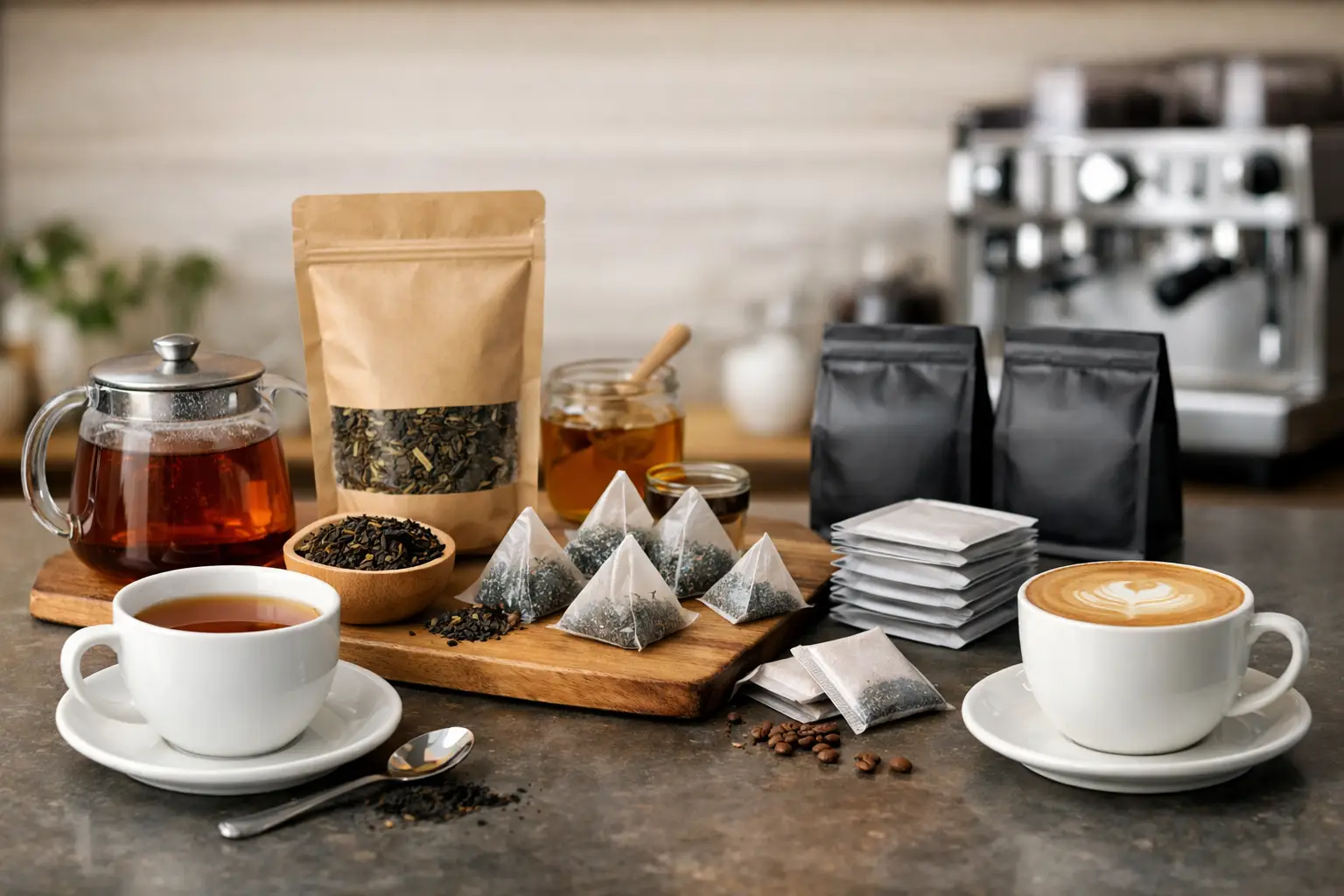
A slow afternoon can hide a tea problem. Service looks smooth until one customer orders English breakfast, another asks for chamomile, and a third wants an iced matcha latte with oat milk. Suddenly the question is not just which tea you stock, but which tea format suits cafes best when speed, consistency, cost, and menu range all have to work together.
For most cafes, there is no single perfect answer. The best format depends on your service model, your staff skill level, your average ticket, and whether tea is a side category or a serious revenue line. A high-volume neighborhood cafe will not make the same choice as a brunch spot with a curated beverage menu, and neither should.
Which tea format suits cafes when service speed matters?
If your bar runs on tight workflow, format matters as much as flavor. Tea can be simple in theory, but in practice it often creates friction. Different steeping times, separate tools, and inconsistent staff habits all affect the final cup.
Teabags are usually the fastest and easiest format for busy operations. They simplify training, reduce prep decisions, and make portion control predictable. Staff can serve hot tea quickly with minimal equipment, which is useful when the core business is coffee and tea orders are secondary. Waste is also easier to control because each serving is pre-portioned.
The trade-off is perception. Some guests still associate teabags with lower quality, especially if your cafe positions itself as premium. That is not always fair, because good pyramid bags and whole-leaf sachets can perform well, but presentation matters. If the rest of your menu emphasizes craft and origin, basic paper teabags may feel out of place.
Loose-leaf tea offers a stronger quality signal. It suggests care, better leaf grade, and a more intentional tea program. It can also produce a better cup when brewed properly. But that last part matters. Loose-leaf only works when staff have the tools, time, and habits to prepare it consistently.
If your team is already juggling espresso, milk steaming, food handoff, and delivery pickups, loose-leaf can slow service unless the workflow is designed around it. That might mean dedicated infusers, measured portions, labeled tins, and a clear steeping guide at the station.
Teabags, loose-leaf, sachets, and powders
Most cafes are choosing between four practical formats: standard teabags, premium sachets or pyramid bags, loose-leaf tea, and powdered tea products such as matcha, hojicha, or chai blends.
Standard teabags are best for straightforward black, green, and herbal teas where convenience matters more than ceremony. They fit cafes that want a reliable tea option without adding labor.
Premium sachets sit in a useful middle ground. They offer easier service like teabags, but often with better leaf expansion, stronger aroma, and a more upscale look. For many cafes, this is the most balanced answer when the goal is quality with operational control.
Loose-leaf is the strongest choice when tea is part of your brand story. It works well in cafes where staff can explain origins, tasting notes, and brew style. It also suits venues where customers are willing to wait a little longer and pay a little more.
Powders are a different category, but an important one. Matcha, hojicha, and chai latte powders are often not about traditional tea service at all. They are menu builders. They support lattes, iced drinks, blended beverages, and seasonal specials, which can make them more commercially powerful than brewed tea in many cafes.
Which tea format suits cafes with premium positioning?
If your cafe is built around specialty quality, your tea should not feel like an afterthought. Customers notice when espresso is dialed in but tea arrives in a generic bag with no story, weak flavor, and no attention to brew time.
In that case, premium sachets or loose-leaf usually make more sense than entry-level teabags. They align better with the rest of the experience and help justify menu pricing. A cleaner presentation, stronger fragrance, and better cup clarity all reinforce trust.
That said, premium does not always mean loose-leaf. Many cafes overestimate how much customers care about the ritual and underestimate how much they care about consistency. If the guest gets a good cup every time from a premium sachet, that may serve the brand better than loose-leaf brewed unevenly by different staff members.
This is where many operators make the right call by being honest about execution. A simpler format done well is better than a more artisanal format done poorly.
Cost is not just about the tea itself
Cafe buyers often compare tea formats by unit price, but that only tells part of the story. Real cost includes labor, waste, equipment, storage, and remake risk.
Teabags and sachets usually cost more per serving than bulk loose-leaf, but they often save money in labor and reduce inconsistency. There is less measuring, fewer brewing errors, and easier stock counting. For multi-shift teams or newer staff, that control has real value.
Loose-leaf can look cost-efficient on paper, especially if bought in volume. But if portions vary, infusers go missing, leaves are overused, or cups are remade due to weak extraction, the savings shrink quickly.
Powders can be extremely efficient when used in popular milk-based drinks. A matcha latte or hojicha latte may carry better margins than a pot of brewed tea, especially when the menu already supports add-ons like alternative milk, flavored syrups, or cold foam. The key is choosing a powder that mixes well, tastes balanced, and performs consistently across hot and iced applications.
Menu fit should guide the format
A cafe with five tea SKUs and low tea demand should not build a complicated loose-leaf program. A compact format with broad appeal will be easier to manage and easier to sell.
On the other hand, if tea drives a meaningful share of beverage orders, it makes sense to build around formats that create distinction. That may mean a premium breakfast tea, a floral herbal option, a green tea, and a specialty format like matcha or chai for latte applications.
Think in terms of what your customers actually order. In many cafes, classic hot tea is a support category, while tea-based lattes and iced drinks generate more repeat sales. That shifts the format conversation. Instead of asking only how to serve black tea, it may be smarter to ask which format helps you build a better beverage menu.
This is especially relevant in markets like Malaysia and Singapore, where iced beverages, matcha drinks, and modern tea-based cafe items often perform strongly. Formats that support speed and visual appeal can have a bigger payoff than a broad traditional tea list.
Staff training can make or break the decision
The more complex the format, the more discipline your team needs. Loose-leaf demands proper weighing or portioning, correct water temperature, timing, and serving tools. If any one of those slips, quality drops.
Teabags and sachets reduce the training burden. They are easier to hand over between shifts, easier to document in SOPs, and easier to scale across multiple staff members. That makes them a safer choice for cafes with high turnover or limited beverage training time.
Powdered formats sit somewhere in the middle. They are simple once standardized, but only if recipes are fixed. Matcha and chai drinks often go wrong because cafes rely on visual guesses instead of gram-based recipes. A strong powder product still needs a disciplined build.
The best answer for most cafes
For most cafes, the smartest setup is a mixed-format tea program. Use premium sachets or teabags for classic hot tea service, then add powdered formats for high-demand drinks like matcha latte, hojicha latte, or chai. That gives you operational simplicity where it matters and menu flexibility where it sells.
Loose-leaf is worth adding when tea is central to your identity, when staff can support it properly, and when your customers are willing to pay for a more deliberate experience. Otherwise, it can become more theater than value.
If you are reviewing suppliers, ask practical questions before anything else. Will the format stay consistent across orders? Is it easy to store? Can new staff use it correctly on day one? Does it support your actual sales mix, not just your ideal menu? A dependable sourcing partner with a strong range, like Auresso, can make this process much easier because the right answer often comes from comparing formats side by side rather than forcing one solution across every tea category.
The strongest tea program is rarely the most complicated one. It is the one your team can execute well on a busy day, your customers enjoy without confusion, and your business can keep profitable as the menu grows.