

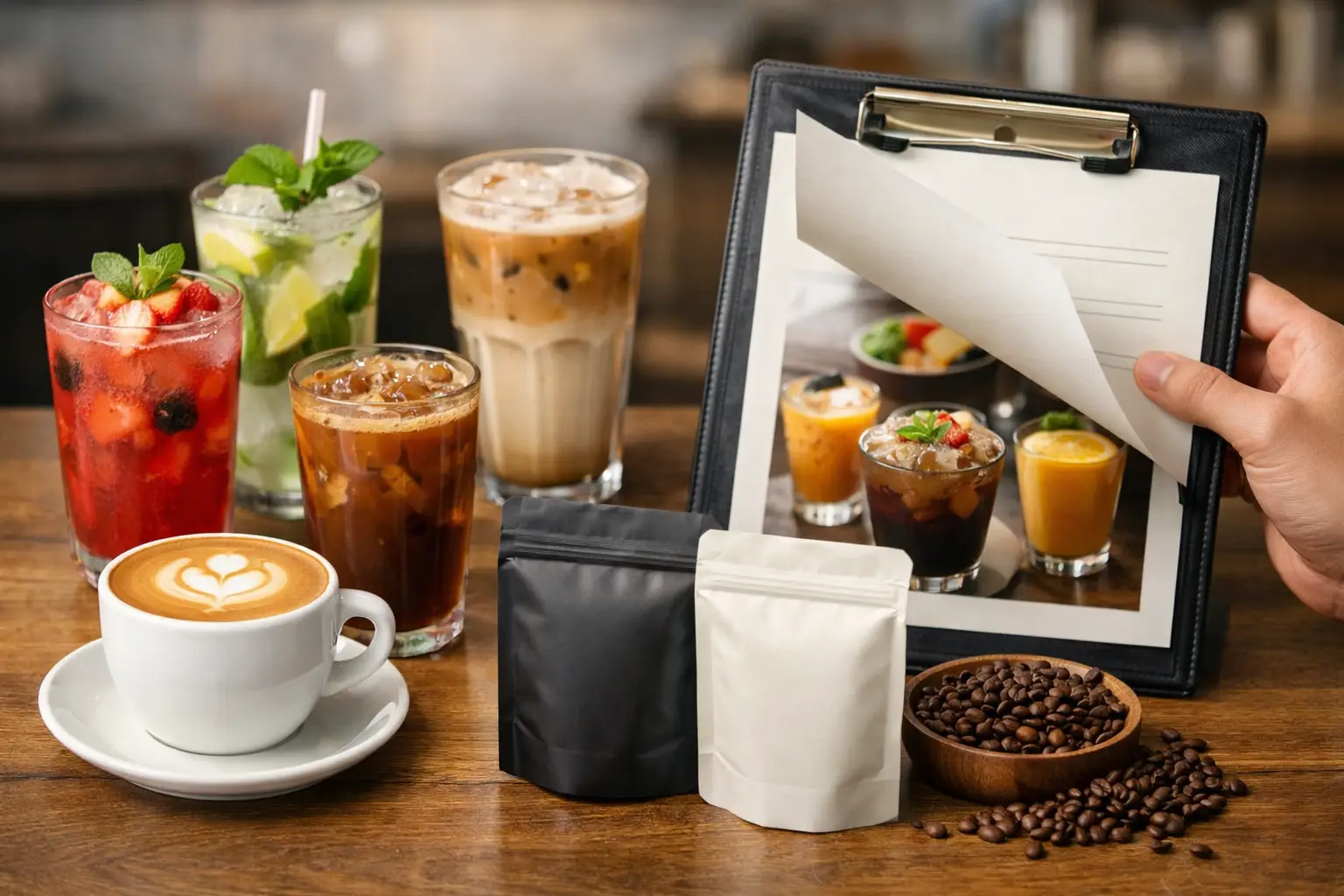
A crowded menu usually looks ambitious right up until service starts slowing down, ingredients begin overlapping badly, and customers default to the same two drinks anyway. If you are figuring out how to build beverage menu options that actually sell, the goal is not to offer more. It is to offer the right mix of drinks for your customers, your team, and your margins.
The best beverage menus do three jobs at once. They give customers clear reasons to order, they help staff produce drinks consistently, and they protect profitability without making the lineup feel limited. That balance matters whether you are opening a café, refreshing a restaurant drink list, or expanding a home-grown beverage concept into something more structured.
Start with the role of the menu
Before choosing a single drink, decide what the beverage menu is supposed to do for the business. A specialty coffee bar and a casual brunch spot may both serve lattes and tea, but the menu logic should be different. One may need to showcase bean rotation and brew methods. The other may need broad appeal, quick prep, and easy add-ons.
A useful way to think about it is to define your menu in three layers. First, what are your core volume drivers? These are the drinks customers expect and order regularly, such as espresso-based drinks, brewed coffee, milk tea, chai, or iced chocolate. Second, what improves average ticket size? That might be flavored additions, matcha, seasonal specials, or premium tea options. Third, what builds identity? These are the signature drinks people remember and talk about.
If every drink is trying to be a signature, the menu loses focus. If everything is too safe, the menu becomes forgettable. A strong menu usually has a reliable center and a few clear points of distinction.
How to build beverage menu categories that make sense
Categories should help people decide faster, not force them to decode your concept. Most beverage menus work best when grouped by how customers think, which is usually by drink type and temperature rather than by your internal inventory structure.
For a café or beverage business, that often means hot coffee, iced coffee, tea, chocolate, matcha, non-coffee specialty drinks, and seasonal items. If you serve both dine-in and takeaway customers, cold drinks often deserve extra visibility because they tend to generate impulse orders and visual appeal.
There is a trade-off here. Too many categories can make the menu feel larger than it is. Too few can make it hard to scan. In practice, five to seven sections is usually enough for a compact, clear menu. If you have a large offering, keep the visible menu focused and let staff recommend deeper options.
Build around ingredients you can use well
One of the fastest ways to weaken a menu is to buy for novelty instead of operational fit. A beverage may sound exciting on paper, but if it uses ingredients that expire quickly, require special training, or only sell a few units a week, it can become expensive clutter.
A better approach is to build from versatile ingredients with multiple applications. Espresso can anchor black coffee, milk drinks, and specialty variations. Matcha can appear in hot lattes, iced drinks, and blended recipes. Drinking chocolate can serve classic hot chocolate, iced chocolate, and mocha builds. A solid chai blend can move across hot, iced, and dirty chai formats.
This is where supplier range matters. If you can source coffee beans, tea, chocolate, chai, and equipment from one dependable partner, menu planning becomes less fragmented. You spend less time juggling inconsistent stock and more time refining drinks that fit your audience.
Keep the lineup balanced
A beverage menu should not lean so hard into one trend that it excludes obvious demand. Even if your brand is coffee-led, not every customer wants coffee. Even if your tea range is excellent, some customers just want a straightforward iced latte done right.
Balance usually comes from covering a few dependable demand points. You need caffeinated staples, non-coffee options, at least one lower-intensity or approachable choice, and drinks that work across different times of day. If your audience includes families or broader foodservice traffic, kid-friendly and caffeine-free options matter more than many operators expect.
Price balance matters too. If every drink sits at the premium end, some customers will trade down or skip extras. If pricing is too low across the board, the menu may move volume without supporting labor and ingredient costs. A healthy menu gives customers options at different price points without making the cheaper items feel like compromises.
Design for speed and consistency
The most profitable drink on paper can still be the wrong choice if it slows the bar down during peak hours. When thinking about how to build beverage menu items, ask how each one performs under pressure. Can staff make it quickly? Is the recipe easy to teach? Will it taste the same across shifts?
This is where standardization earns its keep. Keep recipes tight, define cup sizes clearly, and limit one-off prep methods unless they add real value. Signature drinks should still be executable by the whole team, not just your strongest barista.
It also helps to look at overlap in milk, syrups, powders, tea bases, and garnishes. A menu that shares components intelligently is easier to stock and easier to train. That does not mean everything should taste similar. It means the back-end logic should be efficient, even when the front-end experience feels varied.
Give customers a reason to upgrade
A smart beverage menu does more than list drinks. It quietly guides customers toward better-value orders. That might mean offering oat milk, extra espresso, flavored add-ons, premium beans, or a larger size where it makes sense. These upgrades should feel natural, not forced.
The easiest way to do this is to make sure the base drink is solid first. Customers are more willing to add matcha, switch milk, or try a specialty chocolate if they already trust the quality of your standard menu. If the basics feel weak, add-ons start looking like decoration.
Seasonal drinks can help here, but they work best when tied to ingredients you already use well. A limited-time hojicha latte or iced spiced chocolate can create interest without creating supply headaches. Short-run drinks should support the system, not disrupt it.
Write menu names and descriptions clearly
Customers should understand what a drink is without needing a staff explanation for every line. Creative names can be useful for signature beverages, but clarity still wins. If the drink is a sea salt caramel latte, say that. If it is a matcha strawberry latte, make the flavor profile obvious.
Descriptions should answer the questions that affect ordering: coffee or non-coffee, hot or iced, sweet or not too sweet, creamy or lighter, and anything distinctive about the ingredient quality. This is especially useful for tea, chocolate, and specialty powders, where quality differences may justify the price but are not always visible at a glance.
Short descriptions usually outperform long ones. Give just enough information to build confidence and appetite.
Test before you expand
Many operators make the mistake of launching too many drinks at once. A better move is to start with a disciplined core menu, then watch what customers actually buy. Sales mix, repeat orders, prep time, and waste will tell you far more than brainstorm sessions.
If a drink sounds exciting but gets ordered rarely, ask why. It may be priced wrong, named poorly, or positioned in the wrong category. Or it may simply not fit your audience. Not every good drink belongs on every menu.
This matters even more if you serve markets with mixed customer preferences, such as office workers in the morning, casual café traffic in the afternoon, and social customers in the evening. The strongest menu is often the one that adapts based on real ordering behavior rather than assumptions.
Review your menu like an operator, not just a creative
A beverage menu should be reviewed regularly through four lenses: sales, margin, ease of execution, and brand fit. A drink that sells well but has poor margin may need repricing or reformulation. A high-margin drink that nobody orders may need better placement or may need to go. A beautiful signature drink that takes too long during peak service may be better as a limited feature.
This kind of review keeps the menu commercially healthy. It also helps you spot when ingredient quality upgrades are worth making. Better beans, a more reliable chai blend, or a stronger drinking chocolate can raise customer satisfaction in ways that generic cost cutting cannot.
For operators in Malaysia and Singapore, where customer expectations often span espresso, tea, chocolate, and café-style specialty drinks, breadth matters – but only when it is curated well. That is why many businesses benefit from working with a supplier that understands both product quality and menu practicality, as Auresso aims to do.
A good beverage menu is never just a collection of drinks. It is a working system for sales, consistency, and customer trust. Build it with that in mind, and your next menu revision will feel less like guesswork and more like a smart commercial decision.