

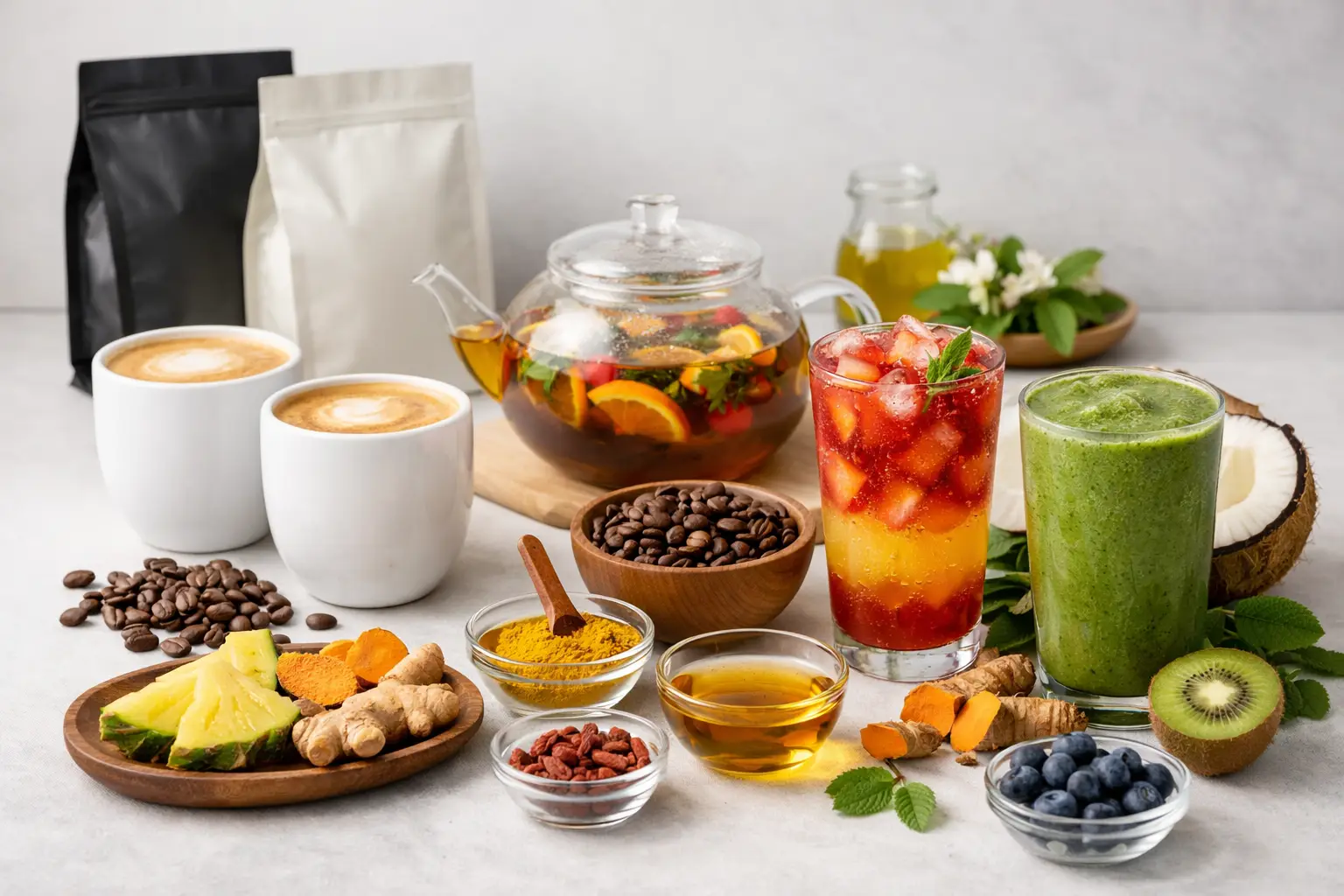
A café menu can look current and still feel dated after the first sip. The premium beverage ingredient trends gaining traction in 2026 are less about adding novelty for novelty’s sake and more about giving customers a clear reason to order again: better flavor, recognizable ingredients, adjustable sweetness, and a drink that feels worth its price.
For café owners, beverage managers, and home brewers, the opportunity is not to chase every new powder or syrup. It is to build a tighter ingredient selection that performs reliably, photographs well, and gives classic drinks a more considered edge. Coffee remains the anchor, but tea, cacao, matcha, chai, and functional formats are taking on larger roles in the daily beverage mix.
Premium Beverage Ingredient Trends That Matter
1. Coffee quality is becoming the menu baseline
Customers are increasingly familiar with roast profiles, origins, processing methods, and brew styles. That does not mean every menu needs a long tasting-note card. It does mean a generic, overly dark coffee can make the rest of a carefully built beverage program feel less credible.
The practical move is to carry coffees with distinct jobs. A dependable medium or medium-dark espresso blend can provide body and consistency for milk drinks. A brighter single-origin or seasonal release can create interest for black coffee, filter service, and retail bean sales. Decaf deserves the same attention, particularly as more guests want an afternoon coffee ritual without the caffeine.
Premium does not automatically mean the most expensive bean on the shelf. For a high-volume café, the best choice is often a coffee that delivers a balanced cup across different baristas, grinders, water conditions, and milk choices. Consistency protects margin as much as it protects flavor.
2. Matcha is moving from trend drink to core category
Matcha has earned a permanent place on many beverage menus, but the category is becoming more discerning. Customers can recognize dull color, bitterness, and a powdery texture. They are also ordering matcha beyond the standard hot latte, including iced matcha, strawberry matcha, coconut matcha, and matcha paired with espresso.
Ingredient quality matters most when matcha is served simply. A good café-grade or ceremonial-style matcha should whisk into a smooth base with fresh vegetal notes and controlled bitterness. For busy service, operators should also test how it holds up when made cold, shaken, or paired with sweeteners. A powder that tastes excellent in a traditional bowl may not be the strongest commercial choice for a 16-ounce iced drink.
Hojicha offers a useful companion category. Its roasted, nutty profile feels familiar to coffee drinkers and gives customers a lower-caffeine alternative to matcha. It also works exceptionally well with milk and brown sugar-style flavor profiles without becoming overly sweet.
3. Tea is becoming more specific, not more complicated
The premium tea movement is not about overwhelming guests with dozens of choices. It is about offering a few teas with a clear reason to exist. Loose-leaf black teas, floral green teas, caffeine-free herbal blends, and quality tea bags can all serve different operational needs.
For cafés, tea can strengthen the all-day menu. A bright iced tea is refreshing and cost-effective. A carefully selected chai or black tea latte creates a comforting alternative for guests who do not want coffee. Herbal teas provide an evening-friendly option, especially in restaurants and hospitality settings.
The key is to respect preparation. Tea brewed too hot, too long, or with inconsistent portions loses the character customers are paying for. Standardizing steep time, water temperature, batch size, and serving format can turn tea from an afterthought into a reliable revenue line.
4. Less sweetness, better sweetness
Customers still enjoy indulgent drinks. What is changing is the expectation that sweetness should support the main ingredient rather than hide it. This is especially visible in coffee, cacao, chai, and tea-based lattes, where syrup-heavy recipes can flatten every drink into the same flavor.
Premium menus are using smaller amounts of well-chosen sweeteners and letting ingredients such as toasted spices, real cocoa, vanilla, caramelized sugar, or fruit provide depth. This approach also gives baristas a clearer customization story: standard sweetness, lightly sweetened, or unsweetened where the recipe allows.
There is a trade-off. Lower-sugar recipes can disappoint guests accustomed to dessert-level drinks, so menu wording and staff recommendations matter. Rather than presenting a drink as a “healthy” replacement, describe what it actually tastes like: dark chocolate-forward, lightly spiced, roasted, creamy, or refreshing.
5. Drinking chocolate is competing with dessert, not cocoa mix
Chocolate drinks are being judged by the same standards as specialty coffee. Guests want real cocoa character, a smooth body, and a drink that does not taste artificially sweet. Premium drinking chocolate powders make it easier to offer hot chocolate, iced chocolate, mocha, and frozen formats with a richer flavor foundation.
A strong drinking chocolate program also creates useful crossovers. Pair it with espresso for a more grown-up mocha, add spice for a seasonal drink, or offer a dark chocolate version alongside a classic milk chocolate option. The ingredient should dissolve cleanly and stay consistent during rush periods. A beautiful product that clumps at the bar is not a premium service experience.
6. Functional ingredients need a flavor-first test
Protein, fiber, adaptogens, collagen, mushrooms, and electrolyte blends continue to attract attention. Some customers actively seek them out, particularly in cold drinks and morning formats. But functional claims should never become the sole reason a beverage exists.
For operators, the first question is straightforward: does it taste good enough to reorder? The second is operational: does it blend smoothly, work with dairy and plant-based milk, and fit the equipment and training already in place? A functional add-on that requires extra prep, leaves grit in the cup, or overwhelms a quality espresso can create more friction than sales.
Where these ingredients fit best, keep the communication factual and restrained. Avoid health promises that the product or local regulations do not support. A well-made protein matcha or fiber-forward iced tea can be appealing without turning the menu into a supplement label.
Building a Premium Menu Without Creating Waste
The most successful premium beverage programs usually rely on ingredient overlap. Matcha can support hot and iced lattes. Chai can appear in a classic latte, a dirty chai, and a blended drink. Drinking chocolate can become hot chocolate, mocha, and an iced chocolate base. This keeps purchasing simpler and reduces slow-moving inventory.
Before adding an ingredient, test it in at least three formats and cost each recipe at the actual serving size. Include milk, ice, cup, lid, garnish, and labor time, not only the powder or beans. A drink with a strong gross margin can still be a poor fit if it slows the bar during peak hours.
Training deserves equal attention. Premium ingredients cannot compensate for an inconsistent recipe. Set clear scoops, doses, steep times, and milk volumes. Taste drinks across shifts, especially after opening a new bag of coffee or a new batch of tea. Small adjustments made early prevent customer complaints and unnecessary waste later.
What to Source for the Next Menu Refresh
Start with the menu gap, not the product trend. If your coffee offering is already strong but non-coffee sales are flat, a quality chai, matcha, hojicha, or drinking chocolate may make more commercial sense than another espresso option. If guests are asking for lighter, less sweet drinks, focus on tea and coffee recipes that let flavor come through naturally.
Reliable supply should influence every decision. A limited ingredient can generate excitement, but core menu items need dependable availability, clear storage guidance, and predictable results. Working with a specialty beverage supplier such as Auresso can simplify this process by bringing coffee, tea, café powders, and equipment considerations into one buying conversation.
Premium is ultimately felt in the cup, not declared on the menu. Choose ingredients your team can prepare confidently, explain honestly, and serve consistently. When a guest can taste the difference and order it again next week, the trend has become a worthwhile part of the business.