

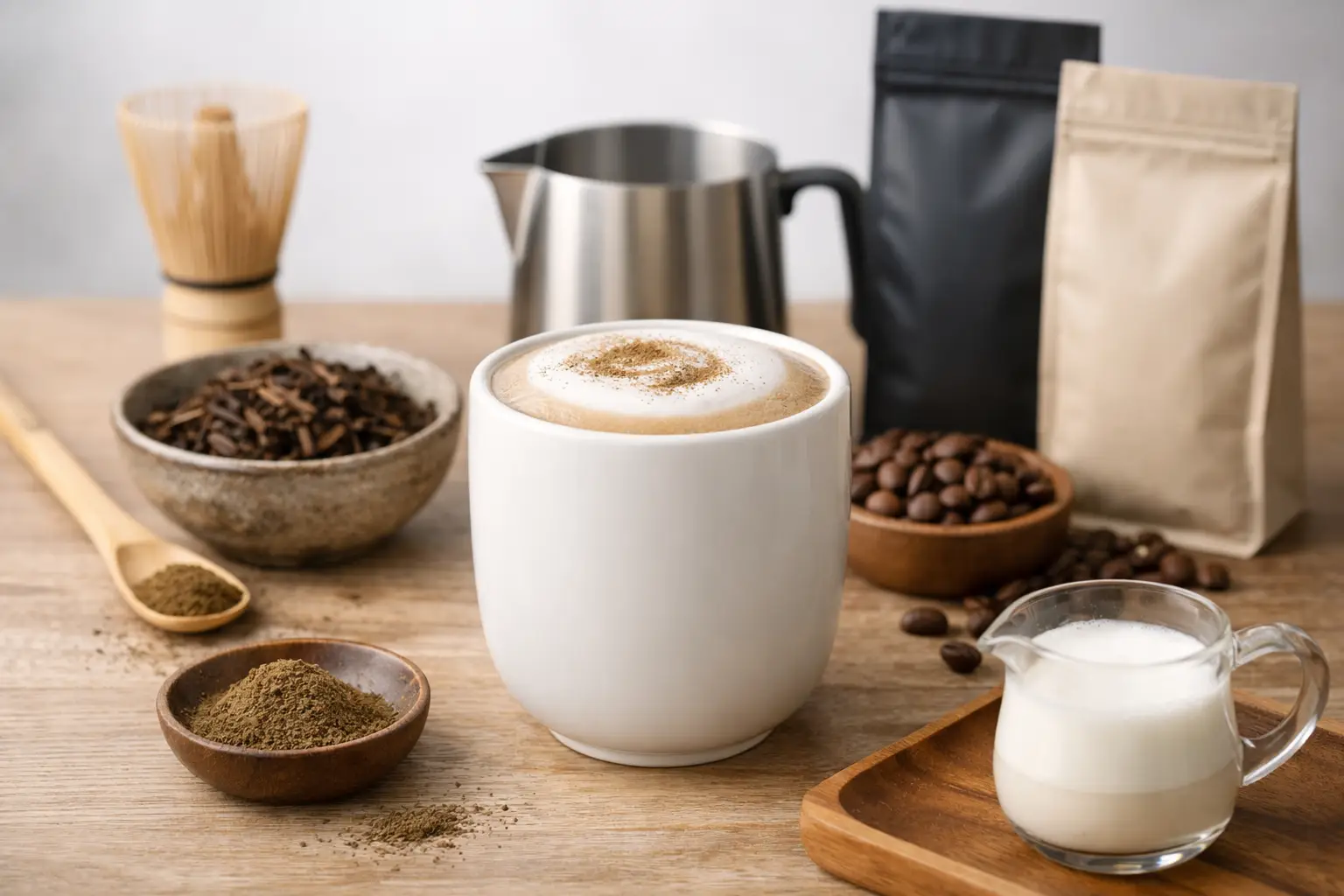
A good hojicha latte should taste toasted, mellow, and unmistakably tea-forward – not like hot milk with a faint brown color. The secret to how to brew hojicha latte well is controlling three things: the strength of the hojicha, the sweetness of the milk, and the temperature used to prepare it. Get those right, and this Japanese roasted green tea becomes one of the easiest café-quality drinks to make at home or add to a beverage menu.
Hojicha is made from green tea leaves that have been roasted, giving it a warm aroma similar to toasted nuts, cocoa, and caramelized sugar. It is naturally lower in caffeine than many green teas and matcha, but its flavor is bolder and less grassy. That makes it especially well suited to milk, including dairy and many plant-based alternatives.
Start With the Right Hojicha Format
Before you brew, check whether you are working with hojicha powder or loose-leaf hojicha. They make different styles of latte and need different preparation methods.
Hojicha powder is finely milled roasted tea. It is whisked directly into water, much like matcha, so the drink includes the full tea leaf. This produces a fuller body, deeper color, and more concentrated roasted flavor. It is the practical choice for cafés that need consistency and quick service, as well as home brewers who want a smooth latte without steeping time.
Loose-leaf hojicha is brewed like tea, then combined with milk. The result is lighter and more aromatic, with a clean finish. It is excellent when you want the leaf’s fragrant roasted character, but it can become diluted if the tea is not brewed stronger than you would drink on its own.
For a classic café-style hojicha latte, use a quality hojicha powder with a fine texture and fresh roasted aroma. Powder that smells flat, dusty, or overly smoky will not improve once milk is added. Auresso’s approach to sourcing beverage ingredients is useful here: start with a product selected for latte use rather than treating every tea powder as interchangeable.
How to Brew Hojicha Latte With Powder
For one hot latte, use 1 1/2 to 2 teaspoons of hojicha powder, 2 ounces of hot water, and 6 to 8 ounces of milk. Choose the lower amount of powder for a lighter, easy-drinking cup and the higher amount for a more pronounced tea flavor that holds up to larger milk servings.
Heat the water to about 175°F to 185°F. Boiling water can make roasted tea taste harsh or dry, particularly with finer powders. Place the hojicha powder in a small bowl or heat-safe cup, then add a small splash of the hot water first. Whisk it into a smooth paste before adding the remaining water. This simple step prevents dry clumps and gives the latte a more even texture.
A bamboo matcha whisk works well, but a small handheld frother is efficient for daily use. Whisk until the mixture is smooth and lightly foamy. Unlike matcha, hojicha will not usually create a thick, bright foam, so focus on dissolving the powder rather than chasing a dramatic froth.
Steam or heat your milk separately. Whole milk gives the roundest, most dessert-like body, while oat milk offers a similar creaminess with a gentle cereal sweetness. Soy milk can work well but may emphasize the roasted notes more sharply. Almond milk is lighter and can leave the tea tasting thinner, so use a slightly stronger hojicha base if that is your preference.
Pour the milk into the hojicha concentrate, holding back the thickest foam until the end. A 1:3 ratio of tea base to milk is a reliable starting point. Taste before adding sweetener. Many good hojicha powders need little more than a teaspoon of syrup, honey, or brown sugar, if any at all.
A Better Sweetener for Roasted Tea
Vanilla syrup is familiar, but it can cover the tea’s character if used heavily. Brown sugar, maple syrup, or a small amount of honey usually suits hojicha better because they reinforce its toasted profile. For café service, a measured pump of brown sugar syrup keeps each drink consistent.
If you prefer a less sweet menu-style beverage, try a pinch of sea salt instead of additional syrup. It can make the roasted aroma seem fuller without turning the latte into a dessert drink.
Brewing a Latte With Loose-Leaf Hojicha
Loose-leaf hojicha needs a concentrated infusion. Use about 2 tablespoons of leaf for 4 ounces of water, rather than brewing a standard cup of tea and adding milk afterward. Heat water to 195°F to 205°F, then steep for two to three minutes. The slightly hotter water is appropriate here because whole leaves release flavor more gradually than powder.
Strain the tea well and combine it with 4 to 6 ounces of steamed milk. If the finished latte tastes watery, do not simply add more sweetener. Increase the leaf-to-water ratio or reduce the amount of milk next time. Sweetener can mask weakness, but it cannot replace a properly brewed tea base.
Loose-leaf hojicha is often a better choice for customers or home drinkers who enjoy tea first and lattes second. Powder is usually preferable when the goal is a richer, more uniform drink with a stronger roasted finish.
Make an Iced Hojicha Latte Without Diluting It
Iced hojicha lattes are refreshing, but cold milk can mute the tea flavor. Build a stronger base than you would for a hot drink. Use 2 teaspoons of powder with 2 ounces of hot water, whisk until completely smooth, then add sweetener while the mixture is still warm.
Fill a glass with ice, add 6 ounces of cold milk, and pour the hojicha mixture over the top. Stir before drinking. For an appealing layered presentation, pour the tea slowly over the back of a spoon, but make sure customers know to mix it for balanced flavor.
Do not whisk hojicha powder directly into cold milk or iced water. It will clump, settle quickly, and leave a gritty texture at the bottom of the glass. A warm concentrate is the small extra step that protects drink quality.
Common Hojicha Latte Problems, Solved
When a hojicha latte tastes bitter, the water may be too hot, the powder may be low quality, or the tea concentration may be excessive for the milk used. Lower the water temperature first, then adjust the powder in small increments. Hojicha should have roast and depth, not burnt dryness.
When it tastes weak, use more powder or less milk. This is particularly common with iced drinks and large takeaway cups. A beverage that works in an 8-ounce cup may disappear in a 16-ounce serving unless the tea base is scaled with it.
Graininess usually comes from skipping the paste step or using powder that has absorbed moisture during storage. Sift the powder if needed, whisk it with a small amount of water first, and keep the container tightly sealed in a cool, dry place.
If dairy milk curdles or separates, the issue is often extreme heat or acidic flavor additions. Hojicha itself is not highly acidic, but fruit syrups and some flavored sauces can create instability. Add those carefully, and avoid pouring near-boiling tea concentrate straight into cold milk.
Practical Ratios for Home and Café Service
A reliable hot latte formula is 2 teaspoons hojicha powder, 2 ounces hot water, and 6 ounces milk. For a 12-ounce iced drink, use 2 teaspoons powder, 2 ounces hot water, 6 to 7 ounces milk, ice, and sweetener to taste. For a larger cup, scale the tea base before scaling the milk.
In a café setting, consistency matters more than complicated technique. Pre-measure powder doses, use a standard milk volume, and decide on one default sweetness level. Staff can then adjust for customer preferences without changing the structure of the drink. A well-built hojicha latte should remain recognizable whether served hot, iced, dairy-free, or lightly sweetened.
The best cup is not necessarily the darkest or sweetest one. Brew a small test drink, taste the roasted tea before you add extra syrup, and let the warm, nutty character of hojicha do the work.