

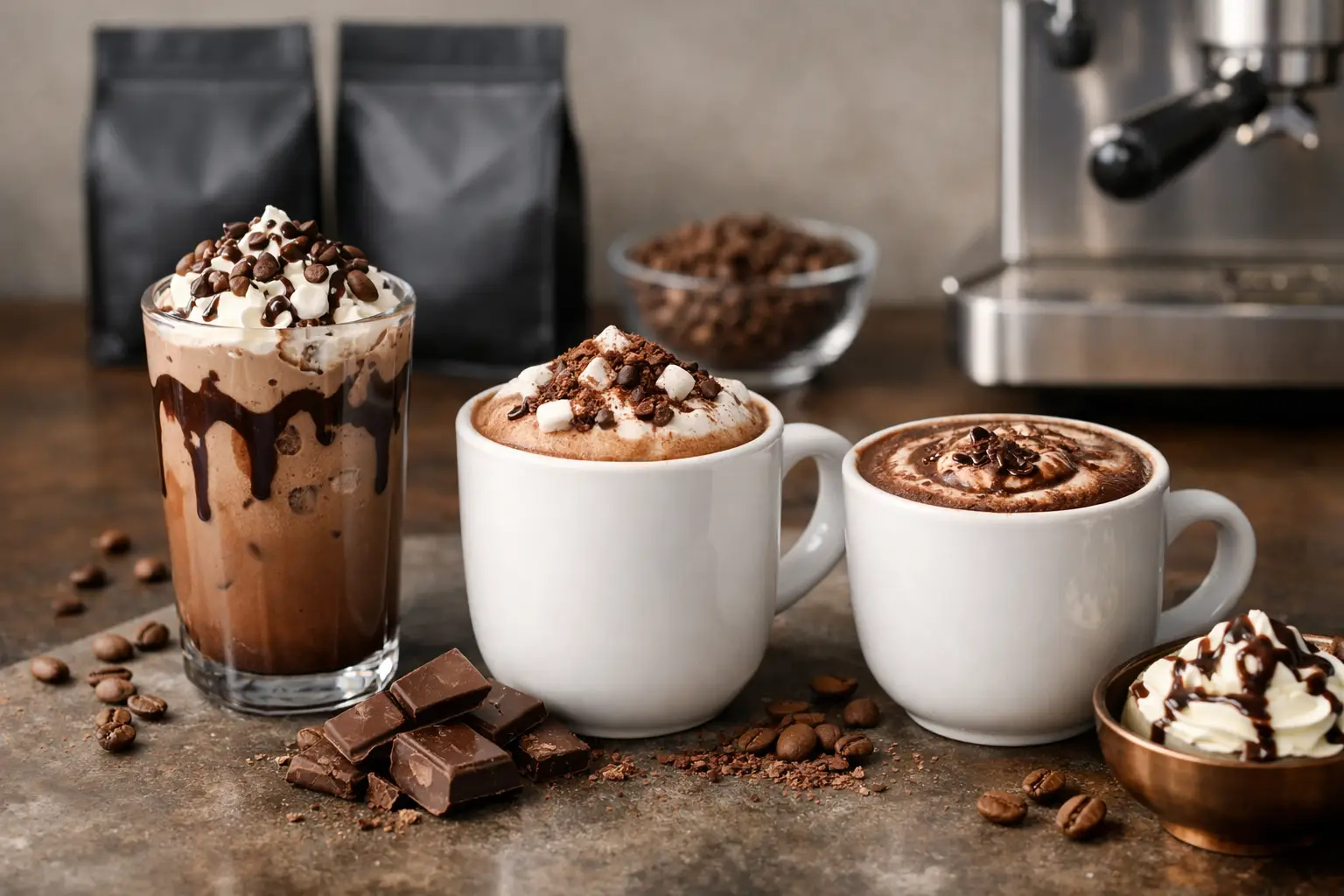
A chocolate drink can look simple on a menu, yet it is often where customers notice the difference between a café that cuts corners and one that cares about the cup. A watery hot chocolate, a powdery mocha, or a drink that arrives lukewarm does not invite a second order. This guide to cafe chocolate drinks focuses on the choices that create richer flavor, faster service, and a menu your team can reproduce with confidence.
For home brewers, the same principles make it easier to build café-style drinks without filling the pantry with single-use ingredients. The goal is not to offer every chocolate variation imaginable. It is to choose a focused range of drinks, ingredients, and preparation methods that work hard for your menu.
A guide to cafe chocolate drinks starts with the base
The chocolate base determines nearly everything: sweetness, body, color, aroma, cost per cup, and how forgiving the drink is during a busy service. Drinking chocolate powder is usually the most practical starting point for cafés because it portions quickly, stores well, and can be used across hot and iced drinks. Quality powders should dissolve smoothly and deliver a clear cocoa character rather than tasting only sweet.
Not every powder is designed for the same job. Some are dark and low in sweetness, which gives baristas more control but may need a syrup or sweeter milk to suit a broad customer base. Others are formulated as a complete drinking chocolate and are easier to prepare consistently. Neither approach is automatically better. A specialty café with customers who enjoy darker cocoa may prefer a less-sweet blend, while a high-volume family café may benefit from a familiar, rounded profile.
Chocolate sauces can add visual appeal and work well for mocha drizzles, dessert-style drinks, and iced beverages. They are not always the best primary base, though. Their thicker texture can slow preparation, and their flavor may get lost in a large hot drink unless the recipe is carefully tested. Cocoa powder offers depth and bitterness, but it needs sugar and proper mixing to avoid a dry, chalky finish.
When comparing options, taste each one in the drink it will actually become. A powder that tastes impressive in a small sample may be too intense after milk is added. Test it hot, iced, and, if applicable, alongside espresso.
Build the menu around familiar orders
A reliable chocolate menu usually begins with three drinks: hot chocolate, iced chocolate, and mocha. They share ingredients, keep training straightforward, and meet most customer expectations. From there, add one or two seasonal or signature options only when the operation can support them.
Hot chocolate is the benchmark. It should have enough cocoa aroma to smell inviting before the first sip, a smooth body, and sweetness that does not linger heavily on the palate. A standard recipe might use drinking chocolate powder combined with a small amount of hot water or steamed milk to make a smooth paste first, then topped with steamed milk. That initial mixing step matters. Adding powder directly into a full pitcher of milk often leaves dry pockets and creates inconsistent drinks.
Iced chocolate needs a slightly different mindset. Ice dilutes the drink, and cold temperatures mute sweetness and aroma. A recipe that works beautifully hot can taste flat over ice. Use a concentrated chocolate mixture, dissolve it fully before adding cold milk, and leave enough room in the cup for ice without making the final drink too weak. If your location has a warm climate, iced chocolate can be more than a side item. It deserves the same testing and presentation standards as coffee.
A mocha should still taste like coffee. Espresso brings roast, acidity, and bitterness, while chocolate rounds the profile and gives the drink a more indulgent edge. If the chocolate is too sweet or dosed too heavily, the result becomes hot chocolate with a faint coffee aftertaste. Start with the espresso recipe your café already serves well, then adjust the chocolate amount in small increments. Bean choice matters here: a medium or medium-dark espresso with chocolate, caramel, or nutty notes often integrates more easily than a very light, fruit-forward roast.
Milk choice changes more than texture
Whole dairy milk remains a dependable choice for chocolate drinks because its fat and natural sweetness soften cocoa bitterness. It also steams well, producing a creamy texture that makes a simple hot chocolate feel more substantial. Lower-fat milk can make the same recipe feel thinner, so it may require a modest adjustment to powder or milk volume.
Plant-based milk deserves separate recipe testing, not just a menu footnote. Oat milk often provides a creamy body and mild sweetness, while soy milk can have more pronounced flavor and may react differently to heat. Almond and coconut milks can be lighter and add their own distinct character. The right choice depends on the chocolate base, the beverage temperature, and what your customers regularly request.
For a café, standardizing the milk-to-chocolate ratio is more useful than relying on a barista’s visual judgment. Write the recipe in grams or milliliters, specify the cup size, and note the target serving temperature. A drink that tastes excellent at one bar station should taste the same at the next.
Getting the temperature right
Chocolate drinks are especially vulnerable to overheating. Milk that is scorched loses sweetness and can overwhelm the cocoa with a cooked flavor. Steam dairy milk to a comfortable serving range rather than pushing it to the hottest possible temperature. The ideal setting depends on local customer preference and cup size, but consistency is more valuable than extreme heat.
For hot chocolate, incorporate air early in steaming if you want a lighter, café-style foam. For a denser European-style drinking chocolate, use less aeration and aim for a glossy, integrated texture. Both have a place, but they are different products and should be described clearly on the menu.
Make consistency part of the recipe
Good ingredients cannot compensate for unclear methods. The most useful café recipes tell the barista exactly how much powder to use, how to combine it, which milk to use, the finished cup size, and the garnish standard. They also account for ice, takeaway lids, and the difference between a ceramic cup and a paper cup.
Use a scale during recipe development. A scoop is fast, but its actual dose can shift with packing, humidity, or staff technique. Once the recipe is approved, you can decide whether a level scoop is accurate enough for service. For higher-volume operations, pre-portioned doses can reduce waste and shorten training time.
Keep an eye on the cost of the finished drink, not just the price of the powder. Milk, espresso, syrup, cups, lids, whipped cream, and chocolate garnish all affect margin. A premium chocolate drink can justify a premium price when the flavor, presentation, and portion feel considered. It becomes difficult to defend when the garnish is inconsistent or the drink is too sweet to finish.
Add signature options with a reason
Signature drinks should build on your core chocolate system rather than creating a separate operational headache. A dark mocha with a richer cocoa blend, a hojicha chocolate latte with roasted tea notes, or a spiced chocolate drink using chai-inspired flavors can give customers a reason to return. Each one should have a distinct flavor story, not simply another syrup added to the same base.
Seasonal drinks are useful for generating interest, but keep them realistic. A limited menu item that requires an unfamiliar garnish, multiple sauces, and a lengthy build may frustrate the bar during peak hours. If a special drink cannot be made well in a busy five-minute window, simplify it before launch.
Presentation is worth attention because chocolate drinks are naturally visual. A clean cocoa dusting, a controlled sauce drizzle, or a neat layer of foam can make a drink feel premium. Avoid decoration that melts instantly, clogs lids, or turns messy before the customer reaches the table.
Source for the cup you want to serve
Reliable supply protects quality as much as a good recipe does. When selecting drinking chocolate, coffee, milk alternatives, and equipment, look beyond the first bag or bottle. Check whether the product can be sourced consistently, whether the pack size suits your turnover, and whether it performs the same way from one order to the next. Cafés with limited storage may prioritize smaller packs and faster replenishment, while larger operators may benefit from wholesale formats and tighter cost control.
Auresso’s range of drinking chocolate, coffee, tea, and café equipment can help simplify that sourcing process for businesses and home enthusiasts who want compatible ingredients in one place. The most practical purchase is rarely the cheapest item on the shelf. It is the one that delivers the flavor your customers expect, fits your workflow, and helps every cup leave the counter looking intentional.
Start with a small, disciplined menu, taste it under real service conditions, and train every recipe as carefully as your espresso. Chocolate drinks reward that attention with broad appeal, strong repeat potential, and a welcome option for customers who want the café experience without ordering coffee.