

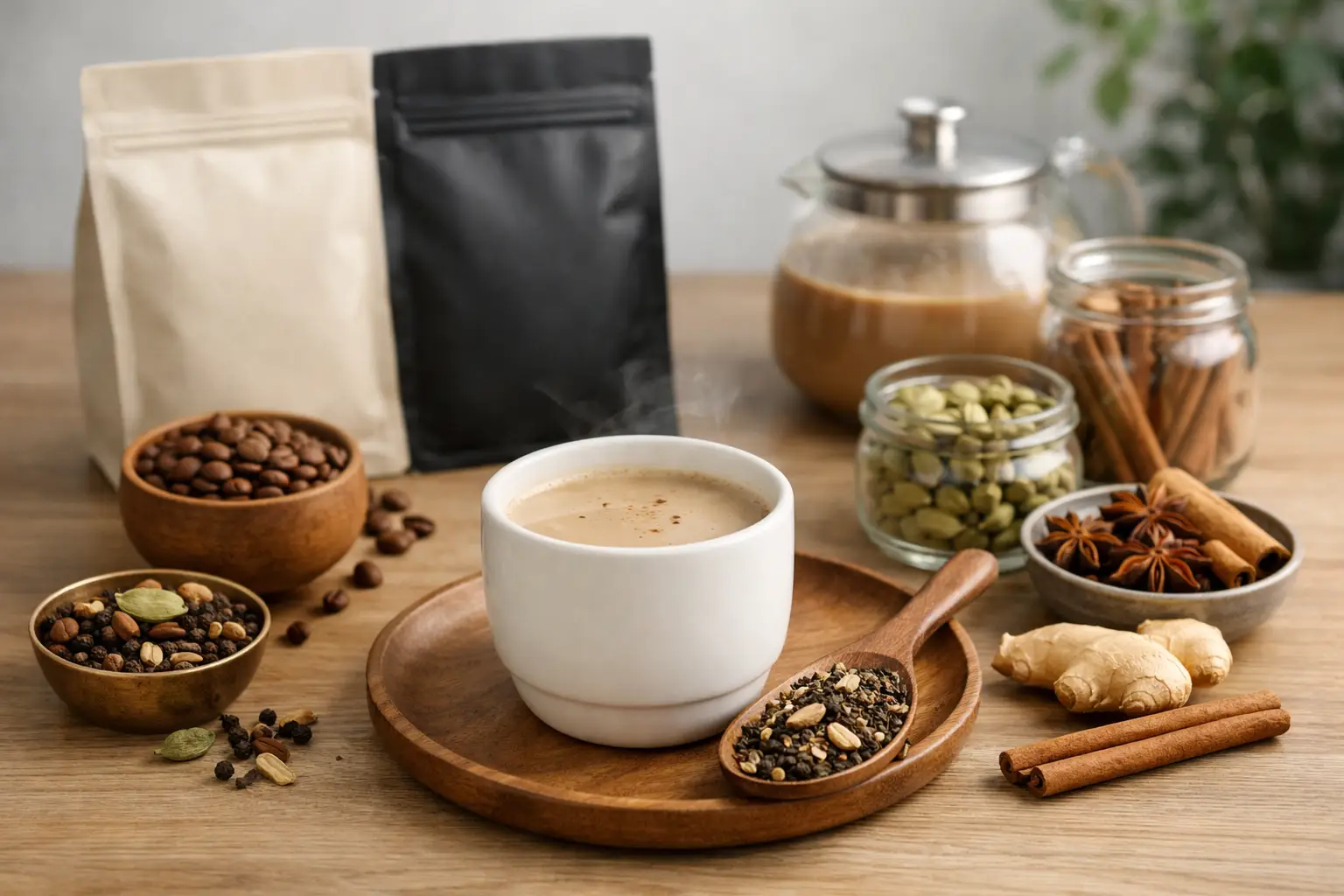
The first sip usually tells you what kind of chai you are dealing with. Some blends hit hard with clove and leave a dry finish. Others lean sweet and creamy but lose the spice character that makes chai worth ordering in the first place. A useful organic chai blend review should go beyond whether a blend tastes good and get into how it performs in a real cup, whether that cup is made at home or served across a busy café bar.
Chai is one of those drinks that sounds simple until you start comparing products side by side. Ingredient quality, sweetness level, spice definition, mixability, and milk compatibility all change the final result. For buyers choosing an organic blend, there is also the expectation that cleaner sourcing should still deliver full flavor, not a flatter version of conventional chai.
What makes an organic chai blend worth buying
A strong chai blend needs more than an organic label. Organic certification can matter for sourcing standards and ingredient preferences, but the cup still has to perform. The best blends bring warmth, structure, and enough body to stand up to milk without turning muddy or overly sugary.
The foundation is usually black tea, then a familiar spice set such as cinnamon, ginger, cardamom, clove, and black pepper. The challenge is balance. Too much cinnamon and the drink starts reading like dessert. Too much clove and it becomes medicinal. Too much ginger and the heat can overpower the tea itself.
A dependable blend keeps each element recognizable. You should taste spice in layers, not as one loud note. That matters for home drinkers, but it matters even more for cafés and beverage operators who need consistency from cup to cup.
Organic chai blend review criteria that actually matter
When we assess chai seriously, we look at more than the front label. A practical organic chai blend review should focus on what happens during preparation and in the finished drink.
Spice balance
This is the first checkpoint. Good chai does not need to be aggressive, but it should be expressive. Cardamom should bring lift, ginger should add heat, cinnamon should round the body, and clove should stay controlled. If one spice dominates from the first sip to the finish, the blend can feel one-dimensional.
Tea presence
Some chai latte blends taste like spiced sugar with a tea afterthought. That may work for customers who want a sweeter café-style drink, but it is a weak fit for anyone looking for true chai character. A solid blend lets the tea carry the spices instead of disappearing behind them.
Sweetness level
This is where preferences split. Retail buyers often want convenience, so a pre-sweetened blend can be appealing. Café operators may prefer more control, especially if they want to adjust sweetness by drink size or offer a less sweet house style. Neither approach is automatically better. It depends on how the chai will be used.
Texture and mixability
Powdered chai blends need to dissolve cleanly. If a product clumps easily or leaves sediment that does not integrate with milk, service slows down and the drink feels less polished. For iced applications, this becomes even more important because poor solubility shows up quickly.
Performance with different milks
A blend that tastes balanced with dairy can flatten out with oat milk, almond milk, or soy. If your customer base leans toward plant-based drinks, test the chai in more than one milk. Some blends need dairy fat to feel complete, while others stay aromatic and full-bodied across formats.
How organic chai blends usually differ from standard chai mixes
Organic blends often aim for cleaner ingredient lists and more direct spice expression. That can be a real advantage, but there are trade-offs. Some organic products avoid additives and stabilizers, which can improve label appeal but slightly reduce instant mix performance. Others use less aggressive sweetness, which many buyers appreciate, though some customers used to sweeter café chai may find them lighter at first.
This is why a straight comparison based only on ingredient claims misses the point. The better question is whether the blend matches your service style and customer taste. For a home user, that could mean a chai that tastes natural and is easy to dial in. For a café, it could mean a blend that stays consistent during rush periods and works well hot or iced.
Flavor profile: what a good cup should taste like
A well-built organic chai should open with aroma before sweetness. You should notice spice on the nose, then black tea and warming notes on the palate. The finish should be clean, gently spiced, and persistent, not syrupy or dusty.
In practical terms, the best versions usually land in a middle zone. They are bold enough to cut through steamed milk, but not so sharp that they need extra sugar to become drinkable. They feel layered rather than heavy. That makes them more versatile for both straight chai lattes and menu variations like dirty chai, iced chai, or chai with matcha.
If the blend tastes impressive only when heavily sweetened, that is usually a sign the base is not doing enough work. A reliable chai should still show personality when prepared slightly less sweet than the label recommends.
Home use versus café use
This is where buying decisions become more practical. A home drinker may prioritize flavor first, then convenience. A café buyer usually has to think about preparation time, recipe control, margin, and staff consistency.
For home use, a blend with straightforward instructions and forgiving flavor is often the better choice. You want something that still tastes good if your milk texture is not perfect or your scoop size is a little off. A slightly sweeter profile can also feel more accessible for everyday drinking.
For café service, the standard is higher. The blend should scale well, steam cleanly, and hold flavor across different cup sizes. It should also integrate smoothly into the broader menu. If a chai works only in one hot format but falls apart iced, that limits its value in a commercial setting.
An operator should also think about customer expectations. In some markets, chai drinkers want a dessert-leaning latte experience. In others, they expect more spice and tea definition. A good supplier can help narrow the field based on that demand rather than pushing a one-style-fits-all answer.
Packaging, freshness, and consistency
Chai is spice-driven, so freshness matters. Spices lose their top notes over time, and tired chai can taste flat even if the formula is good on paper. Packaging should protect the blend from moisture and air, especially in humid environments. That is not a small detail for businesses in Malaysia or Singapore, where storage conditions can affect powder texture and aroma faster than many buyers expect.
Consistency matters just as much. One bag tasting richer than the next creates problems for repeat ordering, especially in cafés. Buyers need to trust that the drink customers liked last month will taste the same on the next visit. This is where curated suppliers have an advantage. Product range is helpful, but consistent sourcing and quality checks are what keep beverage programs stable.
So, is an organic chai blend better?
Sometimes yes, sometimes not. Organic does not automatically mean more flavorful, better mixed, or more café-ready. What it can mean is a stronger ingredient story, a cleaner label, and a spice profile that tastes less artificial. For many buyers, that is enough to make it the better fit.
But if the blend is weak in tea character, overly expensive for the yield, or difficult to prepare at volume, the organic claim will not fix those issues. The right purchase depends on where you sit. A retail customer may accept a higher price for cleaner ingredients and a more natural taste. A wholesale buyer has to weigh that against workflow, margin, and consistency.
A fair organic chai blend review comes down to this: look for a blend with clear spice definition, real tea presence, practical mixability, and a sweetness level that matches how you serve chai. If it performs well in milk, stays consistent from bag to bag, and tastes balanced without needing recipe tricks, it is doing its job.
That is the kind of chai worth keeping on the shelf, and worth ordering again when the weather turns, the café gets busy, or you simply want a better cup at home.