

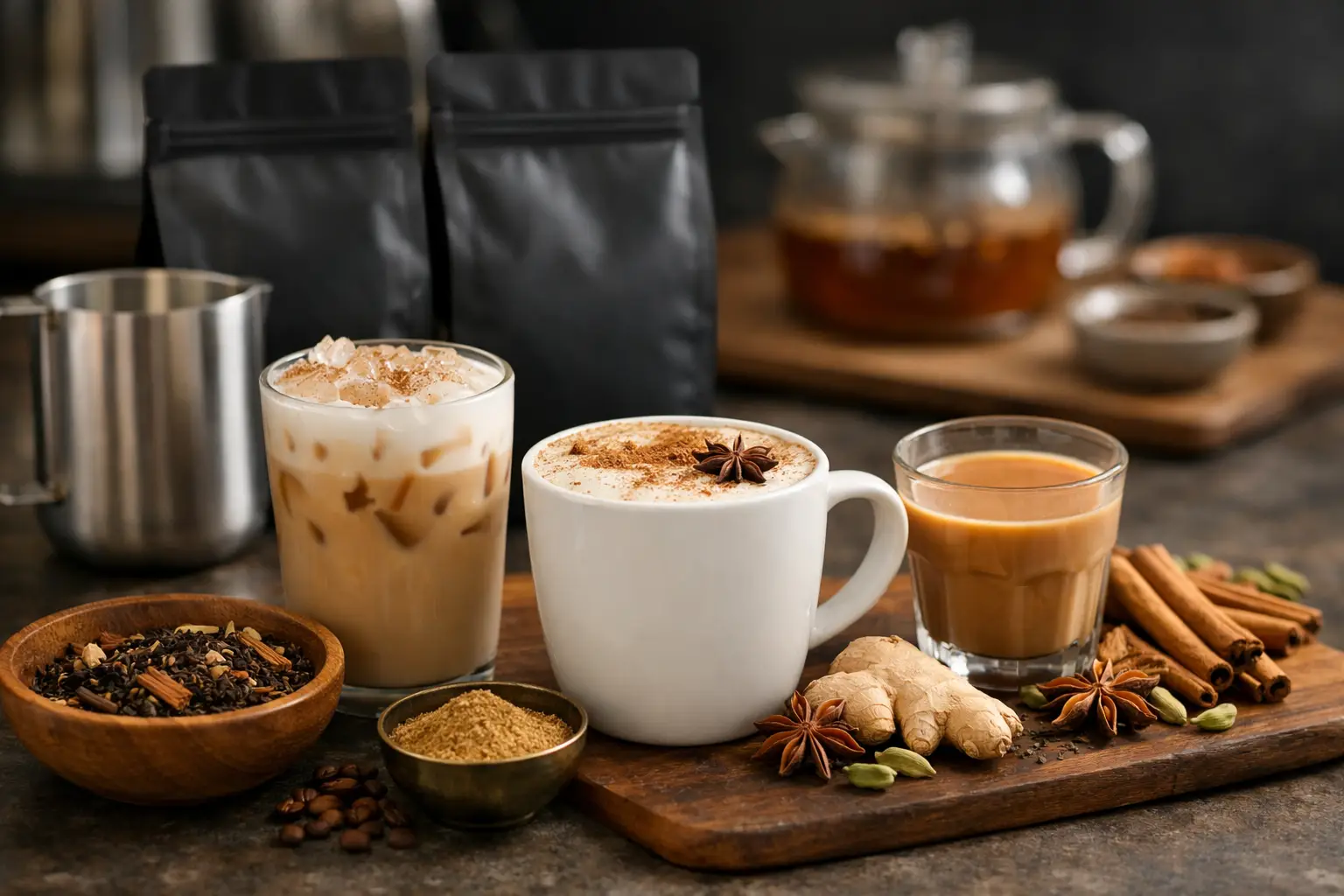
A chai menu usually looks simple until you try to make it profitable. One basic chai latte, one iced version, maybe a dirty chai, and then sales flatten because customers feel like they have already seen the whole offer. Strong cafe chai menu ideas fix that problem by giving people clear reasons to reorder, trade up, and try chai at different times of day.
For cafés, chai works best when it is not treated as a single drink but as a flexible menu category. It can carry dairy or plant milk, serve as a coffee alternative, cross into dessert territory, and hold its own in both hot and iced formats. That range matters if you want better ingredient turnover and a menu that appeals to non-coffee drinkers without adding unnecessary complexity.
What makes cafe chai menu ideas worth adding
A good chai program does more than fill a tea slot. It gives your menu a warmer flavor profile than matcha, a more layered spice character than hot chocolate, and a familiar entry point for customers who want something comforting but still café-quality.
From an operations standpoint, chai also has advantages. It is easier to standardize than many handcrafted tea drinks, and with the right chai latte blend or concentrate, staff training is straightforward. That said, the format you choose matters. Powdered blends are often faster and more consistent for busy service, while brewed loose-leaf chai can create a more premium perception but takes more labor and can be harder to scale during rush periods.
If your café serves a broad audience, chai can quietly become one of your most useful menu builders. It works for students who want a sweet iced drink, office workers who need a less intense caffeine option, and parents ordering for afternoon meetups. It also adapts well to seasonal specials without forcing you to reinvent your whole back bar.
11 cafe chai menu ideas for a stronger beverage lineup
1. Classic chai latte
Start with the version that sets the standard. A well-balanced classic chai latte should be smooth, spice-forward, and not overly sugary. Customers should taste black tea, cinnamon, cardamom, and clove in a way that feels rounded rather than sharp.
This is your anchor drink, so consistency matters more than novelty here. If the base drink is weak, every variation built on top of it will feel weak too.
2. Iced chai latte
An iced chai latte is often one of the easiest wins on a warm-weather menu. It sells well because it feels familiar, photographs nicely, and gives non-coffee drinkers a premium cold option beyond lemon tea or bottled beverages.
The trade-off is dilution. If your chai base is too light, the drink loses character over ice. Build it slightly stronger than your hot version, and be careful with sweetness so the spice profile still comes through.
3. Dirty chai
The dirty chai deserves a permanent spot if your café already has espresso dialed in. Adding a shot of espresso gives chai drinkers a bridge into coffee while giving coffee regulars something more aromatic and slightly indulgent.
This is also a strong upsell item. Customers understand the value of adding espresso, and the drink feels more substantial without requiring a completely different prep workflow.
4. Vanilla chai latte
Vanilla chai works because it softens the spice edge and broadens the drink’s appeal. It is especially useful in cafés where customers lean toward sweeter flavored lattes but still want something a little different from caramel or hazelnut.
Keep the vanilla restrained. Too much and the drink loses its tea-and-spice identity, turning into a generic sweet milk beverage.
5. Brown sugar iced chai
If your store does well with brown sugar milk drinks, this is one of the smartest cafe chai menu ideas to test. Brown sugar brings a deeper sweetness that matches chai’s spice profile better than many fruit-forward syrups.
Served over ice, it can feel modern without straying too far from core café expectations. For many stores, this is the version that attracts younger customers who want something familiar but not boring.
6. Oat milk chai latte
Some customers order plant-based milk for dietary reasons. Others simply prefer the texture. Oat milk pairs particularly well with chai because it adds body and a mild grain sweetness that supports spice instead of fighting it.
This can be listed as a default variation or highlighted as a house recommendation. If your menu already carries oat milk for coffee, it is an easy addition that feels intentional rather than niche.
7. Honey chai latte
Honey chai brings a softer sweetness and a slightly more natural positioning than syrup-heavy options. It works well for customers who want a comforting hot drink that feels less dessert-like.
There is one operational caution. Honey can slow prep if your staff has to measure and mix it carefully during peak service. If you offer this drink, make sure the recipe is simple enough to maintain speed.
8. Chai hot chocolate
This is one of the most underrated menu builders for cooler months or family-oriented cafés. A chai hot chocolate blends drinking chocolate with chai spices for a richer, more indulgent drink that still tastes distinct from a standard mocha.
It can also help you sell chai to customers who normally avoid tea-based drinks. The chocolate provides familiarity, while the spice adds interest.
9. Chai frappe or blended chai
For cafés with blenders already in use, a blended chai can open up a completely different sales occasion. It is especially useful in markets where cold, sweet, café-style beverages have broad appeal.
This format does depend on your customer base. In some specialty-focused cafés, blended drinks move slowly. In others, they are strong traffic drivers. Know your store identity before giving this too much menu space.
10. Seasonal pumpkin chai or spiced chai special
Seasonal chai specials give you room to create urgency without overcomplicating your core menu. Pumpkin chai is the obvious fall version, but you can also rotate around maple, gingerbread, or toasted spice profiles depending on the time of year.
The key is keeping the seasonal element supportive rather than dominant. Customers should still recognize the drink as chai first.
11. Chai affogato or chai dessert drink
If your café serves soft serve, gelato, or vanilla ice cream, a chai dessert drink can create a memorable point of difference. A hot chai pour-over on ice cream or a chai float can work as a limited special or afternoon feature.
This is not for every café, but in stores that lean into experiential menu items, it can create conversation and social sharing. Just make sure it fits your service model and average ticket goals.
How to build a chai menu without overloading the bar
The biggest mistake is offering too many chai drinks with no real structure. A better approach is to start with one strong base and build from there. In most cafés, that means a classic hot chai, an iced chai, and a dirty chai as the core set.
After that, add one sweet variation, one plant-based recommendation, and one seasonal special. That gives customers variety without forcing your team to memorize a dozen one-off recipes. It also helps with inventory because the same chai base can support multiple drinks.
Think carefully about where chai sits on your menu board. If it is buried under tea, customers may miss it. If chai is one of your better-margin categories, it should be visible enough to compete with flavored lattes and chocolate drinks.
Pricing and positioning matter as much as recipe quality
A chai menu should feel intentional, not like an afterthought for non-coffee drinkers. Naming helps. “Classic Chai Latte” is clearer than just “Chai.” “Brown Sugar Iced Chai” sounds more specific and premium than “Iced Chai Special.”
Pricing should reflect both ingredient cost and perceived value. A basic chai latte may sit close to a flavored latte, while a dirty chai or seasonal chai can carry a higher price point. Customers usually accept that if the drink has a clear upgrade story.
This is where supply consistency becomes important. If your chai blend changes flavor too often, repeat customers notice. A dependable beverage supplier with café-ready chai blends, tea options, and complementary ingredients makes it easier to keep your menu stable while still testing new ideas.
Choosing the right chai format for your café
There is no single best format. It depends on volume, staff skill, and the kind of experience you want to deliver.
Powdered chai latte blends are practical for many cafés because they are fast, easy to portion, and consistent across shifts. Concentrates can work well for iced drinks and speed-focused service models. Loose-leaf chai brings stronger craft appeal, but it asks more from your team and can slow production if your setup is not designed for tea service.
For many operators, the smart move is not the most romantic one. It is the format that gives reliable flavor, fast prep, and acceptable margins every day. Customers remember a drink that tastes good and arrives quickly more than they remember how complicated it was to make.
A stronger chai menu does not require ten exotic recipes. It requires a few well-chosen drinks, a solid base product, and a clear understanding of who you are serving. If your café can make chai feel like a real category instead of a backup option, customers will give it repeat business.