

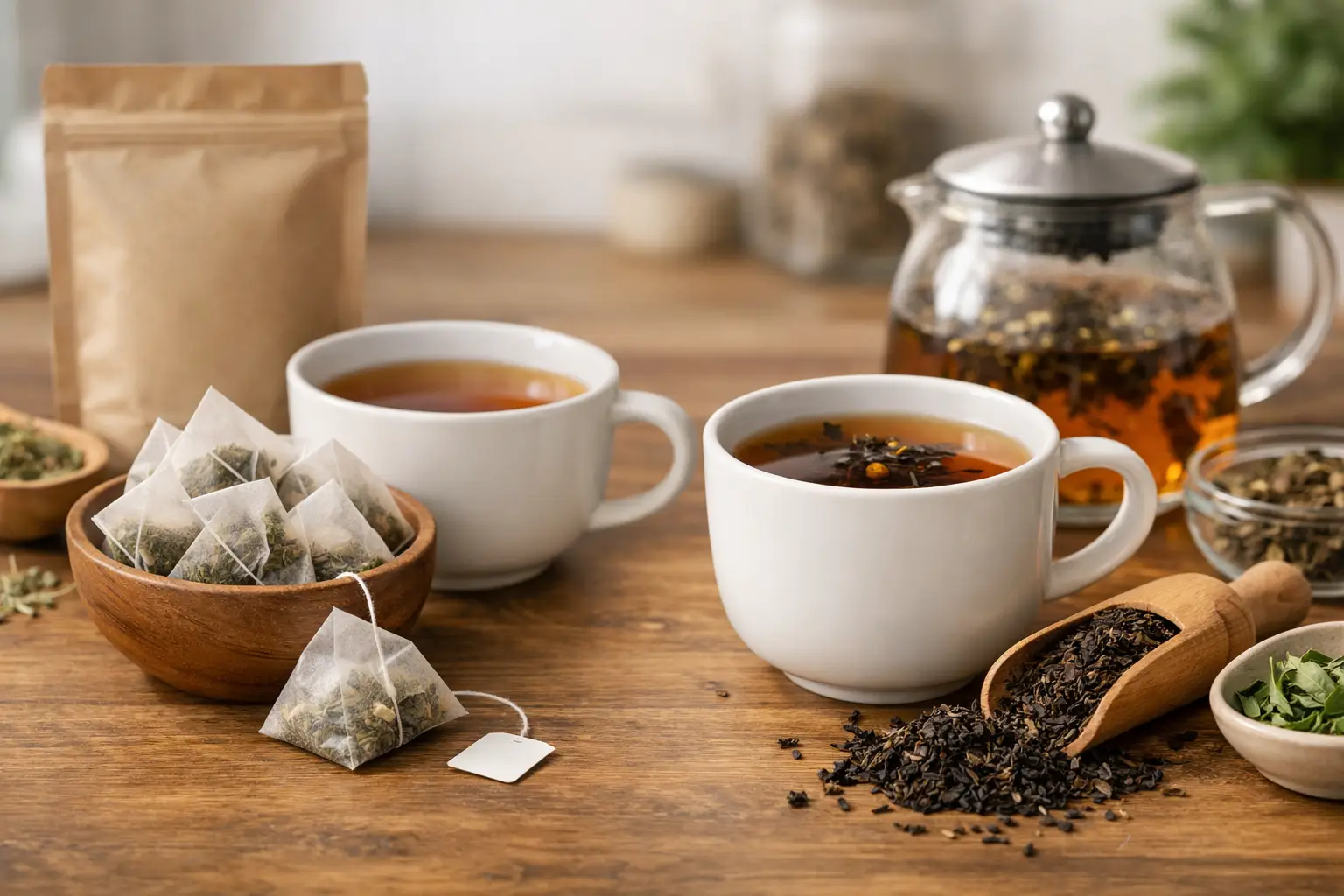
The organic tea bags vs loose leaf decision is rarely about one format being universally better. It is about what happens between opening the pack and serving the cup. A loose-leaf Earl Grey can bring fragrance, clarity, and a more deliberate ritual to a quiet morning. An organic tea bag can keep a breakfast rush, office pantry, or café counter moving without compromising on a clean, well-balanced brew.
For home tea drinkers and beverage businesses alike, the best choice comes down to leaf quality, brewing control, labor, storage, and the kind of experience you want to deliver. Organic certification matters, but it is only one part of a good buying decision.
Organic Tea Bags vs Loose Leaf: The Real Difference
The biggest practical difference is the amount of room the tea has to expand. Loose leaves move freely in an infuser, basket, or pot, allowing water to circulate around the leaf. This usually produces a more aromatic cup with clearer flavor definition, particularly in whole-leaf green teas, oolongs, white teas, and carefully blended black teas.
Tea bags create a more controlled, repeatable portion. Traditional flat bags may hold smaller tea particles, which brew quickly but can produce a stronger, less layered cup. That does not mean all tea bags are low quality. Pyramid-style bags and generously filled sachets can hold larger leaves and herbs, giving the tea more space to unfurl while preserving the convenience of a pre-portioned serving.
The useful comparison is not simply bagged versus loose. It is whole leaf versus broken leaf, fresh versus stale, well-packed versus poorly packed, and thoughtfully blended versus generic. A good organic tea bag can easily outperform old or carelessly stored loose leaf.
When Loose Leaf Is Worth the Extra Step
Loose leaf is the stronger choice when flavor exploration is part of the point. Whole leaves tend to retain more of their natural oils and aroma. With a quality tea, you may notice the citrus lift in a black tea blend, the roasted sweetness in hojicha, or the floral character of a green tea more distinctly than with finely cut tea.
It also gives the brewer control. You can adjust the leaf-to-water ratio, steeping time, and water temperature to suit the tea and the customer. If a floral tea is becoming astringent, use cooler water or shorten the steep. If a breakfast blend needs more body for milk, add a little more leaf rather than over-steeping it. That flexibility is valuable for tea enthusiasts and for cafés building a more premium tea menu.
Loose leaf can be economical over time, especially when the leaves are suitable for a second infusion. The cost per cup may be favorable, but only when portions are measured consistently and waste is managed. For a busy operation, a scoop that varies from one staff member to another can quietly affect both beverage quality and margins.
There is also a service consideration. Loose-leaf brewing requires equipment: infuser baskets, strainers, pots, or batch brewers, plus time for rinsing and resetting. At home, that can be a welcome ritual. During a crowded lunch service, it may not be the best use of a barista’s attention.
Loose Leaf Works Best For
Loose leaf is especially well suited to tea drinkers who enjoy experimenting, cafés offering pots or premium dine-in service, and businesses that want to feature single-origin or distinctive specialty teas. It is also a natural fit for beverages where the tea is meant to be the main event, rather than an accompaniment served quickly with a meal.
Why Organic Tea Bags Still Have a Place
Convenience is not a compromise when the product is chosen well. Organic tea bags offer fast portion control, straightforward staff training, and predictable preparation. For office pantries, hotel rooms, takeaway counters, meeting rooms, and restaurants with a broad menu, those advantages are substantial.
A tea bag also limits mess. There are no loose leaves in the sink, no need to measure each serving, and less chance of a customer receiving an inconsistent brew. This makes it easier to maintain standards across shifts, locations, or staff with different levels of beverage experience.
For home use, tea bags are often the format that gets used. A box kept beside the kettle is easy to reach for before work, after dinner, or when someone wants a caffeine-free herbal infusion without washing extra tools. The best format is ultimately the one that fits your actual routine and helps you brew tea properly rather than leaving it untouched in the cupboard.
For cafés, organic tea bags can simplify menu execution while still supporting a quality-focused offering. Select bags with clear flavor descriptions, individually wrapped portions when freshness and hygiene matter, and enough leaf volume to create a satisfying cup. Serve them in a proper teapot or cup with a timer recommendation when possible. Presentation helps a convenient format feel considered.
Organic Does Not Automatically Mean Better Tea
Organic tea is grown and processed according to standards that restrict certain synthetic pesticides and fertilizers. For many buyers, that is an important sourcing preference. It can support a purchasing policy centered on ingredient transparency and more considered agricultural practices.
Still, organic certification alone cannot tell you whether a tea will taste good. It does not guarantee fresh leaf, careful harvesting, balanced blending, ethical labor practices, or packaging that protects the tea from air, light, moisture, and strong odors. Treat organic status as a valuable qualification, then assess the tea itself.
Look for an ingredient list that is easy to understand, particularly with flavored teas and herbal blends. A straightforward organic peppermint tea should smell vivid and minty, not dusty. An organic chai should show a clear balance between black tea and spices, not rely on overpowering sweetness or artificial-tasting flavor. For tea bags, check whether the bag material and string are appropriate for the standards your customers expect.
Match the Format to the Drink You Serve
The final drink should guide the purchase. Delicate teas served plain benefit from the space and control of loose leaf. A high-quality green tea, white tea, or oolong can lose much of its appeal if it is brewed too hot or left too long, so loose leaf is useful when staff can give it attention.
For milk tea, chai, iced tea, and high-volume breakfast service, a strong, reliable bagged tea can be the more sensible choice. These drinks need consistency first. If tea is one component in a chai latte or a glass of iced lemon tea, speed and repeatability may matter more than subtle leaf presentation.
Think about the serving environment too. A sit-down café can make a loose-leaf pot feel special. A busy bakery counter may be better served by a premium organic tea bag that steeps while the cashier completes the order. Neither choice is lesser when it matches the occasion.
A Practical Buying Check Before You Stock Up
Before committing to a larger order, brew both formats side by side using the same water. Taste them plain first, then with milk, sweetener, or ice if that is how customers will drink them. Check the aroma at opening, the color of the liquor, how quickly the tea reaches its best flavor, and whether it becomes bitter when a customer forgets it for an extra minute.
For business buyers, test the full workflow. Can staff explain the tea in one sentence? Does the package store neatly? Is the serving cost clear? Does the format suit your cup size, teapot, takeaway lid, and peak-hour pace? A tea that tastes excellent but slows service or creates unnecessary waste may not be the right operational choice.
Storage deserves equal attention. Keep both organic tea bags and loose leaf in airtight containers or sealed original packaging, away from heat, sunlight, coffee aromas, spices, and moisture. Buy quantities that you can move while the tea is fresh. Tea is dry, but it is not immune to age.
Auresso’s approach to beverage sourcing is practical: choose quality ingredients that fit the way people actually brew and serve. Start with the experience you want in the cup, then select the organic tea format that helps you deliver it consistently, whether that is a slow afternoon pot or a reliable tea service during the morning rush.