

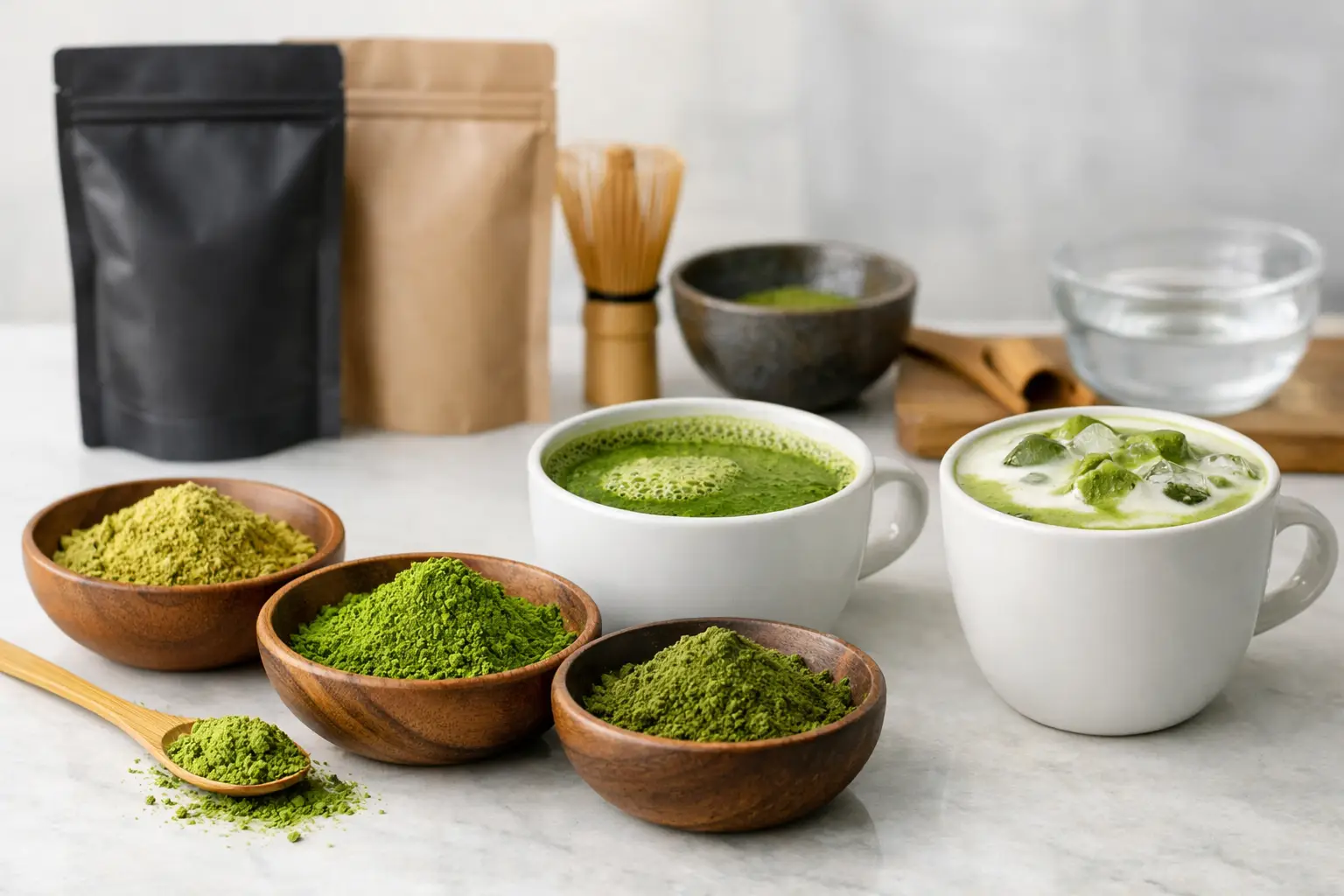
A bright green powder can still make a disappointing cup. That is usually the moment people realize matcha labels are not as simple as ceremonial good, culinary basic. If you are wondering how to choose matcha grade, the real answer starts with what you plan to make, how sensitive you are to bitterness, and whether consistency matters more than prestige.
For home drinkers, the wrong grade often means paying too much for a latte powder or buying a cheap powder that tastes harsh on its own. For cafés and beverage businesses, the stakes are higher. Matcha affects menu pricing, drink color, foam quality, customer perception, and repeat orders. A smart choice is less about chasing the highest grade and more about buying the right grade for the job.
How to choose matcha grade based on use
The fastest way to choose well is to start with application, not marketing language. Matcha is typically sold under broad labels such as ceremonial, premium, latte, or culinary. Those labels are helpful, but they are not universal standards. One supplier’s premium may drink better than another supplier’s ceremonial.
For straight drinking, especially usucha, you want matcha that tastes clean, smooth, and naturally sweet with low bitterness. It should whisk well, look vivid green, and have a fine texture. This is where higher-grade matcha earns its price.
For lattes, you need a powder that can still show fresh green color and pleasant tea character once milk and sweetener enter the cup. A very delicate ceremonial matcha can get lost in dairy, while an overly low-grade culinary option may taste flat, chalky, or aggressively bitter. A strong premium or latte-grade matcha is often the best business decision because it balances flavor, cost, and visual appeal.
For baking, desserts, and blended beverages, the target changes again. You need matcha with enough punch to hold up against sugar, cream, chocolate, or fruit. Slightly more astringency is not a problem here. In fact, it can help the flavor come through. This is where culinary-grade matcha makes sense.
What matcha grade really tells you
Grade is shorthand for expected drinking experience, but it does not guarantee quality by itself. In practical terms, higher grades usually come from younger leaves, more careful processing, and finer milling. That tends to produce brighter color, softer texture, sweeter aroma, and less bitterness.
Still, grade names are not regulated in a way that makes them directly comparable across every brand. That is why experienced buyers pay attention to sensory cues and intended use rather than relying only on the front label.
If you buy for a café, this matters even more. A product described as ceremonial may sound attractive on a menu, but if it is overpriced for milk-based drinks, your margins suffer without adding much customer value. On the other hand, a well-selected premium or latte-grade matcha can deliver better color stability, stronger flavor in milk, and more consistent cost per cup.
The four signs that matter most
Color should look lively, not dull
Fresh, better-quality matcha usually has a vivid green color. Dull olive, yellow-green, or brownish tones often point to older material, lower leaf quality, or oxidation. Color is not everything, but it is one of the quickest quality checks.
For retail buyers, greener powder usually means a smoother cup. For businesses, it also means a more attractive finished drink. Customers notice visual freshness before they take the first sip.
Aroma should smell fresh and soft
Good matcha should smell grassy in a pleasant way, with notes that can feel creamy, sweet, or slightly marine. If the aroma is flat, dusty, or sharply bitter, expect a less refined taste.
The easiest mistake here is confusing strong smell with good smell. Lower-grade matcha can smell intense, but not necessarily balanced. Better matcha tends to smell cleaner and more composed.
Texture should be very fine
When rubbed between fingers, matcha should feel soft and almost silky. A coarser texture can lead to clumping, weaker suspension, and a gritty finish. This matters for all uses, but especially for straight preparation and premium café service where mouthfeel shapes the whole experience.
Taste should match the drink you want to serve
Straight-drinking matcha should be gentle, layered, and low in harshness. Latte matcha should have enough backbone to stay present in milk. Culinary matcha should be bold enough to survive sugar and other ingredients. The best matcha is not always the sweetest or most expensive. It is the one whose flavor profile fits the final cup.
Ceremonial, premium, latte, and culinary
Ceremonial grade is best reserved for drinking with water, especially when you want a clean, smooth bowl with minimal bitterness. It is usually the least practical choice for flavored drinks or recipes because much of its nuance disappears once mixed with milk, syrups, or dessert ingredients.
Premium grade sits in a useful middle ground. It can work for both straight drinking and higher-end lattes, depending on the specific product. For many buyers, this is the most versatile category.
Latte grade is often positioned for milk-based beverages. A good one should deliver green color, recognizable tea flavor, and enough structure to avoid tasting washed out. This can be the sweet spot for cafés serving iced matcha, hot matcha lattes, or specialty drinks.
Culinary grade is the right call for baking, soft serve, sauces, smoothies, and recipes where matcha is only one part of the flavor system. It is usually more affordable, but it should still taste clean. Cheap does not help if the powder turns muddy in color or leaves a rough aftertaste.
How to choose matcha grade for home versus café use
Home buyers can afford to choose based on personal preference. If you mostly drink matcha with water, spend more on quality. If you make sweet lattes every morning, buy a matcha designed for that use and save your budget for consistency rather than label prestige.
Cafés need a more operational view. Start with your menu. Are you selling traditional tea service, sweet iced matcha lattes, or blended drinks? Then test the powder in your actual recipe. A matcha that tastes excellent in water may disappear in oat milk. Another might seem slightly assertive on its own but perform perfectly in a latte.
Cost per serving also matters. A higher-grade powder can sometimes be more efficient if it delivers stronger flavor at a lower dose. But that is not always true. You need to test yield, customer response, and drink appearance together.
Common buying mistakes
The most common mistake is assuming ceremonial grade is always best. It is only best for certain uses. If the drink includes milk, sweetener, vanilla, strawberry, or chocolate, the value equation changes.
Another mistake is buying based on color alone. Bright green is a good sign, but a drink can still taste thin or one-dimensional. Aroma, texture, and flavor all matter.
Many buyers also ignore storage and freshness. Even good matcha loses character when exposed to heat, light, air, and moisture. If your turnover is slow, a smaller pack of better matcha may perform better than a larger bag that sits too long.
For business buyers, inconsistency is the hidden cost. If every batch behaves differently, your team has to keep adjusting recipes, and customers notice. That is why working with a dependable supplier matters as much as choosing the right grade.
A simple way to test before you commit
If you are comparing options, prepare each matcha two ways. First, whisk it with water to judge aroma, bitterness, body, and finish. Then make your standard latte recipe and check whether the flavor still comes through. This side-by-side test quickly shows whether you are paying for nuance you will not use or settling for a powder that cannot carry the drink.
For cafés and foodservice teams, involve the people who actually serve the product. Baristas notice mixability, foam performance, and speed of preparation. Managers notice cost and waste. Customers notice taste and appearance. The right choice sits where those three views overlap.
A good matcha program does not start with the fanciest tin on the shelf. It starts with honest use-case matching, clear sensory checks, and reliable supply. Choose the grade that fits the cup you want to serve, and the powder will do its job without asking you to explain it away.