

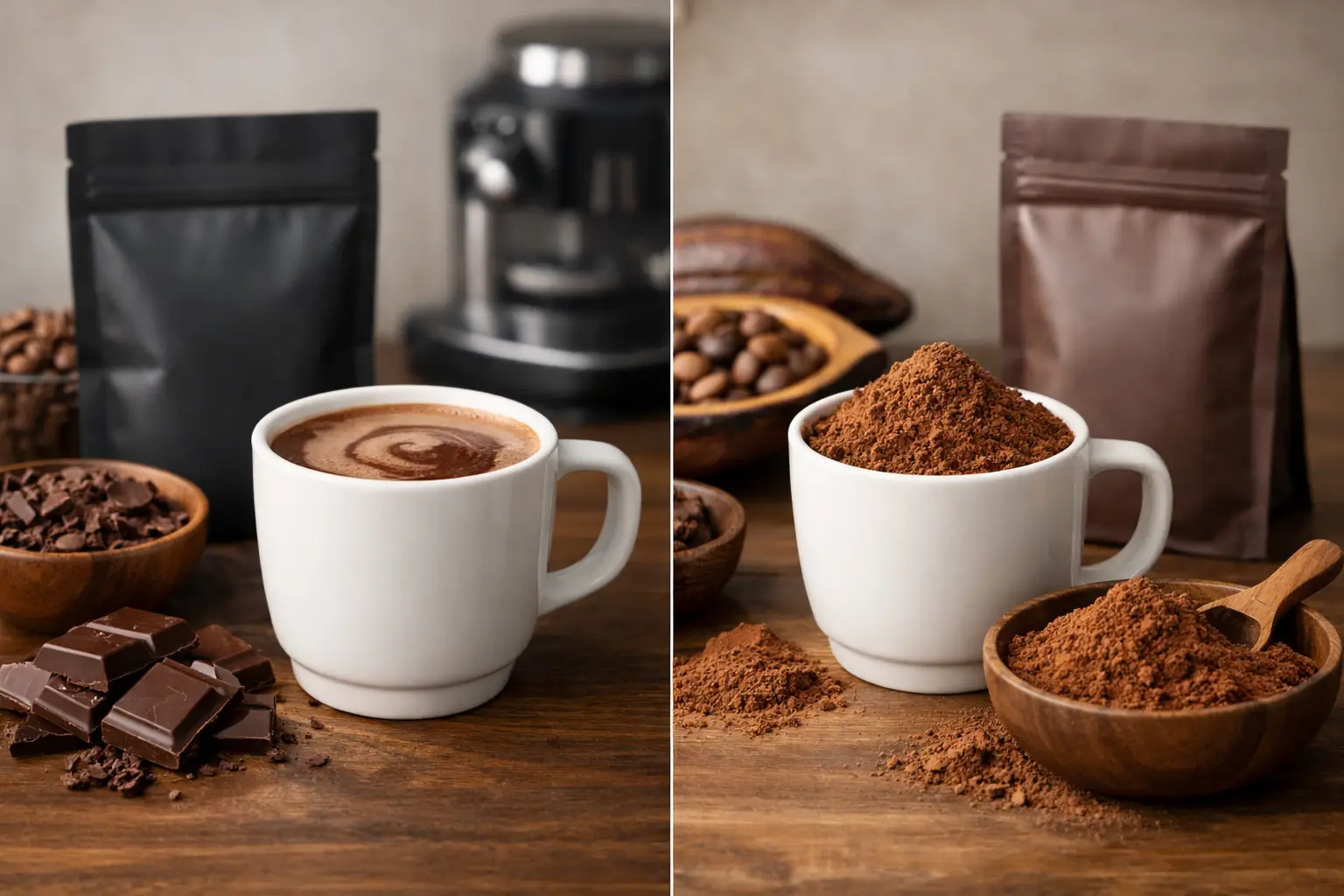
Order the wrong chocolate powder once for your bar or home setup, and the difference shows up fast – thin texture, flat flavor, or a drink that never quite tastes café-quality. When people compare drinking chocolate vs cocoa powder, they are usually trying to solve a practical problem: which one will give the result they actually want in the cup.
The short answer is that they are not interchangeable in every situation. Cocoa powder is an ingredient. Drinking chocolate is usually a finished or near-finished beverage mix designed to create a richer, sweeter, more rounded chocolate drink. Both have value, but they serve different jobs.
Drinking chocolate vs cocoa powder: what sets them apart?
Cocoa powder is made by pressing much of the cocoa butter out of chocolate solids and grinding what remains into a dry powder. Depending on the style, it may be natural cocoa powder or Dutch-processed cocoa powder. It delivers concentrated chocolate flavor, but not much fat and usually no added sugar.
Drinking chocolate powder is built for the cup. It often contains cocoa along with sugar, and in many blends it may also include chocolate solids, milk powder, or other ingredients that improve body, sweetness, and ease of preparation. That is why drinking chocolate tends to taste fuller and feel creamier, especially when mixed with milk.
This is where expectations matter. If you want to bake brownies or control sweetness from scratch, cocoa powder is often the better fit. If you want a smooth, indulgent hot chocolate with less measuring and less guesswork, drinking chocolate is usually the more dependable choice.
Flavor is only part of the story
A lot of buyers focus on intensity alone, but texture is often the real difference between an average chocolate drink and one customers reorder.
Cocoa powder can taste deep and clean, but because it is leaner, the drink can come across as lighter or drier unless you build it carefully with sugar, milk, and sometimes extra chocolate. In a café setting, that means more recipe development and tighter training. At home, it means you may need to tweak several variables before you land on the result you want.
Drinking chocolate is more forgiving. Since it is designed as a beverage base, it usually creates better mouthfeel with less effort. That matters whether you are making one mug on a rainy afternoon or serving dozens of cups during a weekend rush.
There is a trade-off, though. Because drinking chocolate is often pre-formulated, you have less control over sweetness and flavor structure. Some blends lean very sweet. Others prioritize a darker cocoa profile. Choosing well matters.
When cocoa powder makes more sense
Cocoa powder is the better choice when flexibility is the priority. Bakers rely on it because it behaves predictably in recipes and lets them control sugar levels separately. Beverage programs may also use it for signature mochas, chocolate sauces, or custom house recipes where precision matters.
For operators, cocoa powder can make sense if you already have an established recipe system and trained staff. It gives you room to standardize your own chocolate drink profile, whether that means a less sweet dark chocolate, a spiced mocha base, or a seasonal menu item.
For home users, cocoa powder works well if you enjoy making drinks from scratch and do not mind balancing sweetness yourself. Some people prefer that cleaner, less dessert-like profile.
Just keep in mind that cocoa powder on its own does not automatically make a luxurious drinking chocolate. Without enough fat, sugar, or supporting ingredients, the final cup can be sharp, chalky, or thin.
When drinking chocolate is the smarter buy
If your goal is a satisfying chocolate beverage with speed and consistency, drinking chocolate usually wins.
That is why it is popular in cafés, hotels, and foodservice settings. It helps staff produce a reliable drink quickly, and it reduces the chance of variation between shifts. Customers notice consistency more than most operators think. A chocolate drink that tastes great on Monday and weak on Friday is a service problem, not just a recipe problem.
For home buyers, drinking chocolate is simply easier. You get a product built for dissolving, flavor balance, and repeatable results. Pair it with milk or a milk alternative, and you are already close to a café-style drink without a long ingredient list.
This convenience is especially useful if chocolate is one part of a broader beverage setup. Many customers stocking coffee, matcha, chai, and tea do not want to build every recipe from zero. They want dependable quality without slowing down service or cluttering the pantry.
Drinking chocolate vs cocoa powder for hot chocolate
For classic hot chocolate, drinking chocolate is usually the better option. It is made to deliver sweetness, body, and a rounder chocolate taste in one product. In most cases, it also steams and blends more easily in a café workflow.
Cocoa powder can absolutely be used for hot chocolate, but it performs best when treated as one component of a full recipe. You may need sugar, a pinch of salt, and sometimes melted chocolate or syrup to build enough richness. If your drink still tastes flat, the issue is not the cocoa itself. It is that cocoa powder was never meant to carry the entire experience alone.
That difference becomes even more obvious in larger cups. A 12-ounce or 16-ounce serving can make a cocoa-based drink feel diluted unless the recipe is carefully adjusted. Drinking chocolate tends to hold its profile better at volume.
What café owners and buyers should look for
If you are buying for a business, the decision should not stop at flavor. You also need to think about consistency, speed of service, cost per cup, storage, and menu fit.
A cocoa powder-based program may look cost-effective at first, but labor and recipe complexity can offset those savings. If every staff member mixes the drink slightly differently, the product becomes harder to manage. On the other hand, if your café is known for custom beverages and your team is well-trained, cocoa powder can support a more tailored house style.
Drinking chocolate often gives stronger operational value because it reduces prep friction. It can also support a wider menu, from hot chocolate and iced chocolate to mochas and blended drinks, depending on the formulation. That kind of versatility matters for businesses serving both coffee-focused customers and non-coffee drinkers.
Quality still matters more than category. A poor drinking chocolate will not outperform a well-chosen cocoa powder. Look at ingredient quality, flavor clarity, sweetness level, ease of mixing, and how the product holds up with your preferred milk.
What home users should consider before buying
If you are choosing for home, start with how you actually make drinks. If you want a quick evening chocolate, a family-friendly pantry staple, or a reliable base for mochas, drinking chocolate is the easier and often more enjoyable option.
If you bake often, prefer lower sugar, or like building recipes from scratch, keep cocoa powder in the kitchen. It is more versatile across desserts and drinks, even if it asks more from you when the goal is a rich cup.
It also helps to think about who is drinking it. Adults who like darker chocolate may prefer a less sweet profile. Kids and casual drinkers often respond better to a smoother, sweeter drinking chocolate. Neither is more correct. It depends on the cup you want to serve.
The common mistake: treating them as direct substitutes
This is where a lot of frustration starts. People buy cocoa powder expecting instant hot chocolate, or they buy drinking chocolate expecting a baking ingredient with the same behavior as cocoa. The result is usually disappointing.
Cocoa powder is closer to a building block. Drinking chocolate is closer to a finished beverage solution. Once you frame the choice that way, buying becomes much simpler.
For many customers, the smartest setup is not either-or. It is both. Keep cocoa powder for baking and recipe development. Keep a quality drinking chocolate for the moments when taste, texture, and speed matter most.
If you are building a home station or a beverage menu that needs dependable results, choose the product based on the job, not just the label. A better cup usually starts with that decision.