

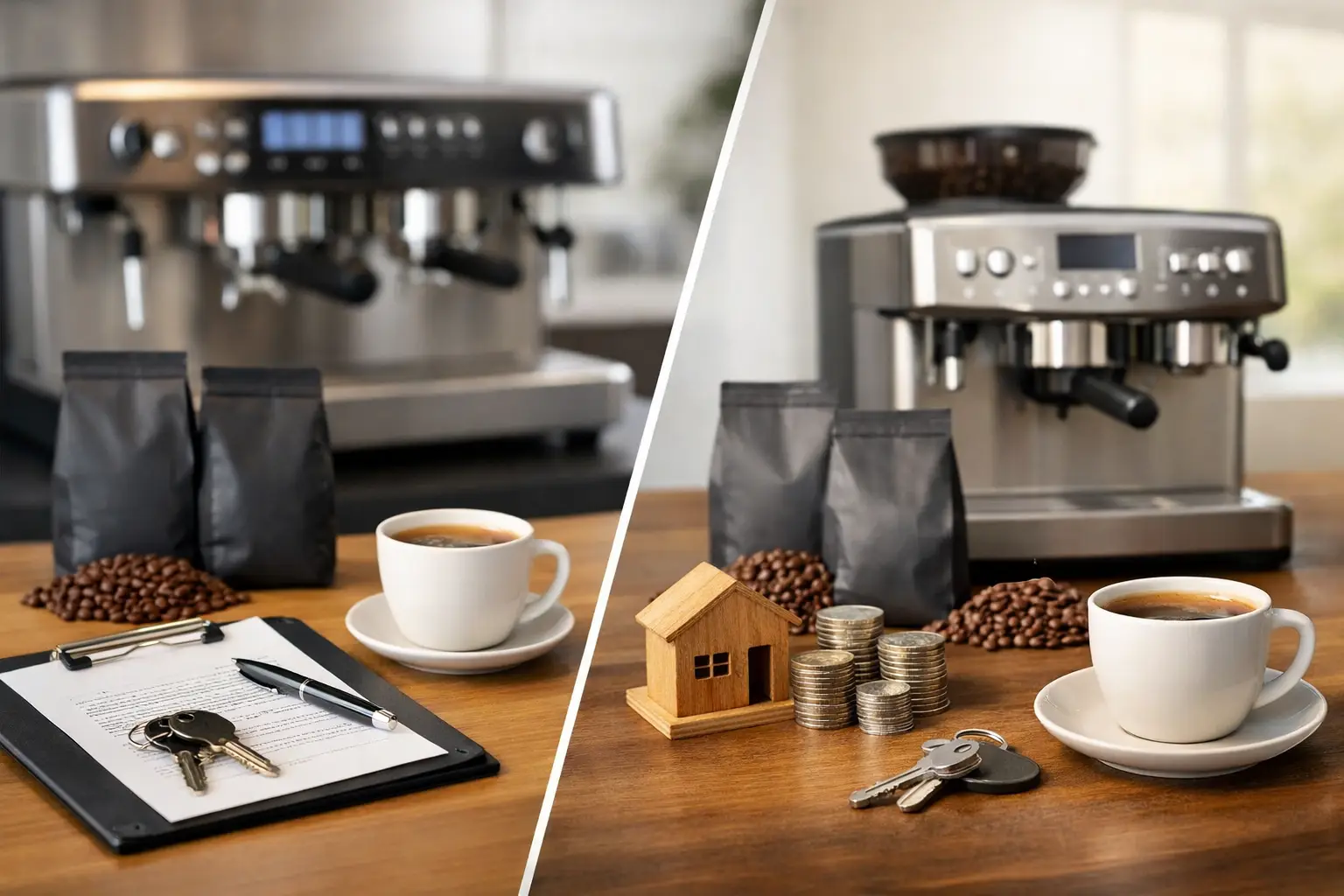
A two-group espresso machine can make or break a morning rush, but the wrong payment model can hurt just as much. When people compare coffee machine lease vs buy, they are usually not deciding between good and bad. They are deciding what kind of risk, flexibility, and cash commitment makes the most sense for the way they actually brew and serve coffee.
For a home user, that might mean balancing upfront cost against the desire for a better grinder and fresher beans. For a café owner or restaurant operator, it usually comes down to cash flow, service expectations, and how confident you are in your daily volume. The best option is the one that keeps quality high without creating pressure somewhere else in the business.
Coffee machine lease vs buy: what changes in practice?
On paper, leasing looks simple. You pay a recurring amount instead of making a large upfront purchase. Buying is the reverse. You pay more at the start, then own the equipment outright.
In practice, the difference goes much deeper. A lease can preserve working capital, which matters if you are also paying for fit-out, rent, staff, cups, syrups, tea, chocolate, and opening inventory. Buying gives you control and may cost less over the life of the machine, but it ties up cash immediately. That trade-off matters most when your business is growing or your beverage menu is still evolving.
There is also the question of support. Some lease arrangements include maintenance or make service easier to budget. A purchased machine may come with a warranty, but repairs outside that period are your responsibility unless you have a separate service plan. If downtime would seriously affect revenue, service structure matters almost as much as the machine itself.
When leasing makes more sense
Leasing is often the better fit when cash needs to stay flexible. New cafés, kiosks, bakeries, offices, and small F&B concepts usually have more than one urgent expense at launch. Keeping capital available for inventory, training, marketing, and payroll can be smarter than putting a large amount into equipment on day one.
Leasing can also help if your demand is not fully proven yet. Maybe you expect strong coffee sales, but you do not know whether your customers will lean toward milk-based drinks, black coffee, or non-coffee beverages like matcha and chai. In that case, preserving room to adjust the program is valuable. A fixed asset can feel reassuring, but flexibility has real value early on.
Another advantage is predictability. A monthly payment is easier to budget than a large purchase followed by occasional repair bills. That is especially useful for operators who want fewer financial surprises. If the lease includes service terms, even better. You are not just paying for the machine. You are paying for a more stable operating rhythm.
Leasing can also make sense for companies that refresh equipment regularly. If staying current with features, output consistency, or branding matters, leasing may align better with that cycle than buying and holding equipment for many years.
When buying is the stronger move
Buying usually wins when you have stable demand and a clear long-term plan. If you know your volume, know your menu, and have enough cash on hand, ownership often gives you the best total value over time.
A purchased machine becomes an asset you control. There are no recurring finance payments after it is paid off, and if the machine is maintained well, it can keep producing for years. For established cafés or restaurants with predictable coffee sales, that can mean better margins in the long run.
Buying also gives you more freedom in how you maintain and use the machine. You are not working within lease terms or waiting for end-of-term decisions. If you want to pair your machine with a specific grinder, filtration setup, or workflow change, ownership can be simpler.
For home users, buying is usually the cleaner decision. Most home coffee enthusiasts are not looking for fleet flexibility or contract terms. They want a machine that fits their routine, budget, and taste preferences. If you brew daily and plan to keep the machine for years, buying tends to be more practical than leasing.
The real question is cash flow, not just price
Many buyers focus on sticker price first, but the smarter lens is total business impact. A machine that is cheaper to own can still be the wrong decision if it leaves you underfunded in the first six months. On the other hand, a lease that feels affordable monthly may cost more overall and reduce your flexibility later.
Think about what else that upfront money could do. Could it help you stock better beans, improve your pastry case, invest in barista training, or add a second grinder so service runs faster? If the answer is yes, then leasing may support revenue better than buying, even if the lifetime cost is higher.
Now reverse the scenario. If your business is already operating well and your coffee program is a dependable profit center, then continuing to pay monthly for equipment may not be the best use of funds. At that stage, ownership can sharpen margins and simplify planning.
Maintenance and downtime matter more than most buyers expect
A coffee machine is not just a piece of hardware. It is part of your daily service system. When it goes down, drink quality drops, orders back up, and customer trust can slip quickly.
That is why the coffee machine lease vs buy decision should always include maintenance realities. Ask who handles service, what response time looks like, what parts are covered, and how preventive care is managed. These questions are not secondary. They directly affect sales and customer experience.
For busy commercial settings, a cheaper ownership path can become expensive if service is inconsistent or slow. A lease with stronger support may be worth more than it first appears. For lower-volume locations or experienced owners who already have a trusted technician, buying may still come out ahead.
Home users should think about maintenance too, just on a different scale. Descaling, water quality, cleaning routines, and access to replacement parts will shape machine life more than financing ever will.
How to decide based on your situation
If you are opening a new café or adding coffee to an existing business, start with your expected volume and your available cash. If cash is tight and the machine is central to launching successfully, leasing often reduces pressure. If coffee is a proven category and your finances are healthy, buying may be the stronger long-term play.
If you are running a restaurant where coffee is important but not the main event, leasing can be appealing because it keeps service predictable without demanding a heavy upfront spend. If you are building a specialty coffee concept where equipment is core to quality and brand identity, ownership may make more sense once you are confident in your workflow.
For offices, event spaces, and hospitality settings, ease of budgeting and service support often push the decision toward leasing. For serious home users, buying is usually more logical unless there is a very unusual financing arrangement.
It also helps to be honest about your upgrade habits. If you tend to replace equipment often, a lease may fit your behavior. If you prefer to buy well once and keep it running properly, ownership is likely the better match.
A practical way to compare lease and buy offers
Do not compare monthly payment to purchase price and stop there. Compare the full picture. Look at total cost over the expected life of the machine, any service coverage, warranty length, end-of-term options, and what happens if your needs change.
Then factor in your operating reality. How costly would downtime be? How quickly do you need return on investment? Are you still testing demand, or do you already know this machine will be used heavily for years? A good decision is rarely about the cheapest number on the page. It is about which option protects quality, supports cash flow, and fits your stage of growth.
That is where a supplier with real beverage experience adds value. The right advice should not push everyone toward one model. It should match the machine, service expectations, and payment structure to the way you actually plan to serve coffee.
A smart coffee setup should make the business easier to run, not harder to finance. If the numbers work and the support is right, both leasing and buying can be good decisions. The best one is the one that leaves you free to focus on the cup.