

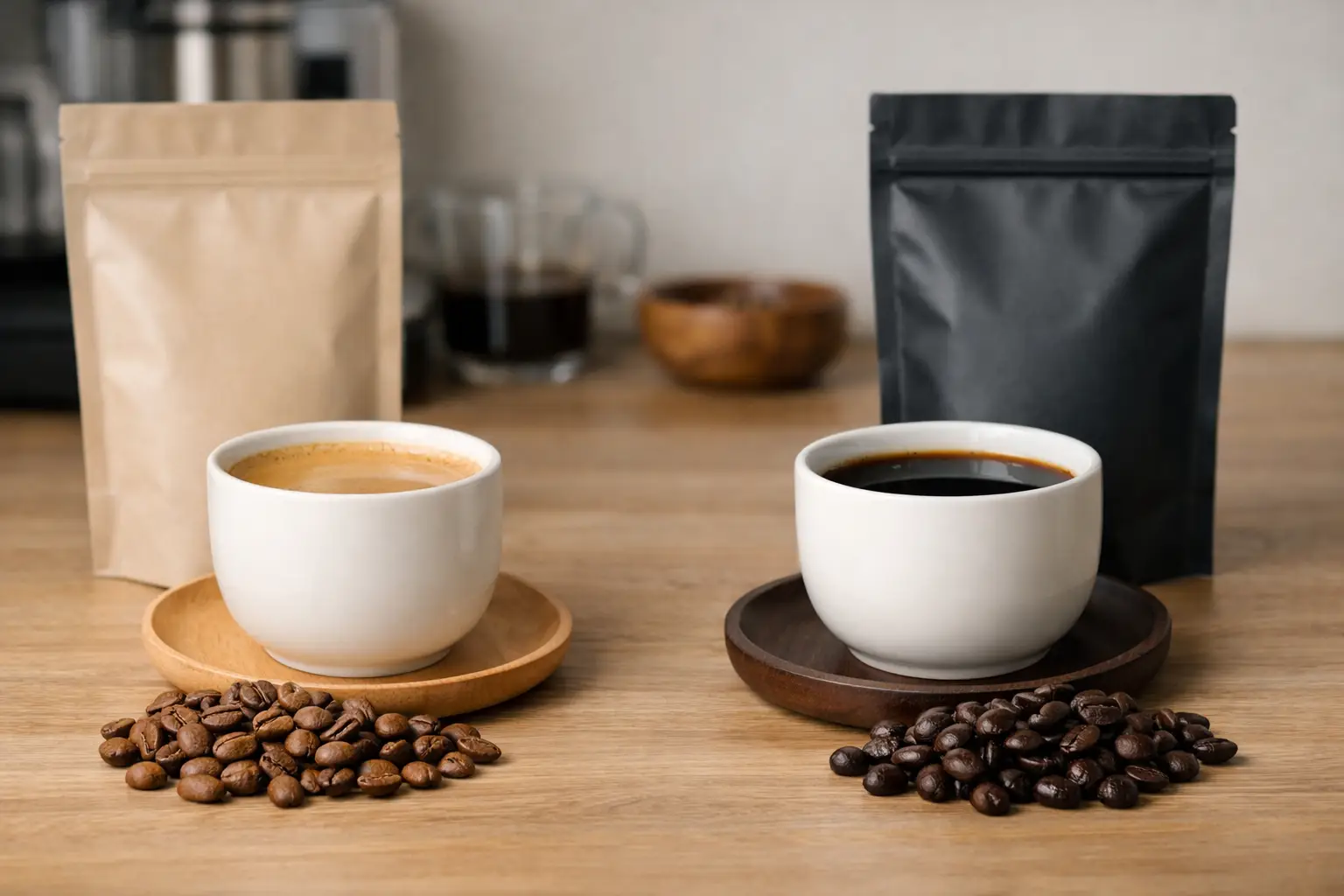
You can taste the debate in one sip. A light-roasted Ethiopian might give you citrus, jasmine, and tea-like clarity, while a dark-roasted blend leans toward chocolate, smoke, and a heavier body. When people ask about light roast vs dark roast, they are usually not just asking which one is stronger. They are asking which one will suit their palate, brewing method, and even their customers.
That is where the answer gets more useful than the usual roast chart. Roast level changes what you taste in the cup, how forgiving the coffee is to brew, and how well it fits different settings, from a home V60 setup to a busy cafe espresso bar.
Light roast vs dark roast: the real difference
The simplest way to think about roast level is this: the longer coffee is roasted, the more the roast itself shapes the flavor. Light roasts preserve more of the bean’s origin character. Dark roasts push further into roast-driven flavors.
With light roast, you are more likely to notice fruit, florals, acidity, and distinct origin notes. A washed Kenya might taste berry-forward and bright. A high-grown Colombian could show caramel sweetness with crisp citrus. These coffees often feel more transparent, which is why specialty coffee drinkers and roasters use light roast to highlight what makes a bean unique.
With dark roast, the profile shifts toward bittersweet chocolate, toasted nuts, spice, and in some cases smokier notes. Body usually feels fuller, acidity tends to seem lower, and the cup can come across as bolder and more familiar. That does not automatically make it better for every drinker, but it does make it very useful for certain preferences and menu applications.
Neither roast is inherently higher quality. Poor green coffee can be roasted dark to mask defects, but excellent coffees can also be roasted darker with purpose. The key question is whether the roast level suits the bean and your intended cup profile.
Flavor, body, and acidity in the cup
If flavor is your top priority, light roast and dark roast offer very different experiences.
Light roasts tend to have higher perceived acidity, but acidity in coffee is not the same as sourness. At its best, it adds structure and liveliness, like the brightness in a ripe orange or red apple. Combined with clearer origin character, this gives light roast a layered, more expressive cup. The trade-off is that it can be less forgiving. If your grind, water temperature, or extraction is off, light roast can taste underdeveloped, thin, or sharp.
Dark roasts generally deliver lower perceived acidity and a more rounded, bittersweet profile. The roast brings caramelization and deeper cooked-sugar notes, often with cocoa, roasted nut, and charred sugar character. In milk drinks, these flavors can cut through more easily than a delicate light roast. The trade-off is reduced clarity. You may lose some of the specific fruit or floral notes that made the coffee distinctive in the first place.
Medium roasts sit between these two ends, which is why they remain popular for both home brewing and commercial service. But if you are comparing the extremes, the decision usually comes down to whether you want origin expression or roast intensity.
Which roast has more caffeine?
This is one of the most common points of confusion.
By scoop, light roast can contain slightly more caffeine because the beans are denser. By weight, the difference is very small. In practical terms, brew recipe, dose, and extraction matter far more than roast level. If someone says dark roast is stronger, they are usually talking about flavor, not caffeine.
That distinction matters in retail and cafe settings. Customers often associate dark roast with a stronger effect because it tastes heavier and more intense. If you are guiding a purchase, it helps to separate strength of flavor from caffeine content.
Brewing matters more than people think
The best roast on paper can disappoint in the wrong brew method.
Light roasts generally do well when you want clarity and nuance. Pour-over, batch brew, and some filter-style immersion methods are excellent fits because they can showcase brightness and layered aromatics. These coffees often need a finer grind, hotter water, and careful extraction to bring out sweetness and balance.
Dark roasts are usually easier to extract and can work well in espresso, French press, moka pot, and milk-based drinks. They are often more forgiving in high-volume service because they produce a familiar, consistent cup even when conditions are not perfect. That reliability matters for businesses where speed and repeatability are just as important as nuance.
For espresso, there is no universal winner. A modern light-roast espresso can be vibrant and complex, but it demands dial-in precision and may not please every customer. A darker espresso profile usually offers more body, lower acidity, and stronger contrast in milk beverages, which can make it easier to serve to a broad audience.
Light roast vs dark roast for home brewers
At home, your choice should reflect both your taste and your setup.
If you enjoy black coffee and like tasting the differences between origins, light roast is often more rewarding. You will notice more variation from bean to bean, and that can make brewing more interesting. But light roast asks more from your grinder, technique, and patience. If your equipment is entry-level or your brew routine is inconsistent, you may struggle to get the sweetness and balance you are looking for.
If you prefer a richer, lower-acid cup or regularly add milk, dark roast may give you better results with less effort. It is often more forgiving across common home methods, and the flavor profile is easier to recognize from one brew to the next. That consistency is part of the appeal.
A practical approach is to match roast level to your usual drink. Black filter coffee drinkers often appreciate light to medium roasts. Milk-based coffee drinkers often lean medium to dark. There are exceptions, but that starting point works well.
Choosing roast level for cafes and F&B service
For business buyers, the question is not only what tastes best. It is what performs best across service hours, staff skill levels, and customer expectations.
Light roasts can elevate a menu when you want to show coffee range and specialty credibility. They work especially well for guest beans, rotating hand-brew offerings, and customers who actively seek origin-driven coffee. They can also support premium pricing when the quality and story are clear.
Dark roasts can be a smart operational choice for espresso-heavy menus, breakfast service, and locations where customers prefer a classic coffee profile. In milk drinks, they tend to remain recognizable and comforting. For many cafes, that translates into fewer complaints, faster dial-ins, and steadier repeat orders.
There is also a margin and waste consideration. Light roasts can be less forgiving during training and service shifts, which may increase dial-in loss or inconsistency if the team is inexperienced. Darker profiles often reduce that risk. For multi-location operations or broad-customer menus, consistency can matter more than showcasing every origin note.
That is why many smart programs do not frame roast level as a quality hierarchy. They use it as a menu tool. One roast serves accessibility and milk drinks. Another serves black-coffee enthusiasts and seasonal interest. Both can have a place.
How to tell which roast is right for you
Start with the cup you actually want to drink, not the roast level you think you are supposed to like.
If you want brightness, complexity, and distinct origin character, choose light roast. If you want body, low-acid comfort, and a more traditional coffee taste, choose dark roast. If you want flexibility across black coffee and milk drinks, medium roast often lands in the sweet spot.
It also helps to pay attention to the roaster’s intent. A well-developed light roast should still be sweet and balanced, not grassy or sour. A well-done dark roast should be rich and clean, not ashy or harsh. Roast level alone does not tell the whole story. Green coffee quality, roast skill, freshness, and brewing all shape the result.
For buyers comparing options across different roasters, this is where curation matters. A dependable supplier should help narrow the choice based on flavor preference, brew method, and service needs rather than treating every dark roast as interchangeable or every light roast as automatically premium.
Coffee gets more enjoyable when the choice feels practical instead of ideological. If a floral light roast makes your morning better, that is the right coffee. If a deep, chocolatey dark roast holds up beautifully in your flat white or your cafe’s latte menu, that is the right coffee too. The best roast is the one that fits your cup, your setup, and the people you are serving today.