

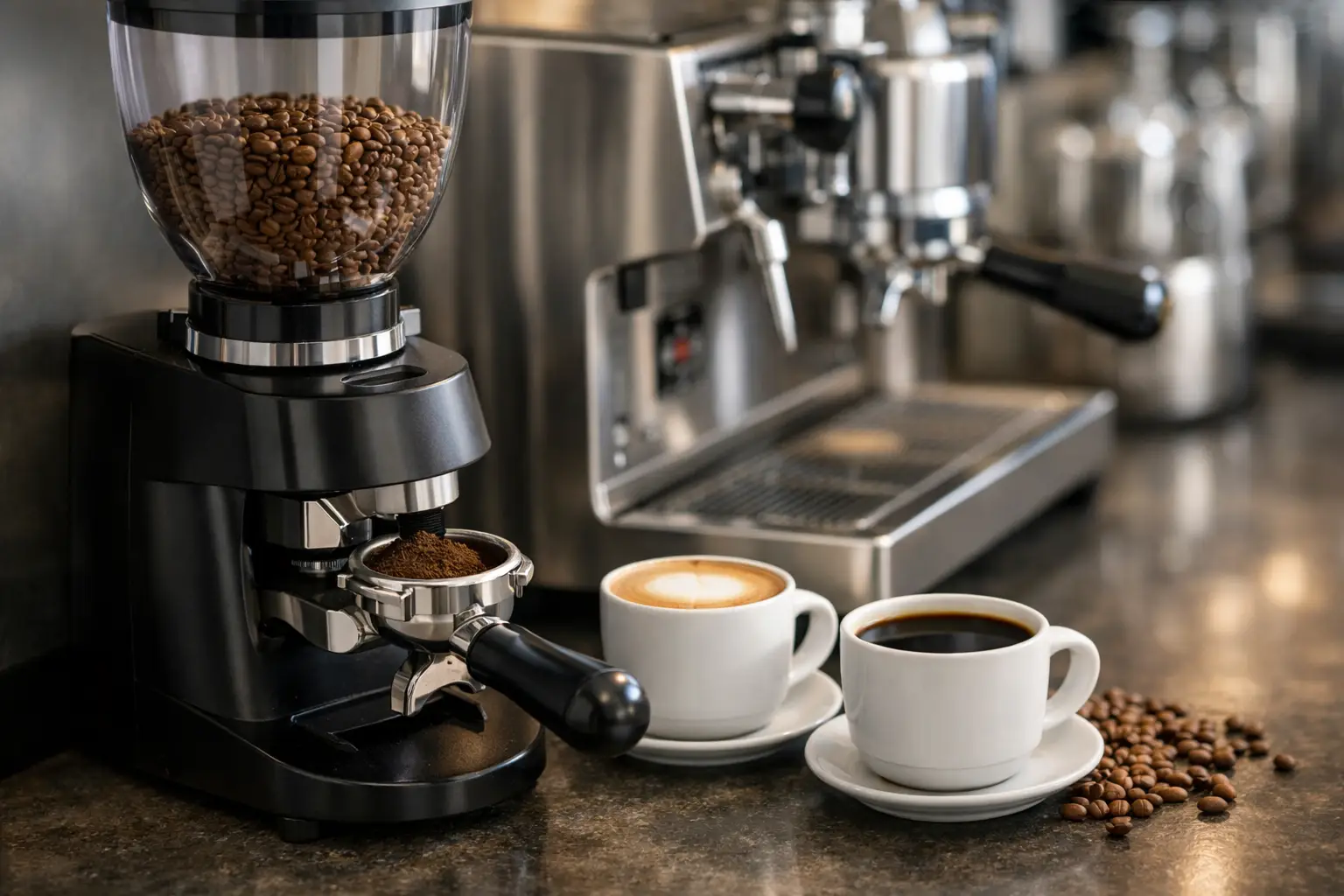
A busy brunch service can expose the limits of a grinder in minutes. The coffee grinder for restaurant operations is not simply a piece of bar equipment – it affects ticket times, drink consistency, waste, staff confidence, and the flavor guests remember. A grinder that performs well for a few home cappuccinos may struggle when the bar receives ten espresso orders at once.
For restaurant owners and beverage managers, the best choice starts with the real service pattern. Consider how many coffee drinks you serve during peak periods, which brew methods are on the menu, who will operate the equipment, and how much room is available behind the counter. The right grinder should support the pace of your operation without making quality harder to maintain.
Start With Your Restaurant’s Coffee Volume
Daily drink volume matters, but peak volume matters more. A restaurant serving 80 coffee drinks across a day may have a calm workflow if orders are spread across breakfast and lunch. Another may serve 80 drinks in a sharp 90-minute rush. Those businesses need very different grinding capacity.
For a small restaurant where coffee is a supporting part of the menu, a commercial espresso grinder with dependable burrs and simple dose adjustment may be sufficient. If espresso is central to the beverage program, look for a higher-output model designed to manage repeated shots without overheating or slowing down. Heat can change grind behavior during service, forcing staff to adjust settings and creating inconsistency from one drink to the next.
Do not buy only for average demand. Buy for the busiest realistic period, with enough headroom for a large table order, a weekend rush, or a short-staffed shift. A machine that is working at its limit every day is likely to create delays and require more attention over time.
Match the Grinder to the Drinks You Sell
Espresso has the narrowest margin for error. It needs a very consistent fine grind so baristas can control extraction, body, sweetness, and shot time. For espresso-focused service, flat or conical burr grinders are the standard choice. Both can produce excellent results, but the design, burr set, motor, and overall build quality matter more than choosing one burr shape by name alone.
Flat burr grinders are often favored in busy espresso programs for their uniformity and workflow-oriented design. Conical burr grinders can offer lower retention and a forgiving grind profile, depending on the model and coffee. The practical question is whether the grinder helps your team produce balanced shots repeatedly with your chosen beans.
If your restaurant offers filter coffee, batch brew, French press, or pour-over service, consider whether you need a separate grinder. Switching an espresso grinder back and forth between fine and coarse settings during service creates unnecessary friction. It can also waste coffee and make dial-in difficult. A dedicated brew grinder is often the cleaner decision when filter coffee is an important menu item.
A multi-purpose grinder can make sense in a lower-volume operation with a limited coffee menu. The trade-off is speed and consistency. It asks staff to change settings carefully, purge retained grounds, and return to the correct espresso setting before the next order.
Why Burr Quality Matters More Than a Large Hopper
A large hopper looks practical, but it is not the first feature to prioritize. Burr quality and alignment have a more direct effect on particle consistency, extraction, and the taste in the cup. Poorly matched particle sizes can create a shot that is sour, bitter, thin, or difficult to repeat.
Look for commercial-grade burrs that are designed for the workload you expect. Larger burrs can grind faster and may handle higher volume more comfortably, though they usually come with a higher upfront price. That investment can be worthwhile when coffee revenue is meaningful and service speed is non-negotiable.
Hopper size should follow bean turnover. Keeping a hopper filled for a busy morning is convenient, but coffee tastes best when it is protected from heat, light, and excessive air exposure. If your volume is moderate, refill a smaller hopper as needed rather than leaving beans sitting for long periods. This is especially relevant when using fresh specialty coffee with delicate sweetness or fruit-forward notes.
Dosing Options: Timed, Manual, or Grind-by-Weight
The dosing system shapes how easily staff can work consistently. Manual dosing gives an experienced barista direct control, but it relies heavily on attention and routine. It may work well for a small bar where one trained person prepares each drink.
Timed dosing is a practical choice for many restaurants. Once the grinder is dialed in, staff can press a programmed button for a single or double dose. The result is faster training, more consistent portions, and less guesswork during a rush. Timed dosing still needs regular checking because changes in bean freshness, humidity, and grind setting can alter the dose delivered.
Grind-by-weight systems can improve dose accuracy by stopping at a target weight rather than a timed estimate. They are particularly useful for quality-driven espresso programs and teams that want tighter control over coffee cost. However, they cost more and do not replace good barista habits. Staff still need to check extraction, keep the chute clean, and adjust the grind when the coffee changes.
For most restaurant teams, a reliable programmable grinder is the sensible middle ground. It supports speed without adding unnecessary complexity. If specialty espresso is a major point of differentiation, grind-by-weight can be a valuable upgrade.
Plan for Workflow, Not Just Counter Space
Before choosing a coffee grinder for restaurant use, map the bar during an actual service period. Where will the barista stand? Is there room to weigh doses, tamp, knock out pucks, and steam milk without crossing paths with other staff? Can the hopper be filled easily under shelves or cabinets?
A grinder should sit close enough to the espresso machine for an efficient movement pattern, but it also needs space for cleaning and maintenance. Check the machine’s height with the hopper installed, especially in tight counters or service stations. A short hopper or alternative hopper design may be more useful than a larger model that barely fits.
Noise is another operational detail. Grinding is naturally loud, but some models are quieter than others. In an open kitchen, hotel breakfast room, or dining space where the bar is close to guests, sound can influence the overall experience. It may not outweigh speed and grind quality, but it is worth considering before purchase.
Budget for the Full Coffee Setup
The purchase price is only part of the cost. A commercial grinder needs regular cleaning, burr inspection, occasional replacement parts, and staff training. Choosing the least expensive option can become costly if it causes inconsistent drinks, frequent downtime, or high coffee waste.
Set the budget alongside your espresso machine, water filtration, coffee supply, and expected maintenance. A capable grinder is not an accessory to the machine. In espresso service, it is one of the main tools determining whether good beans reach the cup as intended.
It also helps to think in terms of revenue protection. If guests receive weak or poorly extracted coffee after a meal, the restaurant loses an opportunity to create a strong final impression. A consistent grinder helps protect the quality of every espresso, latte, long black, and iced coffee on the menu.
Keep It Performing After Installation
Even a well-chosen grinder needs a routine. Clean loose grounds from the chute and doser area daily, wipe the hopper regularly, and use grinder cleaning products according to the manufacturer’s guidance. Old grounds can add stale flavors and interfere with dosing.
Train the team to recognize the signs that a grinder needs attention: shots running too fast or too slow, changes in dose output, unusual noise, clumping, or coffee collecting in the chute. Dialing in should be part of opening procedures, not an emergency response after guests have already been served.
When selecting equipment, ask about burr availability, local service support, warranty coverage, and practical spare parts. For operators in Malaysia and Singapore, access to responsive equipment guidance and dependable supply can matter as much as the specification sheet. Auresso’s broader coffee and equipment range can also help restaurants align the grinder with beans, beverage ingredients, and the menu they plan to build.
The best grinder is the one your team can use confidently at the pace your guests expect. Choose for the busiest hour, maintain it with care, and let the quality in the cup make the decision feel worthwhile.