

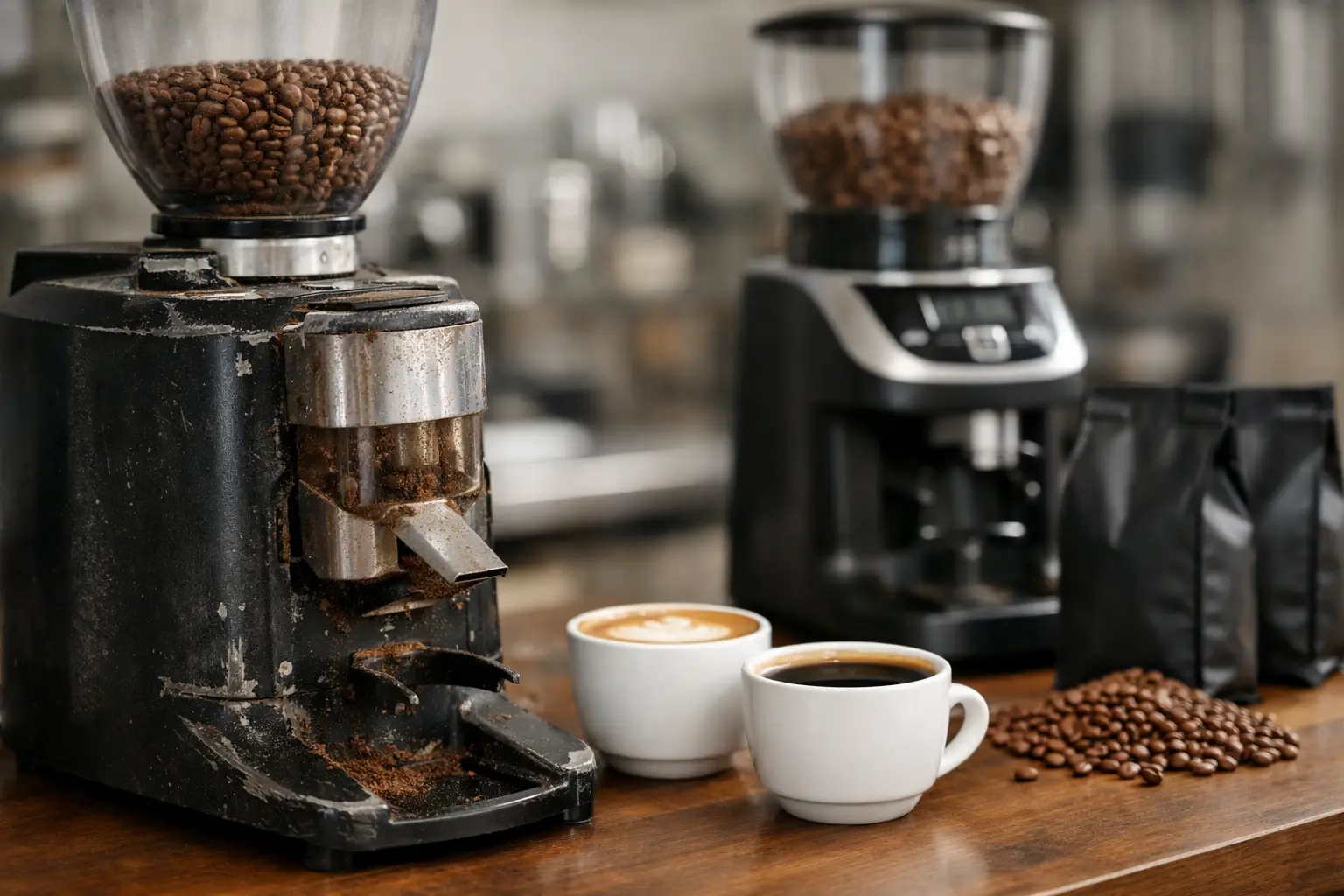
The grinder usually tells you first. Not with a dramatic breakdown, but through slower dialing in, drifting shot times, more coffee waste, and baristas quietly compensating all shift long. If you are wondering when to replace cafe grinder equipment, the real answer is rarely based on age alone. It comes down to grind consistency, workflow, repair frequency, and whether the machine still supports the coffee program you want to run.
For a busy cafe, the grinder is not just another piece of equipment on the bar. It directly affects extraction, service speed, and customer consistency. A machine that still turns on every morning can still be costing you money if it produces uneven particles, overheats during rushes, or needs constant adjustment to stay in range.
When to replace cafe grinder equipment
The clearest signal is when your grinder stops supporting consistent coffee, even after routine maintenance and burr replacement. Many cafe owners delay replacement because the grinder is technically still functional. That is understandable. Commercial grinders are a serious investment, and no operator wants to replace equipment early.
But there is a difference between a grinder that works and a grinder that works well enough for a commercial setting. If espresso shots are suddenly harder to control, if your recipe swings without any change in beans or weather, or if your team spends too much time fixing grind issues, the grinder may be past the point where maintenance alone makes financial sense.
Age matters, but only alongside workload. A grinder used lightly in a small restaurant may last longer than one used hard in a high-volume specialty cafe. What matters more is the number of kilos processed, how often the grinder has been serviced, and whether key components still perform within spec.
The signs your cafe grinder is near the end
One of the biggest signs is declining grind consistency. This often shows up as confusing espresso behavior. You adjust finer, then the shot chokes. You go slightly coarser, then it runs fast. The grinder seems touchy, and the sweet spot gets narrower. That can point to worn burr carriers, motor fatigue, alignment issues, or internal wear that a simple burr swap will not fully solve.
Another sign is rising retention and clumping. Fresh coffee grounds should dose predictably and distribute with minimal fuss, especially on a well-maintained commercial grinder. If your team starts seeing more static, heavier clumps, or inconsistent dosing throughout the day, there may be wear in the chamber, chute, or burr set that affects performance. In some cases, deep cleaning helps. In others, the core design or condition is simply no longer meeting the demands of your service.
Heat is another issue that gets overlooked. Grinders working through back-to-back orders can warm up, and excessive heat changes how coffee behaves. If the grinder struggles during peak periods and your shots become less stable as the morning goes on, the machine may be undersized for your current volume or losing efficiency with age.
Noise also matters more than many operators think. A grinder that becomes noticeably louder, more strained, or rough-sounding may be signaling bearing wear or motor problems. That does not always mean immediate replacement, but it should move the grinder from routine monitoring into active evaluation.
Repairs versus replacement
This is where the decision usually gets practical. A burr change is normal maintenance. Replacing a switch, chute, or minor electrical part can also be reasonable. But when repairs become frequent, expensive, or unpredictable, replacement often becomes the better business move.
A good rule is to look at total downtime and labor, not just the repair invoice. If your grinder needs technician visits every few months, causes service disruption, or forces your staff to spend extra time dialing in and purging coffee, the real cost is higher than the parts bill. A cheaper repair can still be the more expensive choice if it keeps an unreliable machine in the workflow.
Parts availability also matters. Some older grinders become harder to support over time, especially if the manufacturer has updated the line or phased out key components. If sourcing parts takes too long, you are not just maintaining old equipment. You are adding operational risk.
Burr life is not the same as grinder life
Cafe owners sometimes assume a grinder is fine as long as they keep replacing burrs. Burr replacement is essential, but it is only one part of grinder health. New burrs improve cutting performance, yet they cannot fix alignment issues, worn motors, damaged threads, unstable dosing systems, or body wear from years of heavy use.
That distinction matters because a grinder with fresh burrs can still produce poor results. If you have recently replaced burrs and the grinder still struggles to hold a consistent recipe, that is a stronger sign the issue runs deeper.
The opposite is also true. A grinder that seems tired may simply be overdue for burr replacement and a proper service. Before replacing the whole unit, make sure you are not diagnosing worn burrs as total grinder failure. The best decision comes from looking at the full machine, not one symptom.
Volume changes can force the decision
Sometimes the grinder is not worn out. It is just outgrown.
A cafe that started with moderate espresso sales may now be handling a much heavier morning rush, more milk drinks, or a broader menu with decaf and filter options. If the grinder was suitable two years ago but now creates a bottleneck, replacement may be justified even if the machine is still mechanically sound.
This is especially true when growth changes your service standards. Faster dosing, lower retention, better cooling, quieter operation, and more accurate timed or weight-based grinding can all improve workflow. The value of replacing a grinder is not only about avoiding failure. It can also be about making the bar more efficient and the cup more consistent.
What to check before you replace cafe grinder equipment
Before making the call, assess four things clearly. First, check cup quality. Are you seeing more channeling, shot variance, or flavor inconsistency than your coffee should produce? Second, check workflow. Is the grinder slowing down service, requiring constant purging, or creating unnecessary mess and waste?
Third, review service history. A single major repair may be acceptable. Repeated smaller issues often tell a more useful story. Fourth, compare current performance against your business today, not the cafe you used to run. A grinder that is acceptable for low volume may be a poor fit for a busier, more quality-focused program.
If possible, ask your lead barista or trainer for input. They often notice grinder decline earlier than owners do because they work through the small frustrations every day. Their feedback on dialing, clumping, speed, and consistency can help you separate habit from actual equipment wear.
Replace now or plan ahead?
Not every grinder needs emergency replacement. In many cases, the smarter move is to replace before failure rather than after it. Waiting for a full breakdown creates pressure, limits your buying options, and can force rushed decisions on budget or availability.
Planning ahead lets you choose based on fit. You can match grinder capacity to your volume, espresso style, and menu mix. You can also avoid overbuying. Not every cafe needs the highest-spec grinder on the market, and not every lower-priced model delivers the consistency needed for specialty coffee. The right choice sits where cup quality, speed, serviceability, and budget meet.
For operators in Malaysia and Singapore, this planning matters even more when lead times, technician access, and part support affect downtime. A dependable supply partner can help narrow the field based on actual service needs, not just brochure claims.
The business case behind the decision
A grinder replacement can feel expensive until you measure what poor grinding costs. Extra coffee purges, recipe drift, slower bar speed, more remakes, and inconsistent customer experience all cut into margin. Specialty coffee customers may not identify the grinder as the issue, but they will notice when their flat white tastes different from last week.
That is why the best replacement decisions are not based on panic. They are based on performance. If your grinder is making quality harder to deliver, staff harder to train, or service harder to scale, it has probably already told you what you need to know.
A good cafe grinder should help your team work faster, waste less, and serve coffee that tastes like your coffee is supposed to taste. Once it stops doing that consistently, replacement is no longer just an equipment expense. It is an operations decision, a quality decision, and often a smart one to make before the next busy morning proves the point again.