

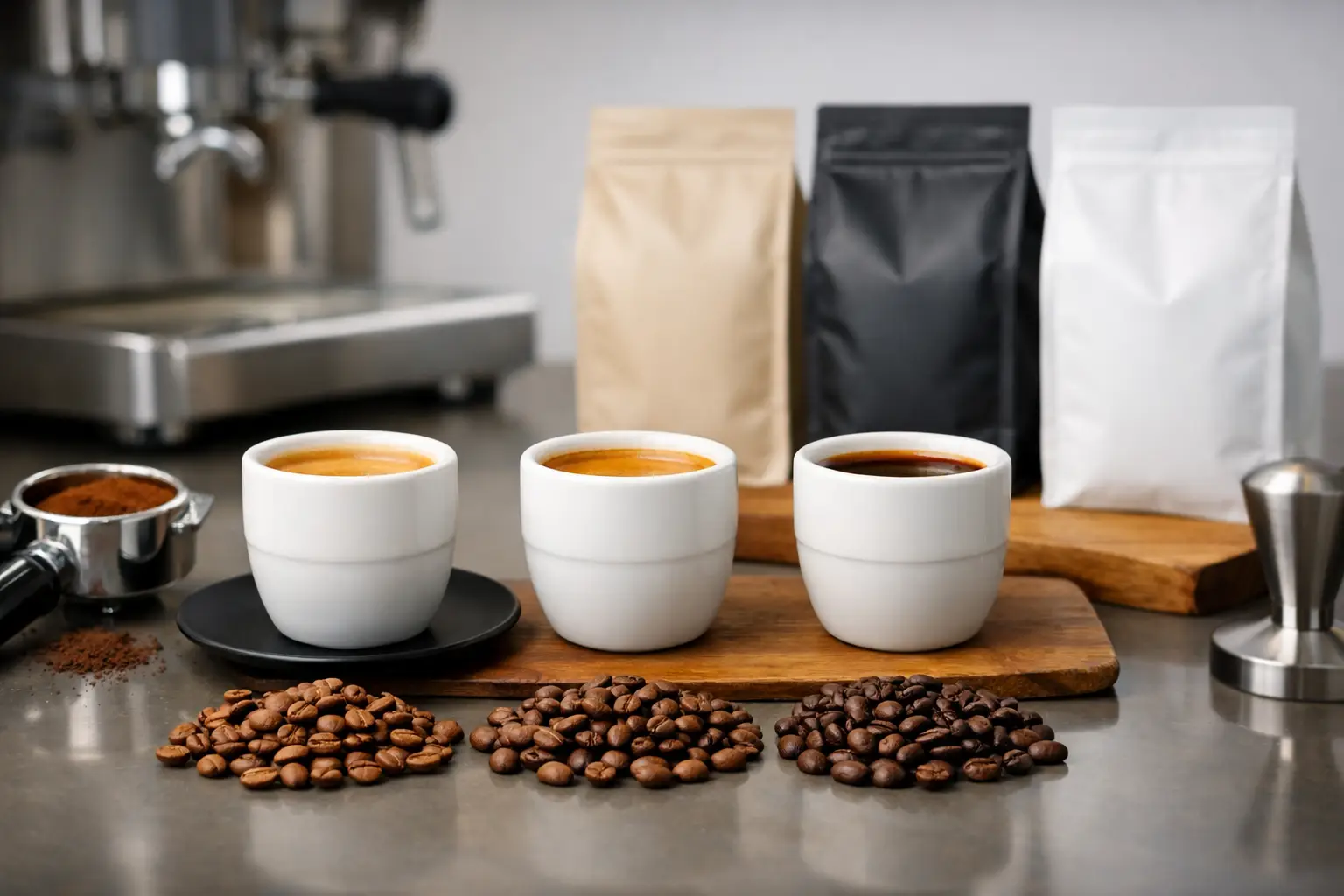
Pull two shots from different bags and you can get two completely different espressos, even with the same grinder, machine, and recipe. One tastes like berries and cocoa with a bright finish. The other lands heavier, darker, and more classic, with notes of caramel and bittersweet chocolate. That difference often starts with roast. This guide to espresso roast profiles is built to help you choose more confidently, whether you are stocking a home bar or buying for a busy café.
Espresso roast is not one fixed style. It is a range of roast development choices that shape solubility, texture, sweetness, acidity, and how forgiving a coffee feels during service. The old idea that espresso must be very dark no longer holds up in specialty coffee. Plenty of excellent espresso coffees are now roasted lighter or somewhere in the middle, depending on the origin, processing method, and the flavor goal.
What espresso roast profiles really mean
When people say espresso roast profile, they usually mean how far a coffee was roasted and how that roast level affects the cup under espresso extraction. In practice, a roast profile is more than a color. It includes the pace of the roast, the degree of development after first crack, and how the roaster balances sweetness, body, and origin character.
That matters because espresso is concentrated. Small changes in roast development become very obvious in the cup. A lighter espresso roast can show florals, citrus, and crisp fruit, but it may require tighter dialing in and a grinder that can deliver clarity. A darker espresso roast tends to be easier to extract, gives a fuller body, and performs more predictably in milk drinks, but it can mute origin detail if pushed too far.
For buyers, the most useful way to think about roast profiles is not light versus dark as a quality scale. It is more practical to ask what style of espresso you want to serve and how much flexibility your setup needs.
A practical guide to espresso roast profiles by roast level
Light roast espresso
Light roast espresso is usually chosen to highlight the bean itself. You will often taste brighter acidity, higher aromatic intensity, and more distinct origin notes. In the right coffee, that can mean jasmine, stone fruit, berries, or citrus layered with sugar-browning sweetness.
The trade-off is extraction. Light roasts are denser and less soluble, so they often need finer grinding, slightly hotter brew temperatures, or longer ratios to open up. If under-extracted, they can taste sharp, salty, or thin. For skilled home brewers and cafés that want a modern espresso program, light roast can be exciting. For high-volume service where consistency matters more than nuance, it may demand more attention than the menu allows.
Light roast espresso also behaves differently in milk. Some coffees cut through beautifully and create a fruit-and-cream profile. Others can taste sour when the milk softens sweetness and pushes acidity forward. It depends on the bean and the roast development, not just the label.
Medium roast espresso
Medium roast is the most versatile part of the espresso spectrum. It typically balances sweetness, body, and acidity in a way that works well both as straight espresso and with milk. Expect flavors like caramel, chocolate, nuts, ripe fruit, or soft citrus, depending on origin and blend design.
This is often the safest choice for buyers who want broad appeal. Home users get a coffee that is easier to dial in than very light roasts but still interesting in the cup. Café operators get flexibility across espresso, cappuccino, and latte service without giving up too much character.
A well-built medium roast can also age more gracefully over the first days after opening. That does not mean it is immune to staling, but it often gives a wider sweet spot for daily use. If you are buying one espresso to satisfy a mixed audience, medium roast is usually where the smartest decisions happen.
Medium-dark to dark roast espresso
Medium-dark and dark espresso roasts lean toward lower acidity, heavier body, and more roast-driven flavors. Think dark chocolate, molasses, toasted nuts, spice, and sometimes a smoky or bittersweet finish. These profiles are familiar to many customers and remain popular for milk-heavy drinks because they hold their presence under dairy or alternative milk.
They are also generally more forgiving in extraction. Solubility is higher, so getting a full shot is easier even on equipment that is not perfectly optimized. That is useful in commercial settings where speed and consistency are part of the business model.
Still, darker is not automatically better for espresso. Once roast character overwhelms the coffee, complexity drops and bitterness rises. A dark roast that tastes flat or ashy can make every drink on the menu feel one-dimensional. The best darker espresso profiles keep enough development for body and sweetness without burning away balance.
How roast profile changes what you taste
Roast affects espresso in four major ways: acidity, sweetness, body, and finish. Lighter roasts usually bring more acidity and clearer flavor separation. Medium roasts tend to show the best balance of sweetness and texture. Darker roasts push body and bitterness forward while reducing perceived acidity.
Crema is another area where expectations can mislead buyers. Darker coffees often produce abundant crema, but more crema does not always mean better espresso. Freshness, bean density, and extraction all matter. Chasing crema alone can lead you toward coffees that look impressive but taste less refined.
Roast also changes your margin for error. Lighter roasts can taste excellent when the shot is well dialed in, but small mistakes show up quickly. Darker roasts can hide minor prep issues, though they can turn harsh if over-extracted. Medium roasts tend to offer the broadest working range, which is why they remain a reliable choice for both home brewers and café teams.
How to choose the right espresso roast profile
Start with the drinks you actually serve. If most of your cups are milk-based, a medium or medium-dark roast is often the best commercial fit because it keeps sweetness and structure in the finished drink. If you serve espresso as a standalone offering and your customers enjoy distinctive flavor notes, lighter or medium roasts may be the better path.
Then consider your equipment and workflow. High-end grinders and stable espresso machines make it easier to get the best from lighter roasts. If your setup is simpler, or your staff needs a forgiving coffee during rush periods, medium and medium-dark profiles reduce friction.
Audience matters too. Some customers want classic chocolate-and-caramel espresso. Others are looking for fruit-forward shots that feel modern and expressive. There is no universal winner here. For many businesses, the strongest move is carrying one crowd-pleasing house espresso and one more adventurous option for seasonal interest.
If you are buying online, read roast descriptions carefully. Terms like espresso roast, omni roast, house blend, or milk-based friendly can point you in the right direction, but flavor notes tell the fuller story. A coffee described as citrus, floral, and tea-like will behave very differently from one labeled cocoa, almond, and brown sugar, even if both are sold for espresso.
Dialing in different espresso roast profiles
Roast level should influence how you approach dialing in. Lighter roasts often benefit from a finer grind, slightly higher water temperature, and in some cases a longer brew ratio to draw out sweetness. Medium roasts usually respond well to standard espresso recipes and need fewer corrections. Darker roasts may require a slightly coarser grind or shorter ratio to avoid bitterness and excessive roastiness.
Freshness matters, but so does rest time. Very fresh coffee can produce unstable shots because gases are still releasing rapidly after roasting. Many espresso coffees perform better after several days of rest. The exact window depends on the roast and packaging, but rushing a bag too early can make you misread the coffee.
For cafés, consistency starts before extraction. Train staff to evaluate not just shot time, but taste, texture, and finish. A shot that lands on target by time alone can still be underdeveloped in flavor. That is especially true when switching between roast profiles from different roasters.
When blends beat single origins
Single-origin espresso can be vivid and memorable, especially at light to medium roast levels. It gives you a focused expression of place, process, and season. That can be a strong selling point for specialty-minded customers.
But blends often make more sense for espresso service. They are built for balance, sweetness, and repeatability. A good blend can combine the body of one component with the brightness or aroma of another, creating a shot that is stable across different drinks and easier to work with day after day.
For many buyers, this is the practical split: choose blends for your core menu and use single origins when you want to feature something limited, distinctive, or conversation-worthy.
The best roast profile is the one that fits your customers, your equipment, and your service style without forcing compromises you cannot sustain. If you want a dependable all-rounder, start in the medium range. If your goal is a more modern espresso experience, go lighter with the expectation that dialing in will matter more. And if your menu leans heavily on milk drinks and speed, a well-developed medium-dark profile can be exactly the right tool. Good espresso starts with good coffee, but the smart choice is the one that keeps tasting right cup after cup.