

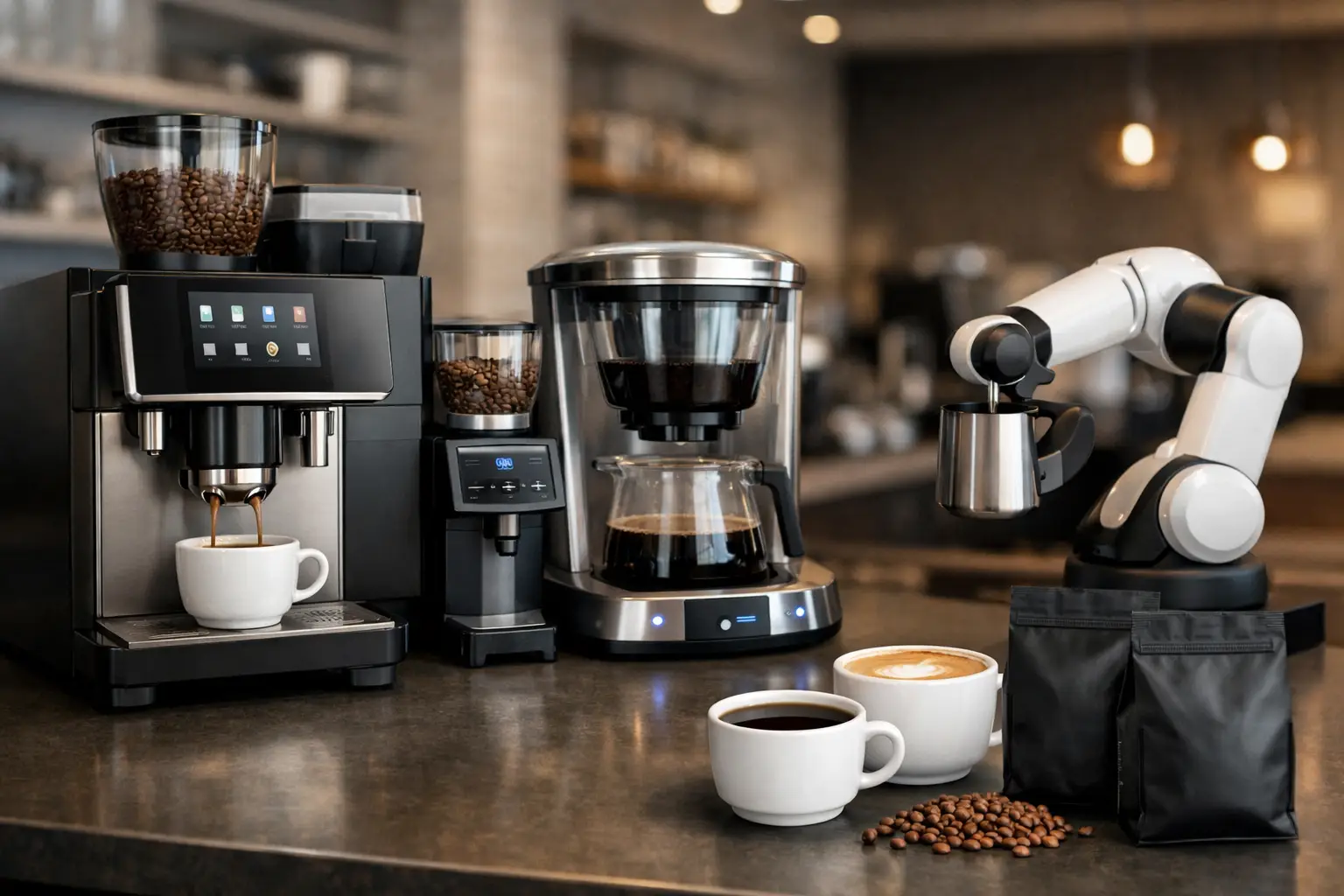
A grinder that corrects dose drift on its own. An espresso machine that tracks shot quality across shifts. A brewer that saves recipes in seconds instead of relying on handwritten notes by the bar. The future of cafe equipment is not some distant concept anymore – it is already showing up in the daily decisions cafés make about speed, consistency, staffing, and margins.
For café owners and beverage operators, that matters because equipment is no longer just a back-bar utility. It shapes workflow, drink quality, training time, maintenance costs, and even whether a menu can grow without creating service bottlenecks. For home brewers, the same trend is bringing more commercial-level precision into smaller, more approachable machines. The common thread is simple: better equipment now has to do more than make good coffee.
The future of cafe equipment is about control
A few years ago, many buying decisions were still centered on output and brand reputation alone. Those factors still matter, but control is becoming the bigger story. Cafés want more visibility over grind consistency, brew temperature, pressure profiling, milk texture, holding time, and energy use. They also want equipment that reduces the number of variables a busy team has to manage during rush periods.
That does not mean every café needs highly complex machines. In fact, one of the clearest shifts is toward equipment that makes advanced control easier to use, not harder. A machine with programmable recipes is valuable because it helps a new barista produce a more consistent drink. A grinder with low retention matters because it cuts waste and supports cleaner flavor separation between coffees. A smart batch brewer matters because it helps maintain quality even when the café is juggling multiple demand peaks across the day.
The trade-off is that more control often comes with a higher upfront cost. For a high-volume store, that investment can pay back quickly through labor efficiency and reduced waste. For a smaller operator, the smarter decision may be equipment with a narrower feature set but stronger reliability.
Automation will grow, but not everywhere in the same way
When people talk about automation, they often imagine fully robotic coffee bars. That gets attention, but it is not the part of the market most cafés should focus on. The more practical version of automation is partial automation – tools that remove repetitive errors without removing the barista.
Think of automatic milk steaming, gravimetric espresso, programmable grinder dosing, and tea brewers with repeatable temperature settings. These features do not replace craft. They protect it during busy service. They also help cafés manage one of the biggest real-world pressures in foodservice: training staff quickly without letting drink standards slip.
This is especially relevant for operators running lean teams. If one experienced barista leaves, equipment that stores recipes and reduces guesswork can soften the impact. That does not make talent less important. It means the café is less exposed to inconsistency when turnover happens.
Still, there is a limit. Over-automating can flatten the customer experience if every touchpoint feels mechanical. Specialty cafés built on hospitality and hand-crafted drinks may choose selective automation instead of full standardization. It depends on the concept, the menu, and the customer expectation.
Energy efficiency is moving from bonus to requirement
Utility costs are no longer a side note in equipment planning. Espresso machines, grinders, undercounter refrigeration, blenders, ice makers, and water systems all affect operating cost over time. As power prices stay unpredictable in many markets, energy efficiency is becoming a practical buying filter.
This will push manufacturers toward better standby modes, faster heat-up times, improved boiler insulation, and more efficient motor systems. It will also make total cost of ownership a more useful metric than sticker price alone. A cheaper machine can become expensive if it runs hot, wastes water, or needs frequent service.
For cafés planning new builds or equipment upgrades, this changes the conversation. Instead of asking only, “How much does this machine cost?” the better question is, “What will this machine cost me to run and maintain over three to five years?” That mindset tends to lead to stronger purchasing decisions.
Equipment ecosystems will matter more than individual machines
One machine rarely works alone. Espresso quality depends on the grinder. Water quality affects both flavor and service intervals. Milk systems shape workflow. Blender performance affects cold beverage speed and texture. The future of cafe equipment will be shaped by how well these pieces work together.
This is why more buyers are thinking in systems rather than one-off purchases. A café opening a new location may benefit more from a balanced setup than from overspending on a flagship espresso machine while underinvesting in grinding, filtration, or batch brewing. Consistency usually comes from the full chain, not from one premium centerpiece.
That systems view is also useful for mixed beverage menus. Many cafés now sell coffee, matcha, chai, chocolate, and tea-based drinks at meaningful volume. Equipment choices need to support that reality. If a store has strong demand for iced matcha or blended drinks, then blender durability, rinsing workflow, and powder integration matter just as much as espresso specs. Good buying decisions reflect the menu customers actually order, not the menu the owner wishes was more popular.
Data will influence service and purchasing
Connected equipment is becoming more common, especially in higher-volume environments. Machines can now track shot counts, cleaning cycles, service alerts, temperature stability, and beverage output. On paper, that sounds technical. In practice, it helps answer very basic questions.
Why is one location using more coffee per drink than another? Why is a machine failing during morning service instead of after hours? Why are drinks taking longer on weekends? Data can point to issues that are otherwise blamed on staff, beans, or customer traffic when the real cause is calibration drift or overdue maintenance.
Not every café needs a fully connected setup. But the wider trend is clear: equipment is becoming easier to monitor, and that makes preventive maintenance and purchasing decisions more informed. Over time, buyers will expect better diagnostics and clearer service visibility from manufacturers and suppliers.
Smaller footprints, broader menus
Retail space is expensive, and café menus are broader than they used to be. That combination is driving demand for compact equipment that can handle more than one task well. Owners want to fit quality beverage production into tighter counters, kiosks, and multi-use service spaces.
This affects home users too. More people want café-level drinks without dedicating half the kitchen to gear. So manufacturers are under pressure to shrink size without sacrificing thermal stability, grind quality, or usability.
There is no magic solution here. Smaller equipment can involve compromises in output, recovery time, or service access. But the direction is obvious: the market increasingly rewards machines that deliver professional results in spaces where every inch matters.
Buying habits are changing with the equipment itself
As equipment becomes more specialized, buyers need more than a basic product listing. They need clear guidance on fit, use case, support, and value. That is especially true for businesses comparing machines across different price tiers or trying to balance coffee quality with budget discipline.
This is where dependable supply partners become more important. Cafés and home brewers alike are looking for suppliers that can help connect beans, ingredients, brewing needs, and equipment choices in one place. That kind of buying convenience is not just nice to have. It saves time, reduces mismatches, and makes it easier to scale a beverage program with confidence.
For operators in Malaysia and Singapore, where specialty coffee standards are rising and menu innovation is moving quickly, access to curated equipment and beverage supply matters even more. The right machine is only part of the equation. Ongoing access to coffee, tea, matcha, chocolate, and reliable support keeps the whole setup working as intended.
What should buyers watch next?
The next few years will likely bring more recipe memory, better temperature management, stronger energy performance, and more user-friendly interfaces across both commercial and prosumer equipment. Milk automation will keep improving. So will grinder design, especially around retention, workflow, and consistency. Water management may also get more attention as cafés realize how much it affects taste and machine lifespan.
But the biggest shift is not one feature. It is the expectation that equipment should help the business run better. Good machines will still need to produce excellent coffee. They will also need to reduce waste, support training, fit the menu, and hold up under pressure.
That is the real future of cafe equipment. Not more technology for its own sake, but better tools for the way cafés and beverage businesses actually work. The smartest investment is usually the one that makes tomorrow’s service easier, not just today’s setup look more impressive.