

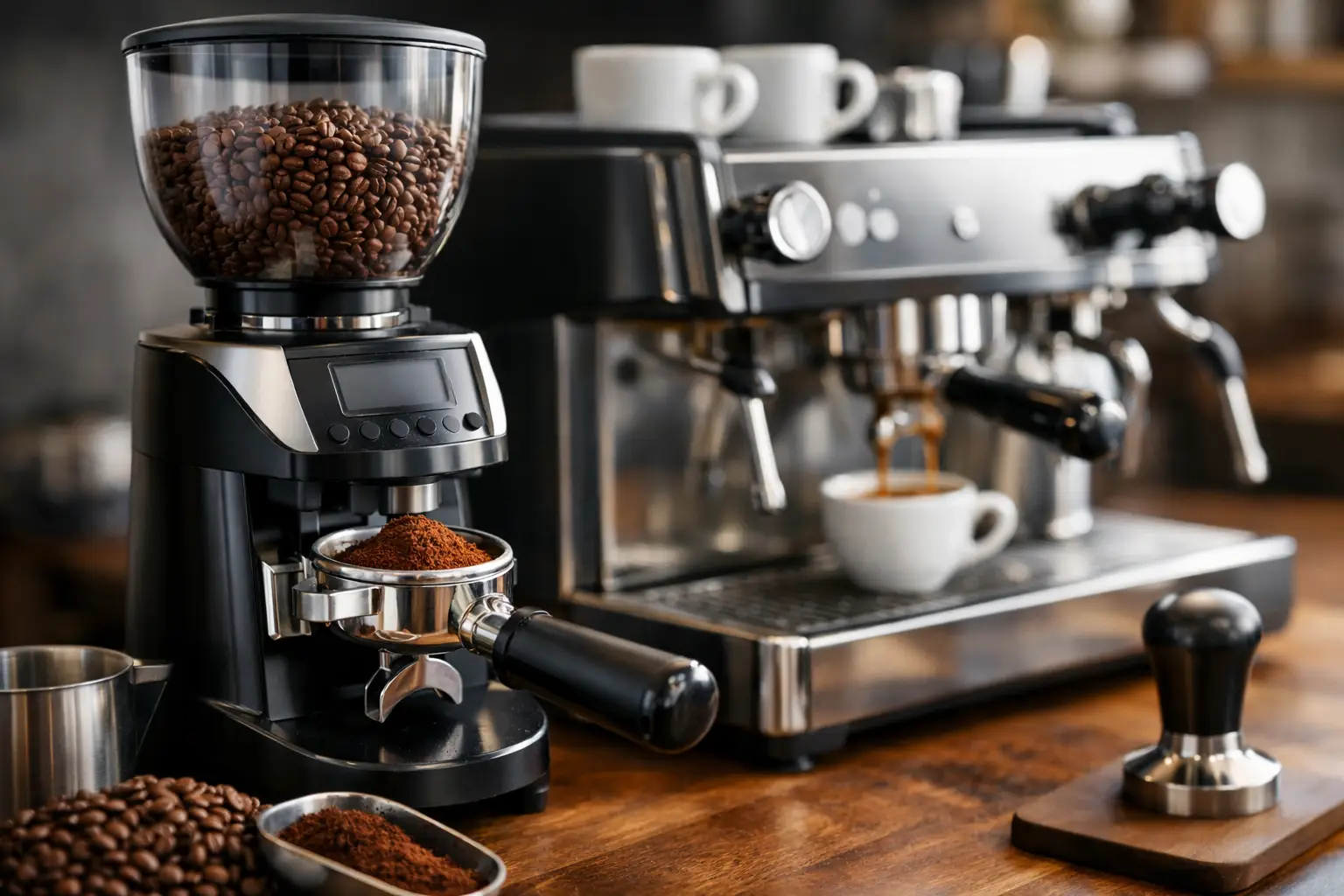
The wrong grinder shows up fast during a morning rush. Shots run slow, then fast. Baristas keep adjusting the dial. Espresso tastes sharp one hour and flat the next. If you are searching for the best coffee grinder for espresso bar service, you are not really buying a machine with burrs and a motor. You are buying consistency, speed, and fewer headaches behind the counter.
For most espresso bars, the grinder matters as much as the espresso machine, and in some setups it matters more. A strong machine cannot fix uneven particle size, clumping, heat buildup, or retention that throws off dose-to-dose consistency. The best choice depends on your drink volume, menu style, staffing, and tolerance for daily calibration. That is why there is no single perfect grinder for every bar, but there is a right type of grinder for the way you work.
What makes the best coffee grinder for espresso bar use?
Start with grind consistency. Espresso is unforgiving. Small shifts in particle size can push a shot from balanced to bitter or sour in seconds. A commercial espresso grinder should deliver a tight, repeatable grind distribution with minimal clumping so baristas can dial in quickly and hold recipe targets through service.
Then look at workflow. In a busy bar, grind quality alone is not enough. You need a grinder that keeps up with ticket volume, supports fast dosing, and lets staff make small grind changes without guessing. A grinder that performs beautifully in quiet testing can still become a bottleneck when ten milk drinks hit the rail at once.
Retention matters too. High retention means old grounds stay in the chamber and mix with fresh coffee. That hurts flavor clarity and makes dial-in more wasteful. In a high-volume espresso bar, some retention is manageable because coffee moves through the grinder quickly. In a lower-volume bar or one that rotates coffees often, low retention becomes much more important.
Durability is the other big piece. Espresso bars do not need hobby-grade equipment. They need grinders built for repeated use, easy cleaning, and parts support. Burr life, motor cooling, and serviceability all affect the real cost over time.
Flat burr or conical burr for an espresso bar?
This is where preferences and drink style come into play. Flat burr grinders are often chosen for clarity, definition, and a more structured flavor presentation. They are common in specialty bars focused on straight espresso, lighter roasts, and recipe precision. Many bar teams like the way flat burrs separate flavors and respond to fine adjustments.
Conical burr grinders tend to produce a different particle profile and often a rounder, heavier cup. Some bars prefer them for traditional espresso styles or milk-heavy menus where body and texture matter more than maximum flavor separation. They can also feel forgiving in certain workflows, though that depends on the grinder design more than burr shape alone.
There is no automatic winner here. If your espresso bar serves mostly cappuccinos and lattes with a medium or darker roast, a grinder known for body and speed may suit you better than one built around ultra-high clarity. If your menu highlights seasonal single origins and straight shots, flat burrs may give you more of the presentation you want.
The features that matter most in daily service
Micrometric grind adjustment should be near the top of your list. Espresso needs fine control, and stepped systems can be limiting unless the steps are extremely small. A good stepless or micrometric adjustment mechanism lets your team react quickly to humidity, bean age, and dose changes.
Dose consistency is just as important. Timed grinders can work very well in a busy bar if they are stable and easy to program. Grind-by-weight systems can improve precision, especially for shops that want tighter control and less waste, but they come at a higher price and may not be necessary for every operation.
Speed matters, but not in isolation. A very fast grinder sounds appealing until it overheats, clumps more, or makes fine tuning harder. What you want is sustainable speed – fast enough for your rushes, stable enough to keep shot quality in place.
Noise and heat are often overlooked. In open café spaces, grinder noise affects the customer experience and staff fatigue. Heat affects coffee performance, especially during long periods of continuous grinding. Better commercial grinders manage both more effectively.
Best coffee grinder for espresso bar setups by business type
A compact neighborhood café has different needs than a high-throughput brunch spot. If your bar serves moderate volume with one house espresso and occasional decaf, a dependable on-demand grinder with strong burr geometry and easy adjustment is usually the sweet spot. You want consistency, reasonable speed, and a footprint that fits your counter.
If you run a higher-volume operation, focus on motor strength, cooling, burr longevity, and dosing speed. During peak service, lag time at the grinder hurts the entire line. In this environment, a larger commercial grinder often justifies its price because it protects workflow and reduces staff friction.
For bars serving multiple espressos, single origins, or rotating guest coffees, retention and ease of cleaning move up the list. A grinder that switches coffees with less purge waste can save money and preserve quality. In these settings, some shops keep one high-volume house grinder and a separate low-retention grinder for featured coffees.
If your menu is heavily milk-based, prioritize reliability and body in the cup. Extremely nuanced burr sets are valuable, but only if your customers will notice that difference through milk and syrup. Many bars are better served by a grinder that is fast, stable, and easy for the whole team to manage.
Common buying mistakes
One of the biggest mistakes is buying too small to save money upfront. A grinder that struggles at your current volume will not suddenly become easier to live with as the business grows. You may save on the initial invoice and lose that value back in slower service, wasted coffee, and early replacement.
Another mistake is buying based only on burr size. Bigger burrs can mean more speed and potentially better performance, but grinder design is more than a spec sheet. Alignment, chamber design, dosing system, and overall build quality all affect results.
Many buyers also overlook staff usability. If only your head barista can dial in the grinder properly, that is a risk. The best setup is one your team can operate consistently, especially during shift changes and busy periods.
Finally, do not ignore after-sales support and parts availability. Commercial equipment should be chosen with maintenance in mind. Burr replacement, cleaning access, and service turnaround all matter once the grinder is working for real revenue.
How to choose with your budget in mind
If your budget is tight, put your money into grind quality and reliability before premium extras. You can live without a touchscreen. You cannot live with inconsistent espresso. Look for proven commercial grinders with solid burr sets, steady dosing, and straightforward controls.
In the mid-range, the best value usually comes from grinders that balance speed, consistency, and ease of use. This is often the strongest category for growing cafés because it covers real service demands without pushing into the highest pricing tiers.
At the premium end, you are paying for refinement – lower retention, better thermal stability, quieter operation, faster workflow, and more precise dosing systems. These upgrades can be worth it, especially for specialty-focused bars or businesses where espresso quality is central to the brand.
For many buyers, long-term value beats lowest price. A grinder that costs more but lasts longer, wastes less coffee, and keeps service moving can be the better business decision.
A practical shortlist before you buy
Before choosing, ask a few direct questions. How many espresso drinks do you serve at peak per hour? Are most drinks milk-based or espresso-forward? Will you run one espresso or several? How experienced is the average barista on shift? How quickly can you get burrs, cleaning tools, and service support when needed?
Those answers narrow the field faster than brand hype. If possible, test grinders with your actual coffee and recipes. The same grinder can feel very different depending on roast profile, dose, and service style. If you are sourcing equipment through a trusted supplier such as Auresso, this is where practical guidance matters most – not just what looks impressive online, but what fits your counter, menu, and daily pace.
The best grinder for your espresso bar is the one that helps your team serve great coffee consistently when the café is full, not just when the bar is quiet. Buy for the rush, buy for the staff you have, and buy for the quality you want to repeat every day.