

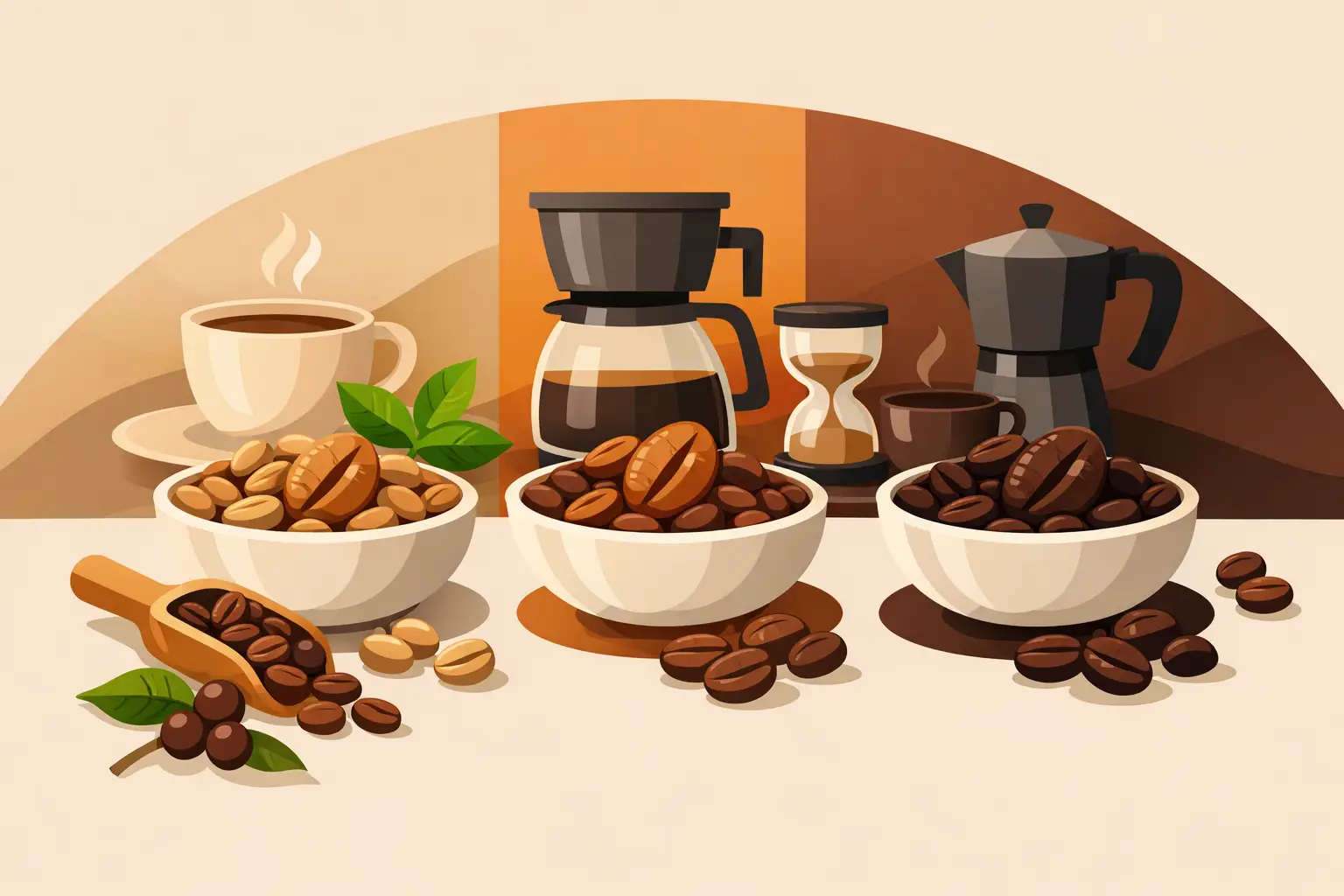
You can brew the same coffee two different ways, serve it to two different people, and get two completely different reactions. One says it is bright and lively. The other says it is too sharp and wants something deeper, sweeter, and heavier. That is exactly why knowing how to choose coffee roast level matters. Roast is not just a label on a bag – it shapes acidity, body, sweetness, bitterness, and how a coffee behaves in espresso, filter, or milk-based drinks.
For home brewers, the right roast makes your daily cup easier to enjoy. For cafés and beverage businesses, it affects menu balance, customer expectations, and consistency across drinks. Light, medium, and dark roasts each have a place, but the best choice depends on what you want in the cup and how you plan to serve it.
How to choose coffee roast level for your taste
A simple way to start is to think about what flavors you usually enjoy in coffee. If you like fruit, floral notes, tea-like texture, and more noticeable acidity, lighter roasts are often the best fit. They preserve more of the bean’s origin character, which is why specialty coffee drinkers often choose them for pour over and other filter methods.
If you prefer balance, medium roasts sit in the middle. They usually bring a mix of sweetness, body, and approachable acidity. You can still taste origin differences, but the roast adds a little more caramel, chocolate, or nutty character. For many people, this is the easiest place to start because it works across several brew methods without feeling too intense in any one direction.
Dark roasts lean toward boldness. You will usually get more roast-driven notes like cocoa, toasted nuts, smoke, and bittersweet chocolate, with lower perceived acidity and a heavier finish. Some drinkers love that profile, especially in milk drinks where the roast can still cut through.
This is where trade-offs matter. A lighter roast can taste vivid and layered, but it may seem sour if brewed poorly or if the drinker expects a classic diner-style cup. A darker roast can taste rich and comforting, but it may flatten origin nuances and turn bitter if pushed too far. There is no single best roast level, only the one that matches the experience you want.
Match roast level to brew method
Brew method changes how a roast tastes, so choosing based on brewing setup is often smarter than choosing by roast name alone.
Light roast for filter clarity
Light roasts generally perform well in pour over, batch brew, AeroPress, and other methods that highlight clarity and aroma. These brewing styles can bring out delicate flavors that would be harder to notice in milk drinks. If you enjoy tasting differences between Ethiopia, Colombia, or a local single origin, a light roast gives you more of that detail.
That said, light roasts are less forgiving. They often need tighter grind control, good water, and careful extraction. For a café program, they can be excellent on filter coffee menus but may require barista training to keep cups consistent.
Medium roast for versatility
Medium roasts are the all-rounders. They work well in drip coffee, pour over, French press, and espresso, which is why many cafés and home users rely on them. If you only want one coffee that can move between black coffee and milk-based drinks, medium is usually the safest choice.
This is also the roast range where many blends are designed to land. You get enough roast development for sweetness and body, but not so much that everything tastes the same.
Dark roast for stronger espresso and milk drinks
Dark roasts are often chosen for espresso, moka pot, and recipes where coffee needs to stay present under milk, syrup, or chocolate. In a latte or cappuccino, a darker profile can deliver a more familiar coffee taste to customers who want strength over nuance.
For businesses, this can be a practical decision. If most orders are milk-based and your customers expect a bold house blend, a darker roast may make more sense than a lighter, more delicate option. But if the roast is too dark, bitterness can dominate and make the drink feel harsh rather than full-bodied.
Origin still matters when you choose roast
Roast level tells you part of the story, not the whole story. A light-roasted Brazil will not taste like a light-roasted Kenya, and a medium-roasted Sumatra will behave differently from a medium-roasted washed Central American coffee.
If you are choosing for a café menu or retail shelf, it helps to read roast level together with origin and processing. A naturally processed light roast may still taste sweet and jammy. A washed medium roast may come across cleaner and brighter than expected. This is why tasting notes matter more than roast names alone.
A dependable supplier will usually organize coffees by roast level and flavor profile, which makes it easier to narrow options quickly. If you are buying for volume, consistency from lot to lot matters just as much as the roast label.
How to choose coffee roast level for espresso
Espresso is where roast decisions become very practical. Lighter roasts can produce beautiful, complex shots, but they are less forgiving. If your grinder, recipe, or water is off, acidity can feel sharp instead of crisp. They are often best for cafés with experienced baristas or home users who enjoy dialing in.
Medium roasts are often the sweet spot for espresso. They offer enough solubility for easier extraction while keeping sweetness and some origin character. In straight shots, they can taste balanced. In flat whites and lattes, they still hold their own.
Dark roasts make sense when you want low-acid espresso with a classic punch. They are easier to extract and can be a practical fit for high-volume service. Still, the line between bold and burnt is thin. A dark roast should taste developed and rich, not ashy.
If your business serves a broad customer base, medium to medium-dark often gives the widest appeal. If your menu leans specialty and your guests ask about origin and tasting notes, a lighter espresso roast may be worth offering.
Think about who is drinking it
One of the biggest mistakes in roast selection is buying for preference without thinking about the end drinker. Coffee professionals may enjoy vibrant acidity and layered florals, while everyday customers may simply want a smooth, chocolatey cup that tastes consistent every morning.
At home, this comes down to your own routine. If you drink coffee black and like exploring flavor, lighter roasts are worth trying. If you switch between black coffee and milk drinks, medium roast gives you flexibility. If you mostly drink sweetened coffee or make iced lattes, darker roasts can provide the weight and intensity that keep the drink from tasting diluted.
For cafés and foodservice operators, customer profile matters even more. Office coffee service, hotel breakfast, and broad-appeal cafés usually benefit from approachable medium or medium-dark roasts. A specialty bar with rotating beans can support lighter roast offerings because the audience expects a wider flavor range.
Freshness, not just roast level
People often focus on roast level and forget freshness. A well-roasted medium coffee used at the right time will usually outperform a light or dark coffee that is stale. Roast date, storage, and packaging all affect the final cup.
For business buyers, this is part of supply planning. You want enough stock to maintain consistency without holding coffee so long that flavor drops off. For home brewers, buying smaller quantities more often usually leads to better results than buying a large bag simply because it seems economical.
If you are sourcing from a curated supplier such as Auresso, the advantage is not just access to different roast profiles. It is the ability to compare options across roasters, formats, and use cases without piecing your supply together from multiple places.
A practical way to decide
If you are still unsure, start with your cup goal rather than the roast label. Choose light roast if you want clarity, fruit, and origin expression. Choose medium roast if you want balance and flexibility. Choose dark roast if you want strength, lower perceived acidity, and a profile that stands up well in milk.
Then test one step at a time. Change roast level, but keep brew method the same. Or keep the roast range similar and compare origins. That makes it easier to understand what you actually like instead of guessing from packaging language.
The best roast level is the one that makes your coffee easier to enjoy, easier to serve, and easier to buy again with confidence.