

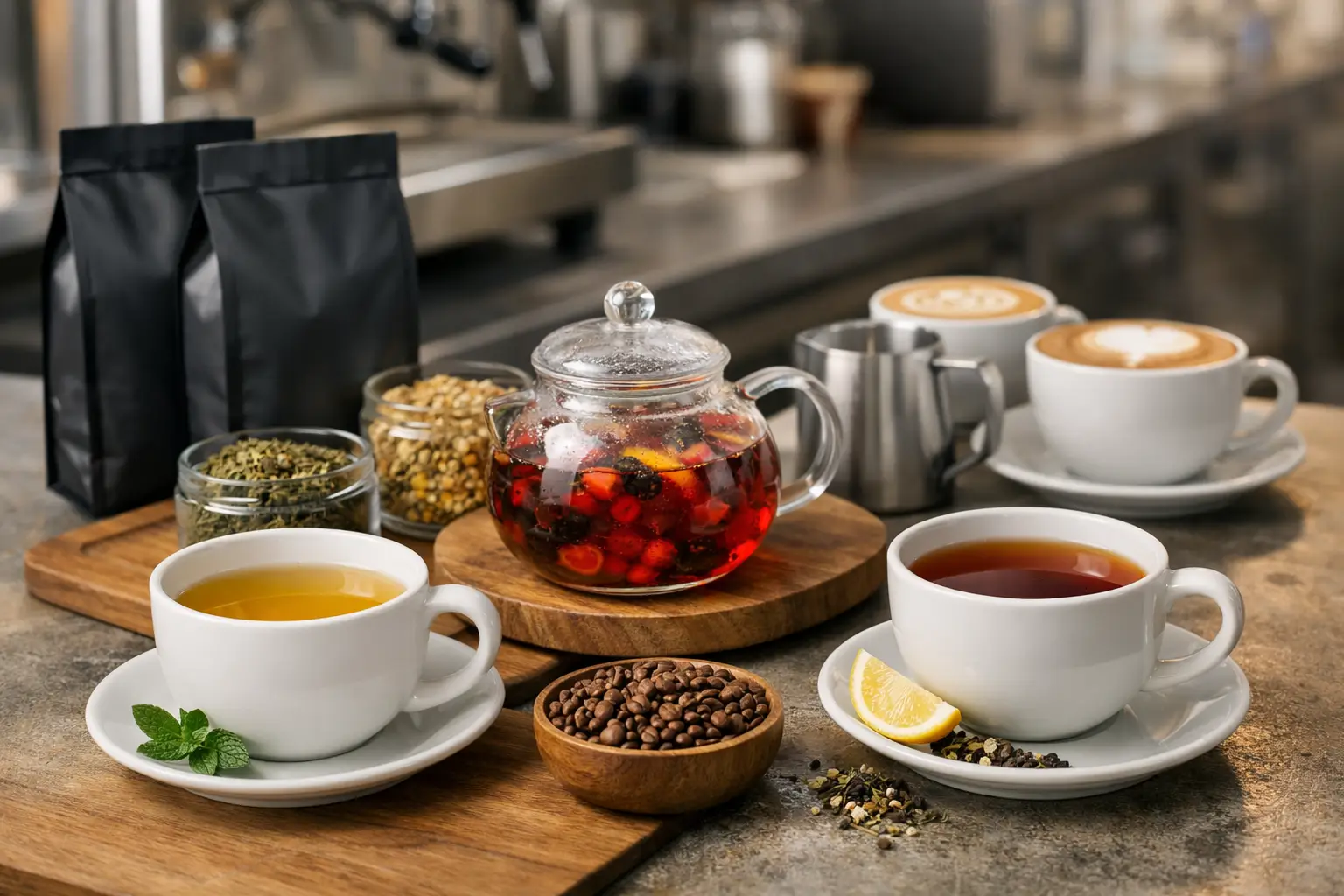
A café’s tea menu often gets built as an afterthought: a few familiar teabags beside the espresso machine and a hope that guests will find something they like. That leaves sales on the table. When café owners ask what tea sells best in cafes, the useful answer is not one universal flavor. The strongest menus combine familiar hot-tea favorites with café-style drinks that feel worth ordering out.
For most cafés, black tea, green tea, peppermint, chamomile, chai, and matcha create the most dependable foundation. They cover daily rituals, non-coffee options, caffeine-free requests, and higher-value specialty beverages without forcing the team to manage an oversized inventory.
What Tea Sells Best in Cafes?
Black tea is usually the volume leader for traditional hot tea orders. English Breakfast-style blends appeal to guests who want a full-bodied morning cup, while Earl Grey offers a recognizable aromatic alternative for afternoon service. These are safe, familiar menu choices, but “safe” does not need to mean basic. A well-sourced organic loose-leaf tea or quality pyramid teabag delivers clearer flavor, better aroma, and a more premium guest experience than a generic bag.
Green tea is another consistent seller, particularly jasmine green tea. It is approachable for guests who want something lighter than black tea and is easy to enjoy without milk or sweetener. Keep the brewing temperature and steep time controlled, though. Over-steeped green tea can become bitter, and an otherwise excellent product will not earn repeat orders if it is prepared inconsistently.
Herbal tea may not always lead total unit sales, yet it earns its place through customer coverage. Peppermint is a reliable after-meal and evening choice. Chamomile answers the caffeine-free request with a soft, familiar profile. A fruit herbal blend can work especially well as a refreshing iced tea, depending on the café’s climate, menu, and customer base.
The major growth opportunity sits beyond the teapot. Chai lattes and matcha lattes often generate stronger revenue per order than a standard brewed tea because guests see them as crafted café beverages. They also give non-coffee drinkers a reason to return rather than settling for a low-margin alternative.
The Best-Selling Tea Categories for a Balanced Café Menu
A practical menu is not a catalog of every tea available. It is a short, intentional range that allows staff to recommend drinks confidently and keeps stock moving. Start with the essentials, then add the products that match your café’s identity.
Black tea for everyday orders
Offer one dependable breakfast black tea and one distinctive black tea, such as Earl Grey. If your guests commonly add milk, choose blends with enough body to remain flavorful after milk is poured. This small detail affects perceived quality more than a long list of near-identical black teas.
Black tea is also flexible. It can be served hot, poured over ice, or used as the base for house-made milk tea. For cafés with limited prep space, that versatility makes it one of the most efficient products to carry.
Green and jasmine tea for lighter preferences
A clean green tea gives your menu balance. Jasmine tea frequently performs well because the floral aroma feels more expressive and accessible than some grassy, vegetal green teas. It can be offered hot or cold and pairs naturally with lighter food, pastries, and lunch service.
If tea quality is a priority for your brand, use loose leaf where the workflow allows. Whole or larger leaves generally give guests a more attractive presentation and a more layered cup. For faster counter service, premium teabags can still provide consistency and speed.
Herbal tea for caffeine-free coverage
Every café needs options for guests avoiding caffeine, including late-day visitors, families, and customers who simply do not drink coffee. Peppermint and chamomile cover the most common requests. One additional fruit or floral herbal tea can add color and seasonal appeal without making the menu difficult to manage.
Be realistic about demand. Carrying six herbal blends because they look good on a menu can lead to stale inventory. Two or three well-chosen selections, presented clearly, will usually sell better than a long list that confuses customers and staff.
Chai for café-style comfort
Chai is one of the best tea-led drinks for cafés because it has a broad audience and easy upsell potential. Guests recognize it, it works hot or iced, and it can be made with dairy or plant-based milk. A quality chai latte blend also creates predictable portion costs and faster service compared with preparing spice blends from scratch during a busy rush.
The trade-off is differentiation. Many cafés serve chai, so taste matters. Choose a blend with real spice character rather than one that tastes mostly sweet. Train staff to prepare it consistently, and offer a clear default sweetness level so every drink meets the same standard.
Matcha for premium ticket value
Matcha has become a core café category, not a niche add-on. It brings visual appeal, a distinct flavor, and a premium price point when prepared properly. A smooth matcha latte can satisfy guests looking for an alternative source of caffeine, while iced matcha is a strong warm-weather seller.
The product choice matters. Low-grade matcha can taste harsh, dull, or overly bitter when mixed with milk. Use a café-suitable matcha powder with a color and flavor profile that holds up in lattes. Hojicha powder is also worth considering as a roasted, lower-caffeine alternative for cafés that want a more distinctive tea latte offering.
Build Around Drinking Occasions, Not Just Tea Types
The menu question is not only which tea tastes best. It is when customers will order it. Morning guests tend to choose black tea, matcha, or chai as a coffee alternative. Lunch guests may reach for green tea or iced fruit tea. Afternoon and evening visitors often appreciate peppermint, chamomile, or a decaffeinated option.
This is why a balanced menu outperforms a menu built around one trend. Matcha may be highly visible on social media, but it does not replace the guest who wants a simple pot of Earl Grey with a pastry. Likewise, classic tea alone may not capture the higher spend available from iced chai and matcha lattes.
Consider food pairing as well. Strong breakfast tea supports rich pastries and savory breakfast dishes. Jasmine green tea suits lighter meals. Chai’s spice profile works with baked goods, cinnamon, caramel, and chocolate. Matcha can be paired with vanilla, strawberry, coconut, or white chocolate, but keep additions deliberate so the tea flavor still comes through.
Make Tea Profitable Through Better Execution
The best-selling tea can still underperform if the service experience is weak. Customers notice when hot water is lukewarm, when a tea bag arrives without a timer or brewing guidance, or when a matcha latte is clumpy. The equipment and process behind the cup matter.
Set clear recipes for water volume, steep time, milk quantity, and syrup use. Use measured scoops for powders and blends. For loose leaf tea, select strainers or pots that are easy for staff to clean quickly. A consistent process protects margins because it reduces waste and prevents over-portioning.
Menu language matters, too. “Jasmine Green Tea” is clearer than an unfamiliar poetic name with no description. For a specialty drink, add a short cue such as “spiced black tea latte” or “smooth green tea latte.” Guests are more likely to try something new when they understand it in seconds.
Review sales every few weeks rather than relying on assumptions. Look at units sold, gross profit per drink, seasonal shifts, and waste. A tea that sells moderately but has excellent margins and low spoilage may deserve more space than a trendy flavor with inconsistent demand. If a blend is not moving, remove it and use the menu space for a better-performing iced format, chai variation, or seasonal special.
A Focused Starting Menu
For a café developing its tea offering, a six-item core is often enough: a breakfast black tea, Earl Grey, jasmine green tea, peppermint, chamomile, and one fruit herbal option. Add chai and matcha as prepared latte beverages rather than treating them as side items. This gives customers familiar choices while creating profitable, café-quality alternatives to coffee.
As demand grows, expand based on actual orders. Auresso’s range of organic teas, loose leaf options, tea bags, matcha, hojicha, and chai blends can help operators build that next step without splitting their beverage sourcing across multiple suppliers.
The tea that sells best is the one that fits a real customer moment, tastes the same every time, and is easy for your team to serve with confidence. Start with the classics, make chai and matcha worth coming back for, and let your sales data decide what earns the next place on the menu.