

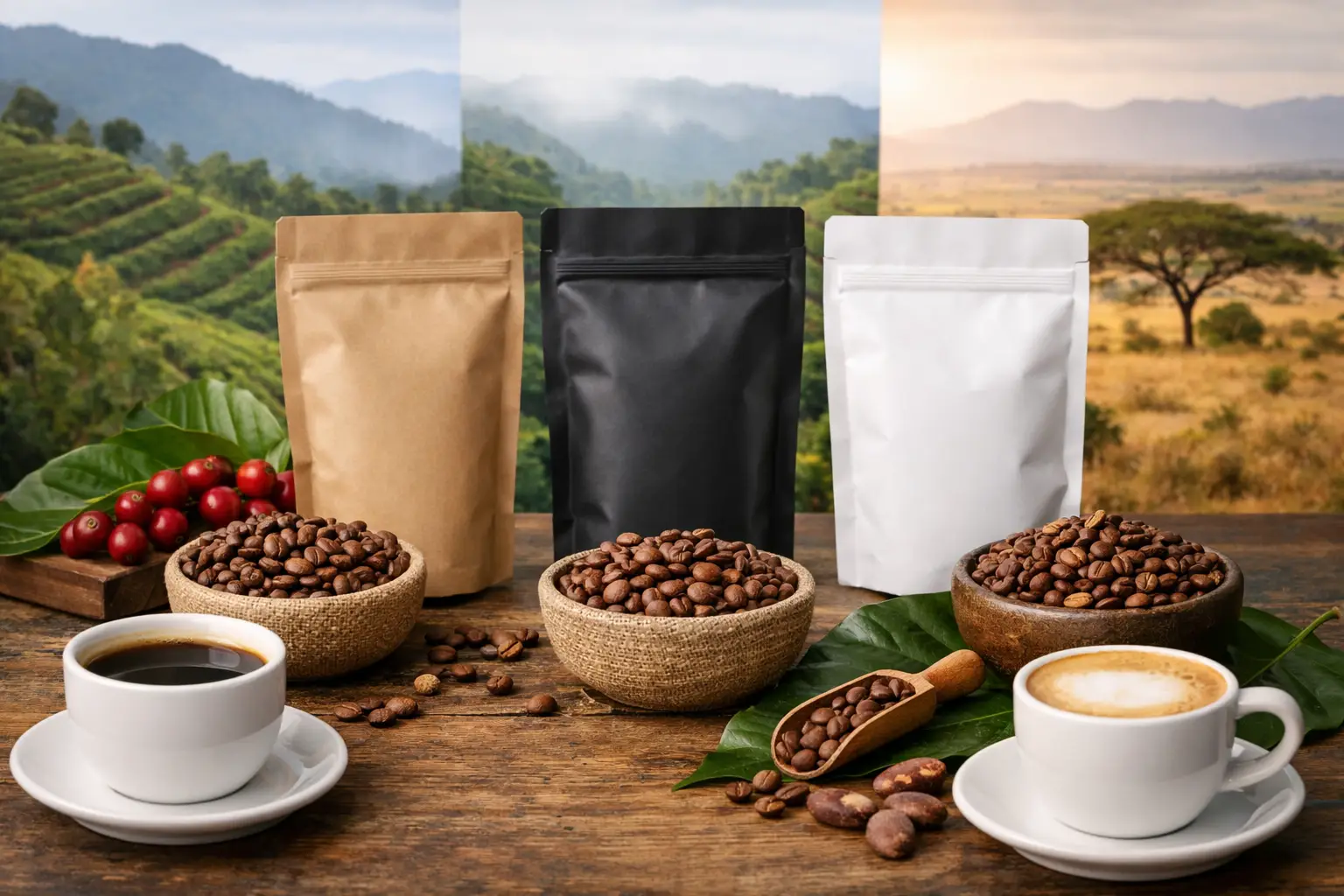
If you have ever bought two bags labeled with the same roast level and wondered why one tasted like berries while the other leaned nutty and chocolatey, this guide to coffee bean origins will make the difference much clearer. Origin is not marketing filler. It is one of the biggest reasons a coffee tastes bright, heavy, floral, sweet, earthy, or familiar enough for everyday service.
For home brewers, understanding origin helps you buy with fewer misses. For cafés and beverage businesses, it helps you build a menu with intention, whether you want a crowd-pleasing espresso, a filter coffee that stands out, or a seasonal offering with a stronger story behind it. The goal is not to memorize every coffee-growing country. It is to know what origin can tell you, what it cannot, and how to use that information when choosing beans.
What coffee bean origin actually means
At the simplest level, origin tells you where the coffee was grown. That might mean a country such as Ethiopia or Brazil, a specific region such as Yirgacheffe or Huila, or even a single farm. The more specific the origin, the more precise the flavor expectations can become, although precision does not always guarantee you will like the cup more.
Origin matters because coffee is an agricultural product. Soil, elevation, temperature, rainfall, and local varieties all affect the cherry that grows on the tree. Processing methods and roasting then shape what you taste, but they start with the raw material. A bean from a high-altitude farm in East Africa and a bean from a lower-altitude lot in Brazil are not working from the same starting point, even before the roast profile enters the picture.
This is where people sometimes oversimplify. Origin influences flavor, but it does not act alone. If a coffee is roasted very dark, some of the delicate differences between origins become harder to notice. If extraction is off, the cup can taste sour or bitter no matter how good the coffee is. Origin gives you a useful direction, not a complete guarantee.
A guide to coffee bean origins by region
The easiest way to use a guide to coffee bean origins is to start broad, then get more specific over time. Regional patterns are not rules, but they are reliable enough to help you narrow your options.
Africa
African coffees often attract drinkers who want clarity, brightness, and more expressive fruit or floral notes. Ethiopia is the classic reference point. Many Ethiopian coffees show jasmine, citrus, stone fruit, or berry-like character, especially when lightly roasted and carefully brewed. Kenya often pushes acidity and structure even further, with blackcurrant, grapefruit, tomato leaf, or savory-sweet complexity.
These coffees can be excellent for pour-over and featured filter programs because they are distinctive. The trade-off is that not every customer wants that much brightness in milk drinks or daily espresso. For businesses, they can be high-impact coffees, but not always the easiest all-rounders.
Central America
Coffees from countries such as Guatemala, Costa Rica, El Salvador, Nicaragua, and Honduras often sit in a very workable middle ground. Expect profiles built around caramel sweetness, citrus, cocoa, nuts, and gentle fruit. Guatemala can bring structure and spice, Costa Rica can feel clean and vibrant, and El Salvador often lands soft and balanced.
This region is useful when you want versatility. A well-roasted Central American coffee can perform across espresso, black coffee, and milk-based drinks. It may not always be as dramatic as an Ethiopian natural, but for many buyers that is a strength rather than a limitation.
South America
Brazil and Colombia are two of the biggest reference points here, though Peru and others also deserve attention. Brazilian coffees are often associated with chocolate, roasted nuts, low acidity, and a fuller body. They are widely used in espresso blends because they provide sweetness, texture, and consistency. Colombia is more variable because its growing regions are broad, but many coffees show red fruit, citrus, brown sugar, and balanced acidity.
For cafés, South American coffees often make practical sense. They tend to be approachable, familiar, and easy to work into core menu offerings. For home users, they are often the safest place to start if you like comfort over surprise.
Asia-Pacific
This region includes Indonesia, Papua New Guinea, and coffee-growing areas with profiles that can range from syrupy and earthy to spice-driven and fruit-forward. Sumatran coffees are known for heavy body and earthy, herbal depth, partly due to regional processing traditions. Other coffees from the broader Asia-Pacific region can show dark chocolate, cedar, tropical fruit, or low-acid sweetness.
These coffees can be excellent when you want body and depth, especially for espresso and milk beverages. Still, it depends heavily on processing and roast style. Some buyers expect all coffees from this region to taste heavy and rustic, which is no longer a safe assumption.
Why altitude, variety, and processing matter
If origin is the headline, altitude, variety, and processing are the details that explain the flavor more fully. Higher altitude coffees often develop more acidity and complexity because cherries mature more slowly. That does not automatically make them better, but it often makes them more vivid.
Variety matters too. Bourbon, Typica, Caturra, SL28, Gesha, and many others all carry different flavor potential. A Kenyan SL variety and a Brazilian bourbon can produce very different cups even with strong roasting and brewing.
Processing is where many buyers can make quick sense of what to expect. Washed coffees often taste cleaner, brighter, and more transparent to origin. Natural coffees usually show more fruit, sweetness, and fermentation character. Honey and pulped natural methods tend to sit somewhere in between. If you love clean citrus and floral notes, a washed coffee from Ethiopia or Colombia may suit you. If you prefer jammy sweetness and a bigger fruit impression, a natural process coffee may be the better move.
How to buy based on origin without overcomplicating it
If you are buying for home, start with the cup profile you already enjoy. If you like chocolate, nuts, and lower acidity, try Brazil or a Brazil-led blend. If you want brightness and fruit, look at Ethiopia or Kenya. If you want balance and flexibility, Central America or Colombia is usually a smart lane.
If you are buying for a café or restaurant, think in terms of menu role rather than country alone. Your house espresso needs consistency, broad appeal, and good performance in milk. A Brazilian or Colombian base often works well there. Your rotating black coffee can take more risks because customers ordering batch brew or pour-over may be looking for character and seasonality.
Price matters too. Some origins and microlots carry higher costs because of lower yields, stronger demand, or more labor-intensive production. That can be worth it for a premium menu slot, but not always for your highest-volume drink. The best buying decision is not the most exotic origin. It is the coffee that fits your taste target, customer expectations, and margin.
Common myths in any guide to coffee bean origins
One common myth is that single origin always means higher quality. It can mean more traceability and a clearer flavor identity, but quality still depends on sourcing, processing, roasting, and freshness. A good blend can outperform a weak single origin every day of the week.
Another myth is that one country equals one flavor. Ethiopia alone can produce cups that taste tea-like and floral, deep and jammy, or sweet and citrusy depending on region and process. Colombia can swing from delicate to rich. Brazil can be classic chocolate or unexpectedly fruity. Country-level expectations are useful starting points, not final answers.
A third myth is that origin matters only for black coffee drinkers. It matters in milk drinks too, just differently. A fruity espresso may read as berry yogurt in a latte, while a chocolate-heavy coffee may become rounder and more comforting. If you serve cappuccinos and lattes all day, origin still shapes the customer experience.
The best way to learn origins is by tasting with intent
Reading labels helps, but side-by-side tasting teaches faster. Brew two coffees with the same method and compare acidity, sweetness, body, and finish. Try a washed Colombian next to a natural Ethiopian. Compare a Brazil espresso against a brighter Central American option in milk. Once you taste contrast directly, origin starts to feel practical instead of abstract.
That is also where a curated supplier adds real value. When coffees are selected with clear tasting notes and dependable quality, it is easier to connect label information to what ends up in the cup. For buyers who need both range and reliability, that guidance saves time and reduces expensive guesswork.
The smartest approach is to treat origin as a tool, not a badge. Let it help you ask better questions, choose more confidently, and build a coffee lineup that suits how you brew, serve, and sell. The more intentional your tasting becomes, the less you will buy coffee based on guesswork and the more often you will end up with beans that truly fit the moment.