

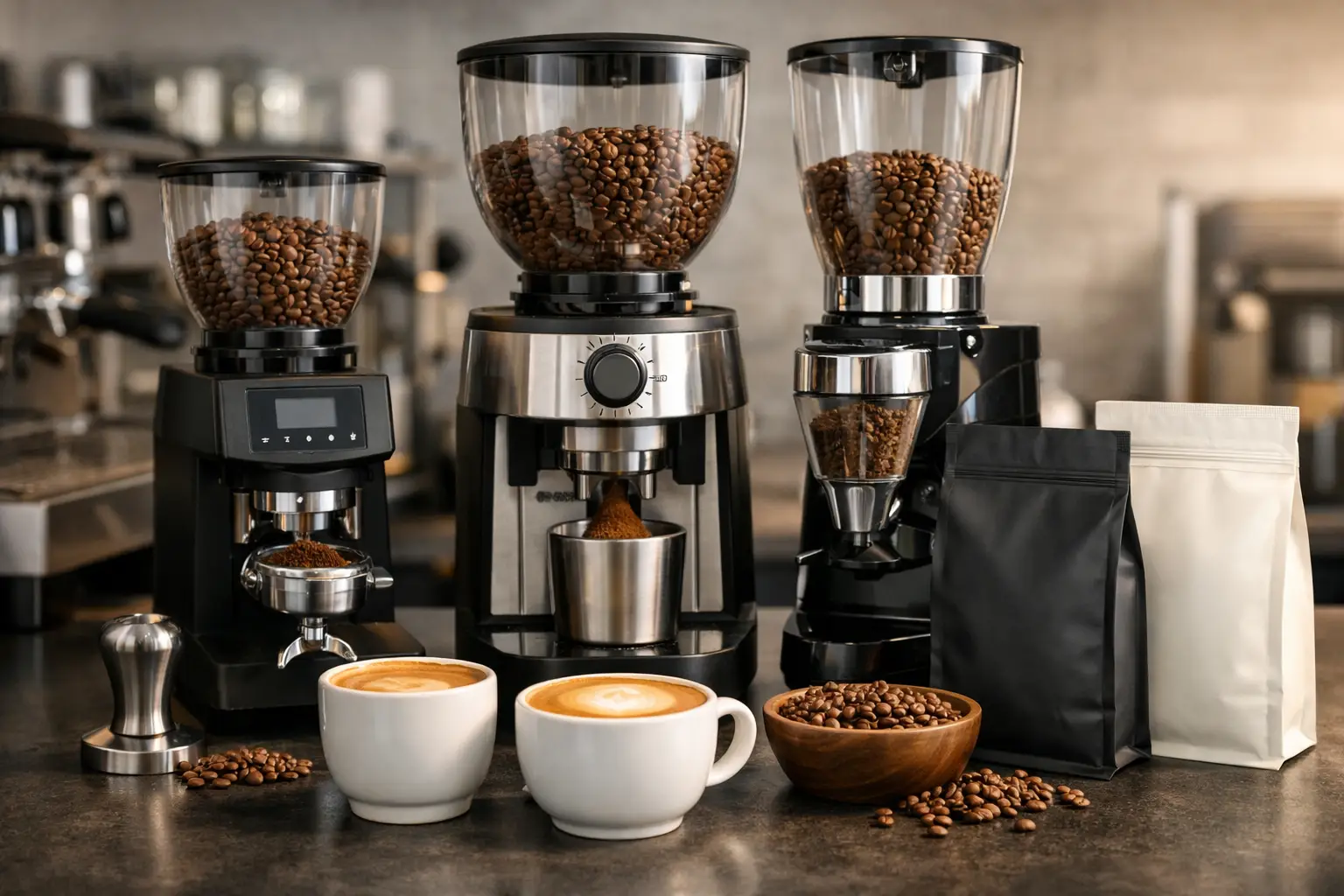
The grinder is usually where a cafe’s coffee program either becomes consistent or starts leaking money. You can have strong beans, a capable espresso machine, and trained staff, but if grind size drifts through the day or the grinder cannot keep up with service, cups get worse and workflow gets slower. That is why a solid guide to cafe grinder selection starts with one simple point: you are not just buying a machine to crush coffee. You are buying speed, consistency, labor efficiency, and a large part of your drink quality.
For most cafes, the wrong grinder shows up fast. Shots run unevenly, baristas keep chasing the dial, coffee waste climbs, and the morning line starts to expose every weakness in your setup. The right grinder feels less dramatic. It keeps pace, holds calibration better, and helps your team stay focused on service instead of constant correction.
What this guide to cafe grinder selection should help you decide
A cafe grinder should match the way your business actually operates, not the way a spec sheet looks on paper. Start with your menu. If espresso is the core of your sales, your grinder needs to deliver tight particle consistency, quick dose-to-dose recovery, and easy adjustment. If brewed coffee, batch brew, or manual bar service matters just as much, you may need a second grinder dedicated to filter coffee rather than asking one machine to do everything.
Volume matters just as much as menu. A low-volume brunch spot with a steady but moderate espresso load has different needs from a high-turnover cafe that pushes milk drinks all morning. In the first case, quiet operation and low retention may matter more than raw speed. In the second, motor strength, thermal stability, and burr durability move much higher on the priority list.
This is where buyers often overspend or underspend. A grinder that is too small becomes a daily bottleneck. A grinder that is far beyond your actual demand can be harder to justify, especially if the rest of your bar setup is not operating at the same level.
Burrs, motor, and grind consistency
The heart of any grinder is the burr set. In cafe use, flat burrs and conical burrs both have their place, but the decision should be tied to flavor goals and workflow preferences rather than internet debates. Flat burr grinders are often chosen for clarity, consistency, and high-volume espresso service. Conical burr grinders are often appreciated for their forgiving nature, lower heat in some setups, and different flavor presentation. Neither style is automatically better for every cafe.
Burr size also matters. Larger burrs generally support faster grinding, more consistent output under load, and better heat management during busy periods. That does not mean the biggest burr set is always the smartest purchase. It means you should expect a small burr grinder to show its limits sooner in a commercial environment.
Motor performance is closely tied to that decision. A grinder may look impressive in terms of burr diameter, but if the motor struggles during repeated dosing, your team will notice. Slower recovery and heat buildup can affect both workflow and cup quality. For a busy bar, consistency after the fiftieth drink matters more than how the grinder behaves during the first five.
Espresso workflow matters more than many buyers expect
If your business serves espresso-based drinks all day, workflow should be one of the main filters in your guide to cafe grinder selection. A grinder can produce excellent grounds and still be a poor fit if it slows down service or creates unnecessary mess.
Think about how your baristas work during rush periods. Do you want grind-on-demand dosing into the portafilter? Is timed dosing accurate enough for your service model, or do you want weight-based dosing for tighter control? Are your staff experienced enough to benefit from advanced adjustment features, or would a simpler interface reduce mistakes during handovers and peak shifts?
Retention is another practical issue. In a cafe, retained grounds are not just a technical detail. They can affect freshness, create inconsistency between doses, and add waste when dialing in. Lower retention grinders are especially useful for cafes that change coffees, offer guest beans, or need to make several adjustments through the day.
Clumping and static also deserve attention. They sound minor until they start affecting distribution and cleanliness on a busy bar. A grinder that keeps the station cleaner and more predictable can save time every hour, not just during opening calibration.
Match grinder capacity to your sales pattern
Daily cup count gives you a better buying framework than broad labels like light commercial or heavy duty. A cafe doing 80 espresso drinks a day with a small lunch bump has one demand profile. A location doing 250 drinks before noon has another. The second shop needs faster output, stronger burr longevity, and better performance under continuous use.
It is also worth looking at your peak 30-minute window rather than daily volume alone. Some cafes have modest daily totals but very intense rushes. That is where underpowered grinders get exposed. If your longest queue happens in a short breakfast period, your grinder must be sized for that pressure.
For multi-drink menus, consider whether one grinder should be dedicated to house espresso while another handles decaf or single origin espresso. Switching beans in one hopper sounds efficient, but in practice it slows service and complicates consistency. Two well-matched grinders often create a smoother operation than one premium grinder trying to cover every need.
Hopper size, footprint, and noise
These details rarely make the headline, but they matter on a working bar. Hopper size should reflect how quickly coffee moves. A very large hopper can be practical in high-volume service, but it may be less ideal if beans sit too long under lights and heat. A smaller hopper with more frequent refills can support freshness, especially in lower-volume specialty cafes.
Footprint is equally practical. Some bars simply do not have room for oversized grinders, especially when space is already shared with an espresso machine, milk pitchers, scales, tampers, and takeaway service items. Measure your actual bar, including cabinet height if the hopper needs clearance. This avoids buying a grinder that fits the budget but not the station.
Noise matters more than people admit. In open cafes, loud grinders affect customer experience and barista fatigue. A slightly quieter grinder can make a real difference in smaller spaces where the coffee bar sits close to dine-in guests.
Serviceability and cost over time
A cafe grinder is not a one-time cost. Burr replacements, cleaning routines, calibration checks, and occasional repairs are part of ownership. That is why serviceability should carry real weight in your decision.
Ask practical questions. How easy is burr access for cleaning? How often will burrs need replacement at your expected volume? Are replacement parts reasonably available? Is maintenance straightforward enough for your team to handle routine care without downtime turning into a weekly problem?
This is especially relevant for cafe operators in Malaysia and Singapore, where local support, parts access, and fast shipment can make a major difference to uptime. A cheaper grinder is not a bargain if a simple issue leaves your bar compromised for days.
Common buying mistakes
The most common mistake is shopping by headline features instead of actual cafe needs. High speed sounds great until you realize your staff values low retention and easier dialing more. Premium burr size sounds attractive until the grinder is oversized for your sales and budget.
Another mistake is treating the grinder as secondary to the espresso machine. In practice, an average machine paired with a strong grinder can outperform the reverse in cup consistency. The grinder deserves serious budget attention because it shapes extraction before the machine has a chance to help.
It is also easy to forget training. A more advanced grinder may give better control, but only if the team understands how to use it well. If your staffing includes frequent turnover or part-time baristas, usability becomes a bigger part of value.
How to choose with confidence
A practical buying approach starts with four questions: how many espresso drinks you serve at peak, whether you need separate grinding for decaf or filter coffee, how much control your team can realistically manage, and what downtime would cost your business. Those answers usually narrow the field quickly.
From there, compare grinders based on consistency, speed under load, retention, ease of cleaning, burr life, and support availability. If two options perform similarly, choose the one that fits your workflow more naturally. Good cafe equipment should reduce friction. That is where long-term value shows up.
For businesses building or upgrading a beverage program, this is one of the smartest areas to buy carefully rather than cheaply. A dependable grinder protects coffee quality, supports staff efficiency, and helps every bag of beans perform closer to its potential. If your cafe is growing, choose the grinder that fits the business you are running now but leaves enough room for the service you want to handle next.