

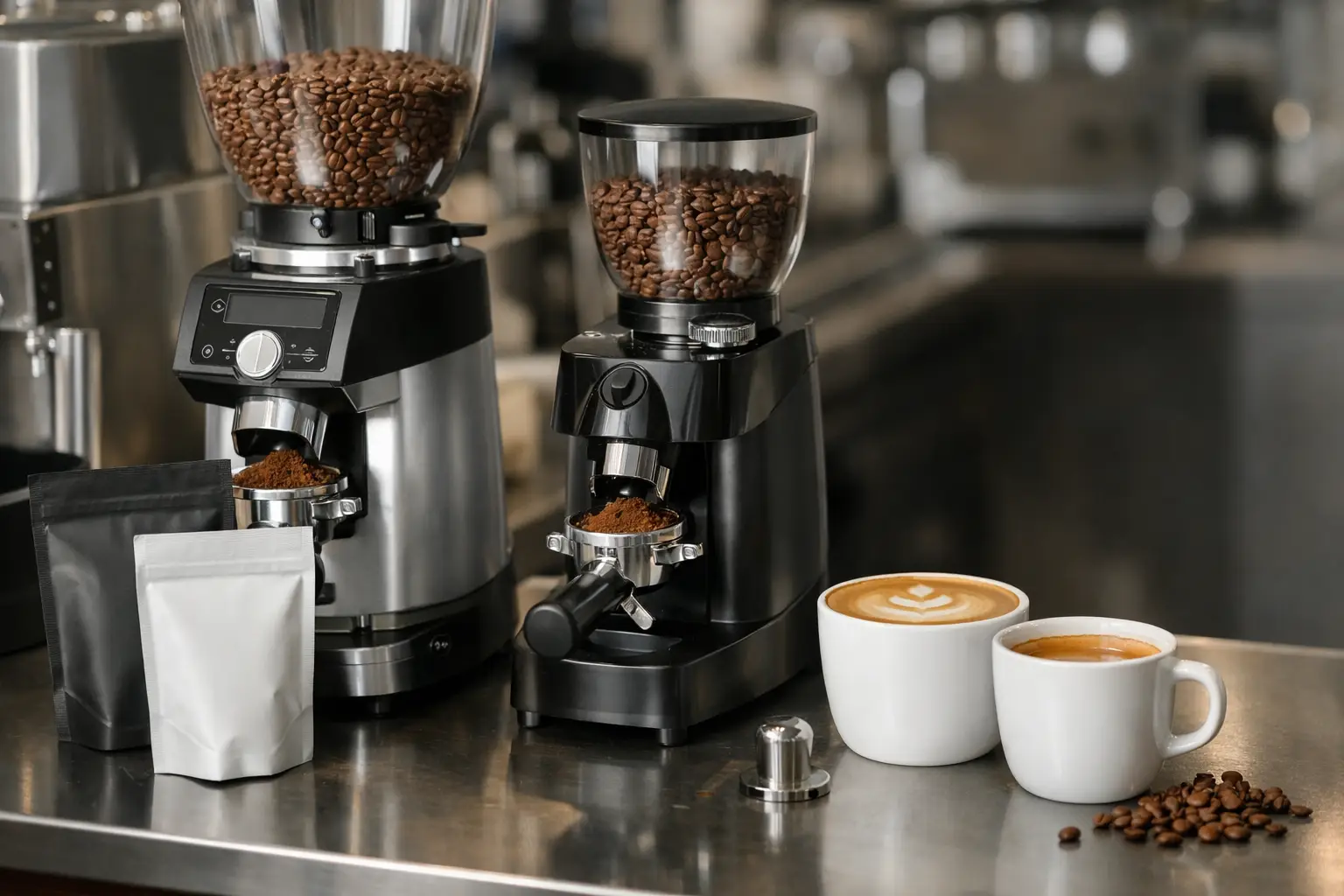
A grinder that feels quick during a quiet morning can become the slowest part of the bar at 9:00 a.m. The question, “what grinder size does a cafe need?” is really a question about peak-hour demand, menu design, and how consistently the team must produce each shot. Burr size matters, but it is only one part of choosing equipment that keeps drinks moving and coffee tasting right.
For most cafes, the right answer is not the biggest grinder available. It is the grinder that can handle the busiest 15 minutes of service without overheating, creating a line at the register, or forcing baristas to compromise on dose and grind adjustments.
What Grinder Size Does a Cafe Need?
For a small cafe serving roughly 50 to 100 espresso-based drinks per day, a commercial grinder with 58 mm to 64 mm flat burrs is often a practical starting point. It offers a meaningful step up from home equipment in speed, durability, and grind consistency, without taking up excessive counter space or stretching the equipment budget.
A cafe serving 100 to 250 espresso drinks daily will usually benefit from 64 mm to 75 mm burrs, particularly if most orders are milk-based drinks made during concentrated rushes. At this volume, the difference between a grinder taking five seconds and one taking three seconds becomes noticeable across a full service.
For high-volume specialty cafes, busy restaurant coffee programs, or locations serving more than 250 espresso drinks per day, 75 mm to 83 mm burrs are a safer choice. Larger burrs generally grind faster, deal better with sustained use, and can produce a more uniform particle distribution. That said, a large grinder is not automatically better for every menu or coffee style.
The number on the burr set is a useful shortcut, not a complete buying decision. Motor power, burr geometry, cooling design, adjustment system, retention, and maintenance access all affect real-world performance.
Start With Your Peak, Not Your Daily Total
Daily drink volume can hide the operational pressure a cafe actually faces. A shop may sell 150 espresso drinks per day, but if 60 of them are ordered in one 45-minute window, the grinder needs to perform like a much busier machine during that period.
Start by estimating your highest-demand period. Count how many espresso-based drinks you expect to make in 15 minutes, then consider how many shots each drink requires. A cafe making 30 double-shot drinks in that window needs 60 shots prepared quickly and consistently, while still allowing time for tamping, extraction, steaming, and customer interaction.
A smaller commercial grinder may technically process that amount of coffee. The better question is whether it can do so without slowing the barista down or causing the grounds to warm up from repeated grinding. Heat can affect extraction behavior, especially when the coffee bar is dialing in a light or delicate specialty roast.
If your team regularly queues orders during breakfast, lunch, or weekend traffic, choose capacity with room to spare. Buying exactly for today’s average volume can create an expensive bottleneck once the business grows.
A practical volume guide
A compact commercial espresso grinder with 58 mm to 64 mm burrs suits a low-volume bar, small bakery, or restaurant where coffee is important but not the primary sales driver. It can also work well as a decaf or single-origin grinder in a larger cafe.
A 64 mm to 75 mm grinder is the dependable all-round choice for many independent cafes. It balances shot speed, consistency, footprint, and cost, making it suitable for a focused espresso menu with regular rush periods.
Grinders with 75 mm to 83 mm burrs make more sense when espresso is the center of the business, when several baristas work the same station, or when fast ticket times are non-negotiable. They are also useful for venues that expect steady growth, although their higher price and larger footprint should be justified by actual demand.
Burr Size Affects More Than Speed
Larger burrs have more grinding surface, so they can process coffee faster. That can reduce the time each dose spends in the grinding chamber and help the grinder stay more stable under repeated use. For a busy bar, this supports faster workflow and can reduce waiting between shots.
Burr geometry also shapes the cup. Flat burrs are widely used in commercial espresso grinders because they can provide clarity and separation of flavor notes. Conical burrs are often valued for a fuller body and a slightly more forgiving grind profile. Neither is universally superior. The right choice depends on your house coffee, espresso recipe, and the flavor experience you want customers to recognize.
A cafe serving traditional chocolatey, nutty espresso may be happy with a grinder that emphasizes body and consistency. A specialty-focused bar featuring seasonal single origins may prioritize clarity and precise adjustment. Ask for a demonstration using coffee close to your intended house blend whenever possible. Grinder specifications are useful, but the espresso in the cup makes the decision real.
Hopper Capacity Should Match Freshness and Workflow
A large hopper may look commercial, but it is not always the best solution. Coffee left in a hopper is exposed to light, air, and changing room temperatures. In a humid climate, this can affect how coffee flows through the grinder and may require more frequent dial-in adjustments.
For a high-volume cafe that goes through a hopper several times per day, a larger hopper is convenient and reasonable. For a slower bar, a smaller hopper or single-dose workflow may protect freshness better. The trade-off is that baristas will refill more often, which can interrupt service if the station is not organized well.
Many cafes use one primary grinder for the house espresso and a second grinder for decaf, guest coffee, or an alternate blend. This setup can be more efficient than repeatedly emptying and recalibrating one grinder. It also gives customers meaningful menu choice without making service harder for the team.
Do Not Ignore Retention, Adjustment, and Cleaning
A grinder can have excellent burrs and still create inconsistency if it retains too much ground coffee. Retention is the amount of coffee left inside the chute and chamber after a dose. When yesterday’s or the previous order’s grounds mix into a fresh dose, dialing in becomes less predictable.
Low-retention grinders are especially helpful for cafes changing coffees frequently or offering espresso flights. For a single house blend used all day, moderate retention may be manageable, provided the team has a clear purge routine at opening and after adjustments.
Look closely at the adjustment mechanism. Stepless adjustment gives baristas fine control over espresso, while stepped settings can be simpler for less experienced teams but may limit precision. A clear, repeatable adjustment collar or digital control system helps when multiple baristas share the machine.
Cleaning access matters too. Coffee oils and fine particles build up quickly in commercial use. Choose a grinder that staff can brush out, inspect, and maintain without complicated disassembly. Reliable equipment is not only about the motor. It is also about whether daily care is realistic during a busy week.
Plan for the Coffee You Actually Sell
Your grinder should be selected alongside your espresso machine, roast profile, and menu. A two-group machine with one small grinder may leave baristas waiting for doses. Conversely, an oversized grinder on a low-volume counter can tie up capital that would be better spent on water filtration, staff training, or a second grinder for decaf.
Dark roasts, medium roasts, and lighter specialty coffees can all behave differently at the grinder. Fresh coffee may require more frequent adjustment as it ages after roasting. Seasonal humidity changes can also shift shot time. These are normal parts of espresso service, not signs that the grinder is failing.
For cafes in Malaysia and Singapore, where warm and humid conditions are common, keeping beans sealed, cleaning the grinder regularly, and checking the dial-in throughout the day are practical habits. A capable commercial grinder gives the team control, but it cannot replace an organized coffee routine.
Buy for Consistency, Then Build Redundancy
The most costly grinder problem is not a slightly slower grind. It is a breakdown during a full service with no backup plan. If coffee is a major part of your revenue, consider a second grinder as operational insurance. It can serve decaf or an alternate espresso on normal days, then keep the bar running if the primary unit needs service.
When comparing options, assess burr size alongside local service availability, replacement burr cost, warranty support, and access to parts. A well-supported 64 mm grinder can be a smarter business purchase than a larger machine that is difficult to repair quickly.
Auresso can help cafe teams match grinders, beans, and beverage requirements in one purchasing conversation. The best setup is the one that gives your baristas a repeatable workflow and gives customers the same satisfying cup when they return tomorrow.