

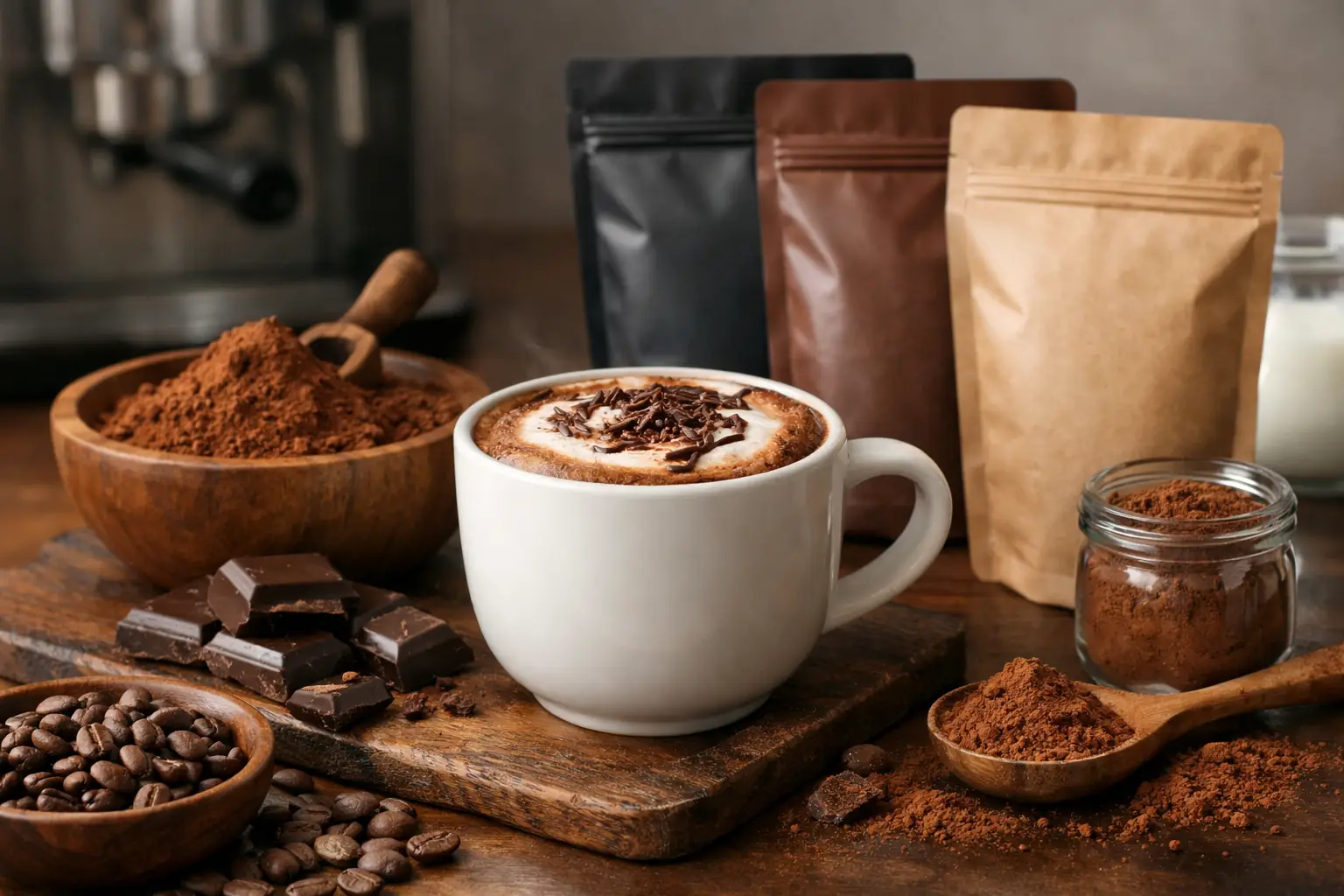
A mocha usually goes wrong in one of two places – the espresso is fine, but the chocolate disappears, or the chocolate takes over and turns the cup into hot cocoa with coffee added as an afterthought. If you’re comparing the best chocolate powders for mochas, that balance is what matters most. The right powder should dissolve cleanly, work with milk texture, and still let the coffee speak.
For home brewers, that means a powder that is easy to mix and forgiving across different beans and milk choices. For cafés and foodservice teams, it also means consistency, speed during service, and a flavor profile that holds up cup after cup. Not every drinking chocolate is automatically a great mocha powder, and not every cocoa-based mix is built for espresso.
What makes a chocolate powder good for mochas
A good mocha powder needs to do more than taste chocolaty on its own. In a mocha, chocolate has to integrate with espresso’s bitterness, acidity, roast character, and body. That is why some powders taste excellent as a standalone chocolate drink but fall flat once coffee is added.
The first thing to look at is sweetness. A very sweet powder can make mochas easy to like, especially in milk-based drinks with medium or darker espresso. But if the sugar level is too high, you lose definition. The drink becomes one-note, which can be fine for a broad commercial audience but less satisfying if you want a more coffee-forward result.
Cocoa intensity matters just as much. A darker, more cocoa-rich powder usually gives better structure in a mocha, especially with double shots and larger milk volumes. The trade-off is that high-cocoa blends can taste dry, bitter, or slightly chalky if they are not formulated well or if your bar team underdoses syrup or milk.
Then there is solubility. This is a practical issue, not a minor one. Powders that clump or refuse to dissolve slow down service and create gritty drinks. In a busy café, that is a problem. At home, it is just frustrating. The best products whisk quickly into espresso or a small amount of hot liquid before milk is added.
Best chocolate powders for mochas by flavor style
The easiest way to choose is by the kind of mocha you want to serve. There is no single best option for every setup because espresso style, milk choice, and customer preference all change the result.
For a classic café-style mocha
If you want the familiar mocha profile most customers expect, choose a powder with moderate cocoa intensity and a rounded sweetness. This style blends smoothly with milk and works especially well with chocolatey, nutty, or caramel-toned espresso. It is usually the safest option for cafés because it pleases a wide range of drinkers without requiring much recipe adjustment.
A classic café-style powder should taste rich rather than sharp. When mixed with espresso, it should give you a milk chocolate profile with enough depth to avoid tasting flat. This is often the best starting point for businesses building a dependable house mocha.
For a dark and more specialty-leaning mocha
If your coffee program leans toward higher quality espresso and you want the chocolate to complement rather than cover it, a darker powder is usually the better fit. Look for blends with stronger cocoa presence and less aggressive sweetness. These powders let the coffee stay visible in the cup, especially with modern medium roasts.
The trade-off is accessibility. Darker mochas can taste more grown-up and less instantly sweet, which some customers love and others may find too intense. They also need better recipe control. A small change in dose can shift the drink from balanced to bitter.
For iced mochas and blended drinks
Cold applications change the equation. A powder that works beautifully in a hot mocha may taste dull or dissolve poorly over ice. For iced mochas, smoother and slightly sweeter powders often perform better because cold temperatures mute flavor. In blended drinks, a powder with easy solubility is even more important.
If your menu includes frappes, iced mochas, or signature drinks, test for texture as carefully as flavor. A little extra sweetness is often acceptable here because these drinks compete with ice dilution. But you still want real cocoa flavor, not just sugar and brown color.
How to compare chocolate powders before you buy
If you are sourcing for a café or restaurant, do not judge a powder only by tasting it as hot chocolate. Build a proper mocha test. Use the espresso you actually serve, the milk you actually stock, and the cup size your customers order most. A powder that tastes great in a sample spoon may behave very differently in a 12-ounce or 16-ounce drink.
Start with texture. Whisk the powder into espresso or a small amount of hot water first and see how fast it dissolves. If it leaves visible specks or settles quickly, it may create inconsistency in service. That matters more than many buyers expect.
Then evaluate sweetness against your espresso. A darker roast can handle a deeper or sweeter chocolate. A brighter espresso may need a more restrained powder so the drink does not taste confused. This is where product selection becomes less about ranking and more about fit.
For home users, the same principle applies on a smaller scale. If your daily coffee is a medium-dark espresso blend and you want a cozy, reliable mocha, you may prefer an approachable, balanced powder over an intense artisan-style chocolate. If you are using a high-quality single-origin espresso, a lower-sugar, higher-cocoa option will usually preserve more character.
Ingredients and labeling matter more than people think
The ingredient list tells you a lot. Cocoa percentage is useful when available, but it is not the only clue. Watch for the balance between cocoa, sugar, milk solids, and stabilizers. Some added ingredients improve mixability and consistency. Too many can flatten flavor or create an artificial finish.
If your business serves customers who ask about halal suitability, dairy content, or sugar levels, clear labeling becomes part of the buying decision. This is especially relevant in Malaysia and Singapore, where menu planning often has to accommodate a wide range of customer needs without slowing down service.
Shelf stability also matters for commercial use. A premium powder is not automatically the best value if it loses freshness too quickly or becomes difficult to manage in back-of-house storage. The best buying choice is often the one that gives strong flavor, dependable handling, and acceptable cost per cup.
A practical shortlist for different buyers
For most home users, the best chocolate powders for mochas are balanced blends that offer good sweetness, easy dissolving, and enough cocoa depth to stand up to a double shot. They are forgiving, versatile, and easy to enjoy without constant recipe tweaking.
For specialty cafés, the best choice is often a darker, cleaner-tasting powder that supports rather than masks espresso. It takes more dialing in, but the payoff is a mocha that still tastes like a coffee drink.
For restaurants, chains, and high-volume beverage programs, consistency may matter more than absolute complexity. A powder that mixes quickly, tastes familiar, and performs the same across staff shifts can be the smartest operational choice.
This is where a curated supplier matters. Auresso’s broader beverage range reflects what many buyers actually need – not just a single chocolate powder, but a dependable way to compare drink ingredients across quality levels, use cases, and budget targets without guessing.
How to get a better mocha from any powder
Even excellent powder will disappoint if the method is weak. Start by dissolving the chocolate fully before adding steamed milk. Stirring dry powder directly into a finished latte usually leaves graininess and uneven flavor. For iced drinks, dissolve with hot espresso first, then chill or pour over ice.
Dose with intent. If your mocha tastes thin, adding more powder is not always the answer. You may need a shorter milk ratio or a more chocolate-friendly espresso. If it tastes muddy, reduce chocolate slightly and let the coffee come forward.
Milk choice changes the result too. Whole milk supports sweeter, rounder chocolate profiles. Oat milk can pair well with cocoa-forward blends but may make sweeter powders taste heavy. There is no universal rule here – test the combination, not just the powder.
The best mocha is rarely built from the most expensive chocolate powder on the shelf. It comes from choosing a powder that fits your coffee, your service style, and the kind of drink your customers actually want to order again. Start there, and the cup gets much easier to get right.