

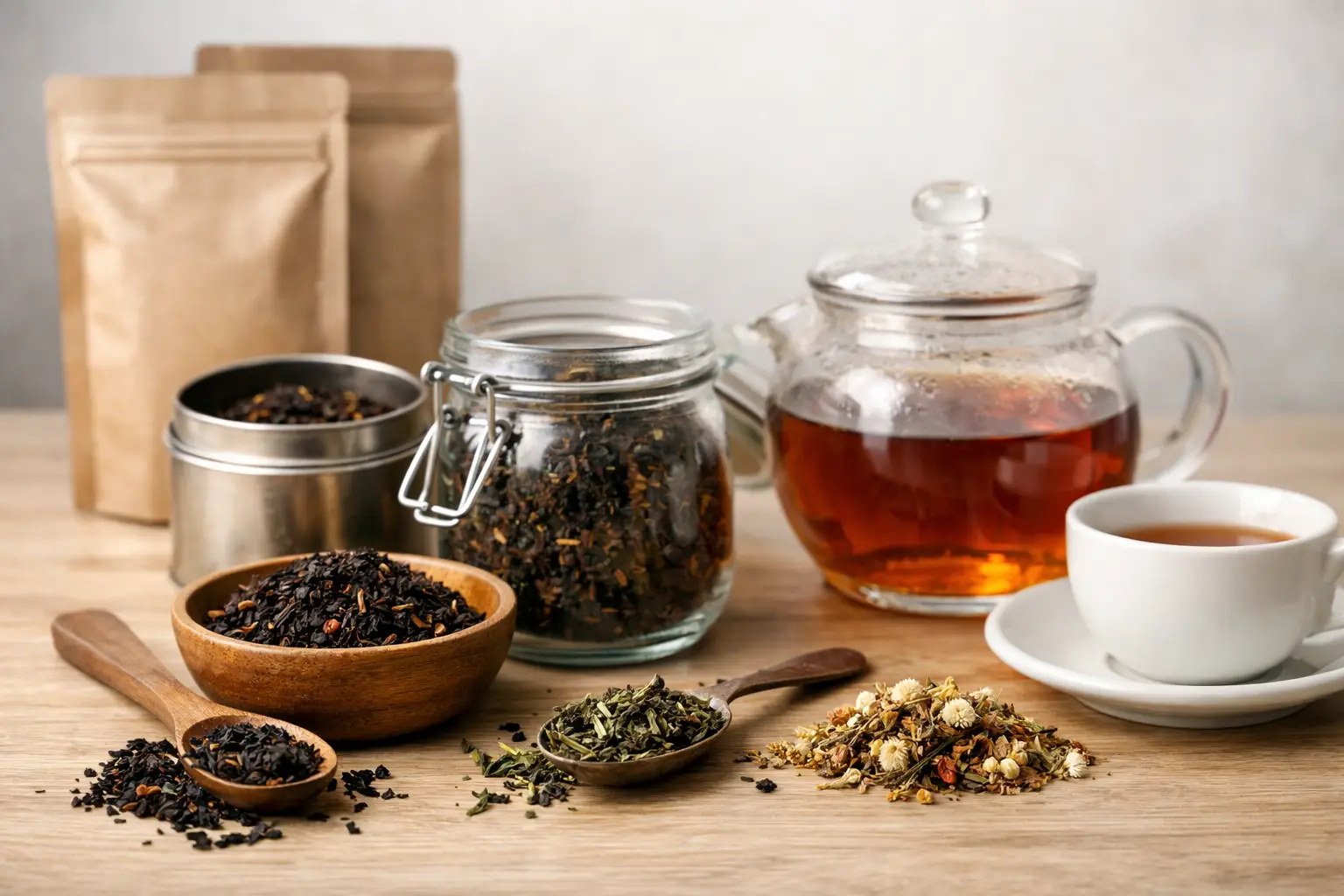
You open a pouch of loose leaf tea you forgot about in the back of the cabinet, take a sniff, and wonder whether it is still worth brewing. If you have ever asked, can loose tea expire, the short answer is yes – but not always in the way people expect. Most loose tea does not suddenly become unsafe overnight. More often, it fades. The aroma gets flatter, the flavor gets dull, and the cup loses the clarity that made it worth buying in the first place.
That distinction matters whether you are stocking tea at home or buying for a café menu. For home drinkers, old tea means a disappointing brew. For business buyers, it can mean inconsistent service, wasted inventory, and a product that no longer reflects your standards.
Can loose tea expire or just go stale?
Loose tea can do both. In many cases, what people call “expired” tea is really stale tea. The leaves have been exposed to oxygen, moisture, heat, or light long enough that their volatile compounds have broken down. That means less fragrance, less complexity, and a thinner finish in the cup.
Actual spoilage is different. Tea can become unsafe or clearly unusable if it has absorbed moisture and developed mold, picked up strong surrounding odors, or been contaminated by pests. Dry tea is relatively shelf-stable, but it is not indestructible.
So the practical answer is this: loose tea does have a usable life, and quality usually declines before safety becomes the issue.
What determines how long loose tea lasts?
Not all teas age at the same pace. Processing style, ingredient blend, packaging, and storage all make a difference.
Green tea is usually the most delicate. It tends to lose freshness faster because its grassy, marine, and sweet notes are more volatile. If you buy high-quality green tea for brightness and lift, you will notice decline sooner than with a darker tea.
Black tea is generally more forgiving. It has been fully oxidized, so it often holds up better in storage. That does not mean it stays perfect forever, only that the drop-off can be less dramatic.
Oolong sits somewhere in the middle, depending on style. A greener, lighter oolong may fade sooner, while a more roasted oolong can remain enjoyable longer.
Herbal infusions are their own category. Ingredients like chamomile, peppermint, lemongrass, or hibiscus can lose potency over time, especially if they are stored poorly. Spiced blends can also weaken as essential oils dissipate.
Matcha is one of the least forgiving products in the tea world. Once opened, it is especially vulnerable to oxidation, heat, and odor absorption. If freshness matters, and with matcha it absolutely does, storage discipline matters a lot.
How long does loose tea stay fresh?
There is no universal date that works for every tea, but there are useful ranges. When stored well in a sealed container away from heat, light, air, and moisture, many loose teas remain enjoyable for 6 to 24 months.
Green tea and matcha are best treated as short-window products. They are often at their best within several months to a year, depending on packaging and handling. Black tea and some roasted oolongs can remain pleasant for a year or two. Herbal and flavored blends depend heavily on the ingredients. A citrus peel blend may lose top notes quickly, while a dense spice blend may hide age a bit longer.
For cafés and beverage businesses, this is less about squeezing the longest possible shelf life out of tea and more about protecting cup quality. If a tea is a menu item, “still drinkable” is not the standard. “Still tasting like it should” is the standard.
Signs your loose tea is past its prime
The nose tells you a lot. Fresh tea should have a distinct aroma, whether that is malty, floral, roasted, grassy, sweet, earthy, or spiced. If the scent is faint, dusty, flat, or oddly cardboard-like, quality has likely dropped.
The leaves also tell a story. Tea that looks dull, overly brittle, faded, or uneven may be old. If you see clumping, that can point to moisture exposure. Any visible mold means it should be discarded immediately.
Then there is the brew itself. If you steep a normal dose at the usual time and temperature and the cup comes out weak, lifeless, or muddy, the tea may be too old to deliver the intended profile. Flavored teas can be especially misleading here. Sometimes the artificial or added flavor lingers while the base tea underneath has already faded.
If the tea smells musty, sour, or off in any way, do not risk it. Dry leaf should never smell damp.
Can expired loose tea make you sick?
Usually, old dry tea is more disappointing than dangerous. If it has simply lost freshness, the main issue is flavor. But if tea has been exposed to moisture, the risk changes. Mold growth, bacterial contamination, or pantry pests make it unsuitable to drink.
This is why storage matters so much in warm, humid climates. In places like Malaysia and Singapore, where ambient humidity can work against dry goods, tea should not be stored casually in paper pouches, near steam, or in containers that are opened repeatedly without being sealed well.
When in doubt, trust sensory checks. If it looks wrong, smells wrong, or has been stored poorly for a long period, replace it.
How to store loose tea properly
Good tea storage is simple, but it has to be consistent. Air, light, moisture, heat, and strong odors are the main enemies.
An airtight, opaque container is the safest option for most loose teas. Keep it in a cool, dry cupboard away from the stove, dishwasher, sunny windows, and spice racks. Tea absorbs odors easily, so storing it next to coffee, curry powder, or cleaning products is a bad idea.
Original packaging can be fine if it is resealable and has a proper barrier layer, but not all pouches are equal. For higher-value teas or slower-moving stock, transferring to a better storage tin or canister often makes sense.
Refrigeration is not usually the best answer for most loose tea because condensation becomes a risk, especially when containers move in and out. Matcha can be an exception if it is tightly sealed and handled carefully, but even then, the key is minimizing temperature swings and moisture exposure.
For cafés, tea storage should be part of routine stock handling, not an afterthought. Opening a bulk bag every service shift introduces air and humidity. Decanting working stock into smaller containers and keeping reserve stock sealed can protect consistency and reduce waste.
Buying habits matter as much as storage
One of the easiest ways to avoid expired tea is to buy in quantities that match your actual pace of use. It is tempting to stock up on multiple blends, especially when a tea smells great in the bag, but shelf life starts ticking the moment the product is packed and speeds up once opened.
For home users, smaller packs often deliver better value than larger bags that sit too long. For business buyers, par levels should reflect realistic sales velocity, seasonality, and menu turnover. A slow-moving premium tea may deserve a smaller reorder cycle than a high-volume breakfast blend.
This is one reason curated sourcing matters. A dependable supplier does more than offer variety. It helps you buy the right product in the right pack size for your use case, so freshness and cost stay in balance.
When old tea is still usable – and when it is not
There are cases where older tea can still be used without being ideal for straight brewing. A black tea that has lost some sparkle may still work in milk tea, chai, kombucha, or batch-brewed applications where other ingredients share the stage. Some fading is less noticeable there.
But that depends on your standard. If you serve tea as a premium standalone beverage, compromised aroma and finish are a problem. If a tea has any sign of moisture damage, mold, or contamination, it should not be repurposed at all.
There are also specialty teas that are intentionally aged, but that is a different category from forgotten tea sitting open in a humid pantry. Purposeful aging requires the right tea type and controlled handling. Accidental aging is usually just decline.
A simple rule for deciding
If you are unsure whether to keep or toss loose tea, ask three questions. Does it smell clean and distinct? Does it look dry and normal? Does it still brew with enough character to meet your standard?
If the answer is yes to all three, it is probably still usable. If the aroma is gone, the cup tastes flat, or the leaf shows signs of moisture or contamination, it is time to replace it.
Great tea is not only about avoiding spoilage. It is about preserving what you paid for in the first place – aroma, flavor, and a cup you would be happy to serve again tomorrow.