

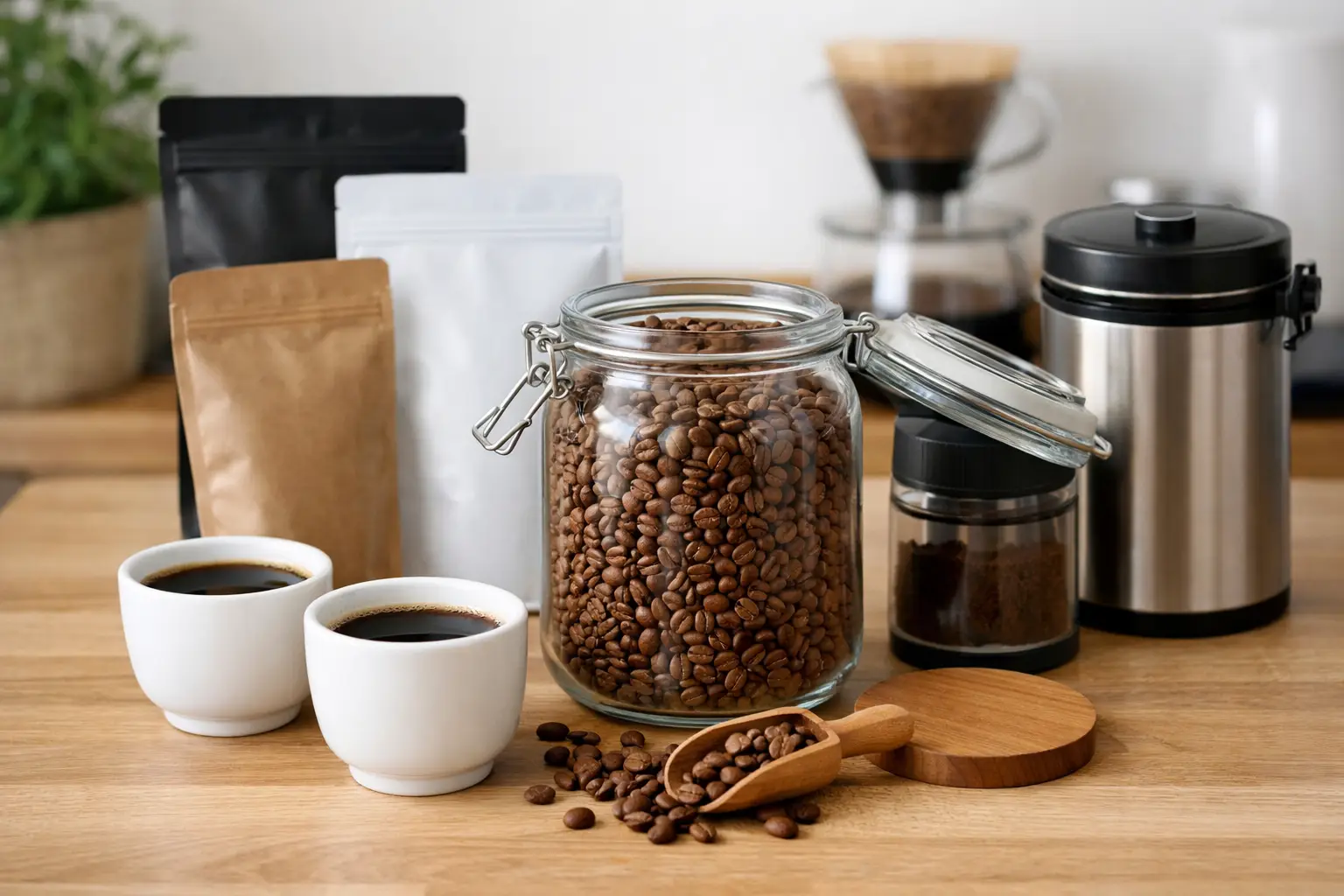
A fresh bag can smell extraordinary when you open it, then taste flat far sooner than expected because it sat beside the stove, in a clear jar, or open to humid air. Knowing how to store roasted coffee properly protects the flavor you paid for: the sweetness, aroma, acidity, and finish that make a good coffee memorable.
The goal is simple: limit coffee’s exposure to oxygen, heat, light, and moisture. You do not need an elaborate storage system. You need the right container, a sensible buying rhythm, and a routine that keeps beans stable from the first dose to the last.
How to Store Roasted Coffee Properly
Whole beans are best stored in an opaque, airtight container at room temperature, away from direct sunlight, steam, and strong odors. A kitchen cabinet that is not above the oven or next to the dishwasher is usually a better choice than a countertop display.
Coffee is porous and aromatic. It absorbs odors and gives up its own volatile aromas over time, which is why an open bag near spices, cooking oil, or scented products is a poor setup. Heat speeds up flavor loss, while moisture can damage beans and create condensation problems. Light also contributes to staling, especially when coffee is stored in glass containers on a bright counter.
For most home brewers, the original resealable bag is a good starting point if it has a one-way valve and a strong zipper seal. Press excess air out before closing it, then place the bag in a cool, dark cabinet. If the zipper no longer seals well, move the coffee to an airtight, opaque canister.
A good container should be easy to open, easy to clean, and sized close to the amount of coffee you keep on hand. Oversized containers leave more air around the beans each time you refill them. For cafés and busy beverage counters, it is often more practical to keep a working canister near the grinder and maintain reserve stock in sealed bags in a separate dry storage area.
Choose the right container, not just a pretty one
Coffee canisters come in many forms, but their function matters more than their finish. Look for these practical qualities:
- An airtight seal that does not loosen after repeated use
- Opaque walls, or storage inside a dark cabinet
- A size that suits one to two weeks of coffee use
- A dry, clean interior with no lingering odors
Vacuum canisters can reduce air exposure, but they are not essential for every coffee drinker. A high-quality sealed container and frequent purchases in sensible quantities will usually make a bigger difference. If a vacuum canister is convenient and you use it correctly, it can be worthwhile. If it becomes another item that is difficult to clean or awkward during a morning rush, a simple airtight canister is the better choice.
Avoid decorative glass jars unless they are kept inside a dark cabinet and seal tightly. Clear jars may look appealing on an open shelf, but they expose coffee to light and often encourage storing more beans than you can use while they are fresh.
Keep coffee whole until brewing
Grinding dramatically increases coffee’s surface area. That gives water more access during brewing, but it also gives oxygen more access during storage. Ground coffee loses its most expressive aromatics much faster than whole beans.
For the best cup, grind only what you need immediately before brewing. This matters whether you use espresso, pour-over, drip coffee, French press, or a commercial batch brewer. A capable grinder is not just an equipment upgrade – it is one of the most direct ways to preserve the character of a roast.
Sometimes pre-ground coffee is the practical option. Perhaps you are traveling, supplying an office pantry, or preparing for a service setup without a grinder. In that case, buy smaller amounts, seal the bag carefully, and use it promptly. Do not transfer a month’s worth of ground coffee into a large container and expect it to hold its flavor.
Do not refrigerate your daily coffee
The refrigerator is not the best place for an opened bag of coffee. It is humid, full of food odors, and subject to temperature changes every time the door opens. Beans can absorb those odors, while condensation can form if cold coffee is exposed to warmer room air.
The common exception is long-term freezing. Freezing can be useful when you have more coffee than you can finish within a few weeks, have purchased a limited seasonal roast, or want to hold several bags for later. The key is portioning.
Freeze coffee in unopened bags when possible, or divide it into small, airtight portions that match several days or a week of brewing. Remove only one portion at a time. Let it come to room temperature before opening it, which prevents moisture from condensing on the beans. Do not repeatedly thaw and refreeze the same bag.
For a café, freezer storage is generally a backup strategy rather than everyday inventory management. Reliable ordering, sensible par levels, and stock rotation are easier to manage and better for service consistency. For a home brewer who buys specialty coffee less often, freezing well-portioned reserve bags can be a smart way to avoid waste.
Buy for freshness, not for the biggest discount
Coffee does not stay at peak flavor indefinitely, even with careful storage. The best purchase size depends on how quickly you drink it. A household making two cups a day may do well with a bag that lasts two to three weeks. A café needs a tighter plan based on daily sales, grinder settings, menu demand, and delivery timing.
Freshly roasted coffee also needs a little time after roasting. Carbon dioxide escapes from the beans in a process called degassing. Espresso often performs best after several days of rest, although the ideal window varies by roast level, coffee origin, and recipe. Filter coffee can be enjoyable sooner, but it also benefits from a short resting period.
Rather than relying on one universal rule, use the roast date, brew results, and aroma as your guide. If coffee tastes unusually gassy, sharp, or difficult to dial in, it may need more rest. If it has lost fragrance and tastes papery or dull, it may be past its best window. Storage slows deterioration, but it cannot reverse it.
For business buyers, first-in, first-out rotation is essential. Date every opened bag or storage container, use older inventory first, and avoid combining fresh beans with older leftovers. Mixing them can make espresso dialing inconsistent and complicate quality control across shifts.
Build a storage routine that fits your workflow
The best storage system is one your household or team will actually follow. Keep the coffee scale, dosing tools, and canister in a clean, dry area close enough to the grinder to be convenient, but far enough from heat and steam to protect the beans. Never scoop coffee with a wet spoon, and keep the canister lid closed between doses.
At home, a simple routine works well: buy whole beans in an amount you can finish within a few weeks, keep them in their sealed bag or a proper canister, and grind just before brewing. For cafés, establish a daily opening and closing check for bean hoppers, reserve bags, and date labels. Emptying and cleaning hoppers on a schedule helps prevent old coffee oils from affecting the next batch.
Auresso customers who stock multiple roasts can also avoid confusion by labeling each container with the coffee name, roast date, and intended brew method. This is especially useful when one coffee is reserved for espresso and another for filter service. Clear organization protects both flavor and speed during busy periods.
Good coffee storage is less about buying the most complicated accessory and more about giving fresh beans the conditions they need. Keep your next bag cool, dark, dry, sealed, and whole until brew time, then let the cup show you the difference.