

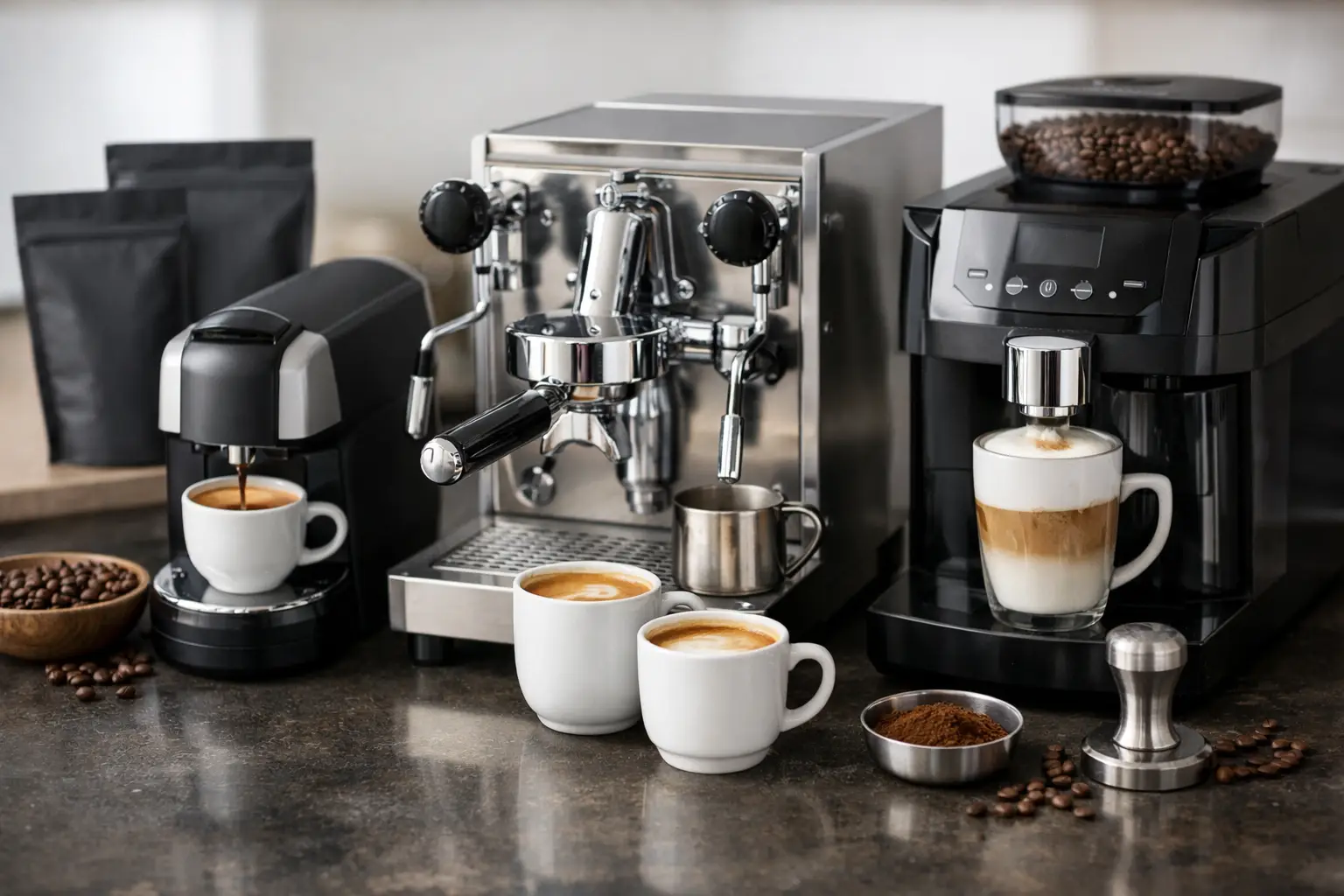
A beautiful machine on the counter does not guarantee a sweet, balanced espresso in the cup. The real difference usually comes from matching the machine to your coffee volume, available time, grinder quality, and willingness to learn. If you are wondering how to pick an espresso machine, start with the drinks you want to serve every day, not the machine that looks most impressive online.
For a home drinker, that may mean two flat whites before work and a relaxed weekend espresso. For a café or restaurant, it means considering peak-hour orders, staff consistency, recovery time, and service support. The right choice should make good coffee easier to repeat without creating unnecessary cost or workflow problems.
How to Pick an Espresso Machine by Your Daily Use
First, be honest about how many drinks you will make and who will make them. A compact single-boiler machine can be an excellent fit for a person who enjoys dialing in coffee and usually makes one or two milk drinks at a time. It is not designed for a busy brunch service where several staff members need to produce drinks quickly.
Home machines generally fall into three practical categories. Manual and lever machines suit enthusiasts who enjoy hands-on control, but they require technique and patience. Semi-automatic machines give you control over grinding, dosing, tamping, and shot timing while automating water flow. They are often the best balance for people who want café-style coffee and are happy to build a routine.
Automatic or super-automatic machines simplify the process by grinding, dosing, brewing, and sometimes frothing milk at the touch of a button. They offer convenience and consistency, particularly for offices or households with multiple users. The trade-off is less control over the final cup, more internal parts to maintain, and sometimes a lower ceiling for espresso quality compared with a well-used semi-automatic setup.
For commercial settings, a one-group machine may work for a small bakery or low-volume restaurant. A two-group machine is the more common choice for a dedicated café because it allows two baristas, or one fast barista, to handle multiple orders. Higher-volume operations may need more groups, stronger steam capacity, and equipment designed for continuous use. Buying too small creates queues and stressed staff. Buying too large can tie up capital, use more power, and occupy valuable counter space.
Choose the Boiler and Heating System Carefully
The heating system affects what the machine can do in a real service situation. A single boiler heats water for both brewing and steaming. It is typically more affordable and compact, but you must wait when switching between pulling espresso and steaming milk. That is manageable for occasional drinks, not ideal for a household that makes several lattes back-to-back.
A heat-exchanger machine allows brewing and steaming at roughly the same time. It is a popular step up for serious home users and lower-volume beverage programs, though temperature management can require some familiarity.
Dual-boiler machines use separate boilers for brewing and steam. They provide better temperature stability and stronger milk-drink workflow, making them attractive for enthusiasts and demanding home use. They also cost more and need more counter space. In commercial machines, multi-boiler systems can offer very precise temperature control across groups, which matters when a café serves several coffees with different roast profiles or recipes.
Do not choose a boiler system only because it sounds more advanced. If your usual order is a straight espresso or Americano, temperature stability may matter more than steam power. If most of your drinks are cappuccinos and lattes, reliable steam performance deserves a larger share of your budget.
The Grinder Is Not an Accessory
An espresso machine cannot compensate for an inconsistent grinder. Espresso is sensitive to small changes in particle size, dose, and extraction time. A grinder that produces uneven grounds makes it difficult to get the sweetness, body, and clean finish you expect from quality beans.
For home use, choose a burr grinder made specifically for espresso, with fine and repeatable adjustments. Stepped grinders can work well if the steps are close enough for dialing in. Stepless or micro-adjustment grinders provide more precision, which can be useful when coffee freshness, weather, or a new roast requires a small adjustment.
Cafés should consider speed, burr size, retention, noise, hopper capacity, and the ease of training staff. A busy shop may benefit from a primary espresso grinder plus a backup grinder. That backup protects service when a grinder needs cleaning, adjustment, or repair. It can also support decaf or a second coffee offering.
Set your equipment budget as a system. A modest machine paired with a capable grinder usually delivers better espresso than an expensive machine paired with a basic grinder. Leave room for a scale, tamper, cleaning products, milk pitchers, filtered water, and good fresh coffee.
Match Features to Your Workflow
Useful features are the ones that remove friction from the way you actually work. A programmable volumetric machine can help a café maintain shot volumes during rush periods. A manual paddle or pressure-profiling machine offers more control, but it asks more from the barista. Neither option is automatically better.
At home, a built-in timer, temperature control, low-water alert, and easy-to-access water tank can make daily use more enjoyable. If you prefer milk drinks, test whether the steam wand has enough power for your typical pitcher size and whether it is comfortable to maneuver.
For a business, look beyond the brew group. Confirm the machine’s electrical requirements, plumbing needs, drain setup, water filtration, bench depth, and clearance for cups and grinders. A machine that does not fit your bar layout can slow down service before it ever pulls its first shot.
Cleaning access matters as much as polished metal and touchscreens. Ask how backflushing works, how often filters need changing, whether the steam wands are easy to wipe down, and what daily closing tasks staff must complete. A machine that is simple to clean is more likely to stay clean, which protects both flavor and equipment life.
Water Quality Protects Flavor and Equipment
Water is the largest ingredient in an espresso, and it can be hard on equipment. Water with excessive minerals can cause scale buildup in boilers, valves, and pipes. Water with very low mineral content can also produce flat-tasting coffee and may not suit every machine specification.
Use filtration designed for your local water conditions and follow the manufacturer’s requirements. For a café, water treatment should be part of the installation plan, not an afterthought. It supports more consistent espresso and can prevent costly downtime. At home, even a smaller filtration solution can make a noticeable difference in cup quality and maintenance needs.
Think Beyond the Purchase Price
The right machine is one you can maintain, repair, and use confidently over time. Before buying, check the warranty, availability of replacement parts, local technician access, and expected turnaround if the machine needs service. This is especially important for commercial buyers, where a day without espresso service can mean lost revenue and disappointed regulars.
Also factor in energy use, cleaning supplies, filters, and preventive maintenance. A lower-priced machine that is difficult to service may cost more over several years than a better-supported model with a stronger build quality.
For cafés, calculate the purchase against your menu and expected volume. If a reliable machine lets your team serve better coffee faster, reduce remakes, and maintain drink quality during peak periods, the investment has a clear operational value. For home buyers, value may look different: a machine that encourages you to use fresh beans, refine your technique, and enjoy the ritual every morning can be the better choice even if it is not packed with features.
Test With the Coffee You Plan to Serve
Whenever possible, make the decision with your intended coffee in mind. A machine may perform differently with a light, fruit-forward specialty roast than with a darker, chocolate-led blend. Ask for a demonstration, pay attention to shot texture and milk performance, and consider how easily the barista adjusts the grind and recipe.
Auresso’s approach to coffee equipment is built around this practical fit: equipment, grinder, beans, and workflow should support each other. Choose the machine that gives you enough control for your goals, enough capacity for your busiest hour, and dependable support after the sale. Great espresso is not about owning the most complicated machine. It is about building a setup you will use well, clean properly, and enjoy cup after cup.