

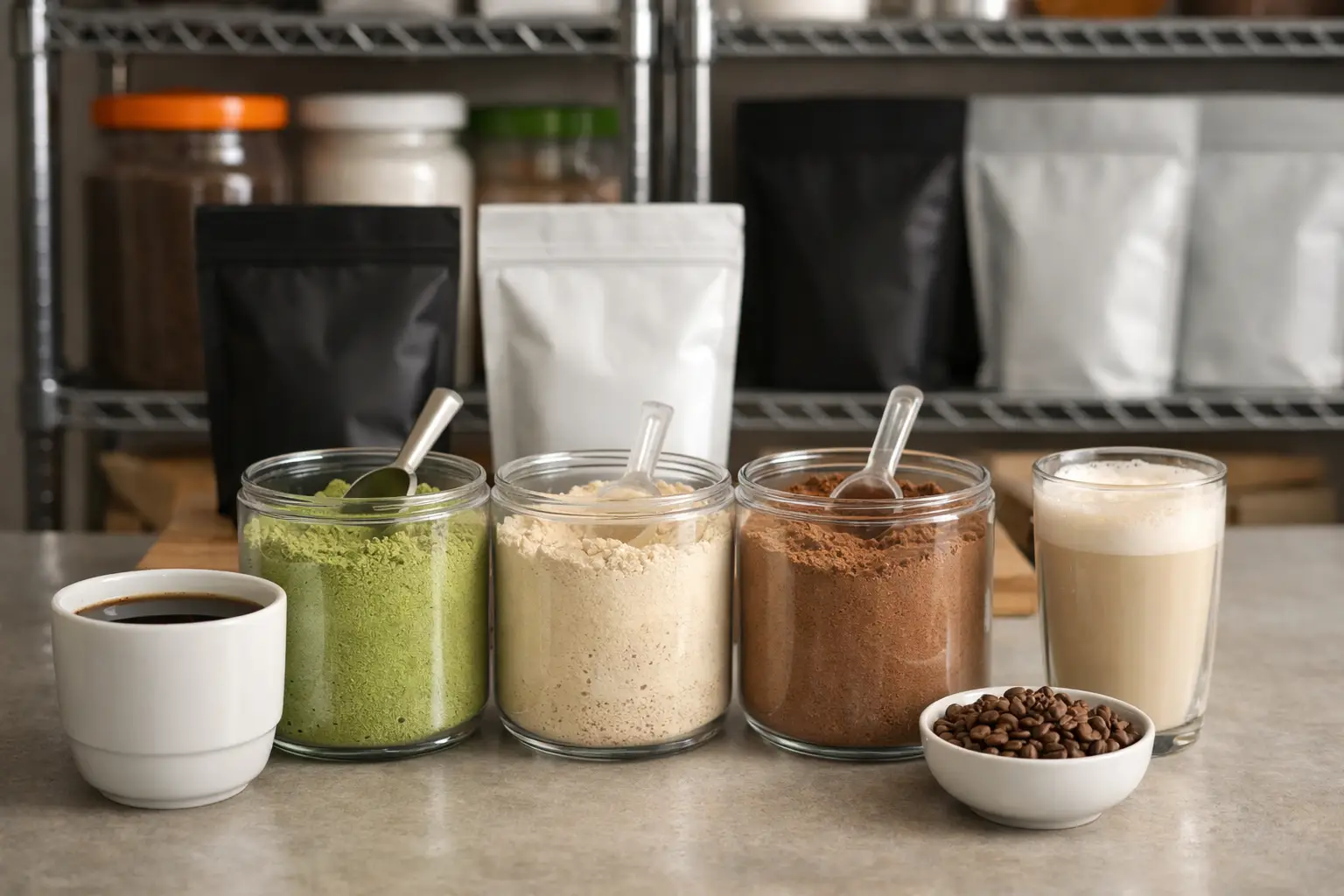
The easiest way to lose margin on drink ingredients is not dramatic waste. It is the slow, quiet kind – over-ordering one powder, running out of another, and tying up cash in stock that moves too slowly. If you are figuring out how to stock beverage powders efficiently, the real goal is balance: enough inventory to keep service smooth, but not so much that freshness, storage space, or working capital take the hit.
That balance matters whether you are running a café, managing a small restaurant beverage menu, or just keeping a serious home setup organized. Beverage powders look simple on the shelf, but they behave very differently in practice. Matcha is not managed like chai latte powder. Drinking chocolate does not move like a seasonal hojicha blend. Efficient stocking starts when you treat each category according to demand, shelf life, and menu role.
Start with movement, not with shelf space
A common mistake is arranging inventory based on how products look in storage rather than how they actually sell. The better approach is to begin with movement data. Which powders are daily essentials? Which ones are occasional add-ons? Which ones spike during promotions or rainy-season demand?
For most cafés and beverage businesses, powders fall into three working groups. Core movers are the products you cannot afford to run out of, such as chocolate powder, chai blends, or matcha used across multiple drinks. Controlled movers sell steadily but in lower volume. Slow movers are specialty items, seasonal flavors, or powders tied to a narrow customer preference.
Once you know where each item sits, stocking decisions get easier. Core movers deserve tighter monitoring and more predictable reorder points. Slow movers need smaller purchase quantities and more discipline. This is where many operators improve efficiency quickly – not by buying less across the board, but by buying the right amount for each SKU.
How to stock beverage powders efficiently with par levels
Par levels are one of the simplest tools for keeping inventory practical. A par level is the amount of stock you aim to have on hand to cover normal usage between orders, with a little protection for delays or stronger-than-usual sales.
The right par level depends on three things: how fast the powder moves, how often you reorder, and how reliable your supplier lead time is. If you use two bags of drinking chocolate a week and typically restock weekly, your par level should not be the same as an item you use half a bag of per week. At the same time, if a supplier is highly consistent and ships fast, you may not need as much backup stock.
This is where operators sometimes overcomplicate things. You do not need a perfect forecasting model to improve stock control. A practical starting point is average weekly usage multiplied by your reorder cycle, plus a small buffer for your fastest movers. Review it every few weeks. If a product keeps hitting emergency reorder territory, your par is too low. If it keeps sitting untouched, your par is too high.
For home users, the same logic still works. You may not call it a par level, but if you know how quickly you finish matcha or chai powder, you can avoid panic buying and stale backup stock.
Shelf life matters, but opened life matters more
One reason beverage powders get stocked inefficiently is that buyers focus only on the printed expiration date. In reality, the more useful question is how well the powder holds up after opening.
Some powders are relatively forgiving. Others are more sensitive to moisture, oxidation, heat, light, or repeated exposure during service. Matcha is the obvious example. Once opened, quality can drop faster than many people expect, especially if storage conditions are poor. Aromatics flatten, color dulls, and the cup loses the brightness customers notice.
Chocolate powders and chai blends may hold up better, but they still suffer if containers are left open near steam, heat, or prep splashes. Efficient stocking is not just about ordering. It is also about making sure the stock you already paid for stays usable and consistent.
For that reason, it often makes sense to buy some products in smaller, more frequent quantities even if the unit cost is slightly higher. That is not always the cheapest buy on paper, but it can be the better business decision if it protects flavor quality and reduces waste.
Storage setup should support service speed
A good powder storage system does two jobs at once. It protects product quality and makes daily prep easier. If it only does one of those, problems follow.
In busy service environments, powders should be stored with a clear split between back stock and working stock. Back stock stays sealed as long as possible in a cool, dry area. Working stock is the smaller quantity kept at the drink station for active use. This reduces repeated opening of your full inventory and makes stock counts more accurate.
Labeling also matters more than many teams assume. Every opened container should show the open date. If you have multiple staff handling prep, this creates accountability and helps rotate older stock first. Without that simple habit, half-used containers can hide in plain sight while newer stock gets opened.
It is also worth checking scoop size and recipe consistency. Sometimes what looks like strong demand is actually over-portioning. If one barista uses a rounded scoop and another uses a leveled scoop, your stock consumption data becomes unreliable. You cannot stock efficiently if your usage standard is loose.
Order by menu role, not just by product category
Another smart way to think about inventory is menu dependency. Some powders support one drink. Others support an entire section of the menu.
That difference should shape your stocking strategy. If matcha appears in lattes, frappes, soft serve applications, and seasonal specials, it carries more operational weight than a powder used in just one niche beverage. It needs stronger availability planning because one out-of-stock item can affect multiple sales lines.
On the other hand, specialty powders with narrow use cases should be watched carefully. They can still be worth carrying, especially if they help differentiate your menu, but they should earn their shelf space. If a product is exciting but slow, keep the quantity lean and review whether it performs well enough to stay.
This is especially important for smaller cafés and F&B operators where storage is tight. Every bag on the shelf competes with something else for space and budget.
Buying in bulk is not always efficient
Bulk pricing can be attractive, and sometimes it makes perfect sense. High-volume staples with stable demand are often strong candidates. But buying in bulk becomes inefficient when it creates cash flow pressure, storage problems, or quality decline before the product is used.
This is the trade-off many businesses miss. Lower cost per unit does not automatically mean lower operating cost. If bulk purchases increase spoilage risk or slow down your ability to adjust the menu, they may reduce flexibility more than they improve margin.
A better rule is to bulk buy only when demand is proven, storage conditions are suitable, and the powder has a strong turnover rate. For newer menu items or trend-based drinks, test demand first. You can always scale up later once usage becomes predictable.
For operators in Malaysia and Singapore, where climate control and humidity management can be real inventory factors, this point matters even more. Powders that seem stable in theory can deteriorate faster in poor storage conditions.
Build a reorder routine your team will actually follow
The best inventory plan is useless if it depends on memory. Efficient powder stocking needs a repeatable reorder routine. That means checking stock on a fixed schedule, comparing it to par, and placing orders before shortages become urgent.
Weekly reviews work well for many cafés. High-volume stores may need more frequent checks on core beverage powders. Home users can usually review before a regular grocery or specialty ingredient order. The timing matters less than the consistency.
Keep the system simple enough that anyone responsible for purchasing can use it without guesswork. If your counts live in three notebooks, one phone note, and someone’s memory, stock control will drift. A straightforward spreadsheet or inventory sheet is often enough if it is updated reliably.
Supplier consistency also plays a big role here. Fast shipment and dependable availability make it easier to keep leaner stock without increasing risk. That is one reason many buyers prefer a curated supplier relationship instead of splitting beverage powders across too many sources. It reduces ordering friction and makes forecasting cleaner.
Review the powders that create hidden drag
Every inventory has a few products that quietly create extra work. They may have low turnover, inconsistent demand, difficult storage needs, or unclear recipe usage. These items deserve a closer look.
Sometimes the answer is better merchandising or staff training. Sometimes the answer is a recipe adjustment. Sometimes the answer is simply to stop carrying an item that no longer fits your beverage program. Efficient stocking is not only about keeping enough product. It is also about removing stock that no longer earns its place.
That discipline can feel uncomfortable, especially if a product was added with good intentions. But cleaner inventory usually leads to better menu focus, stronger cash use, and fewer service disruptions.
If you want a practical benchmark, the best-stocked powder shelf is not the fullest one. It is the one where every product has a clear reason to be there, moves at a known pace, and supports a drink program you can execute consistently.
A good inventory system should make service calmer, ordering easier, and quality more predictable. When your powder stock is working properly, you feel it in the daily flow – fewer last-minute substitutions, fewer half-used bags, and more confidence every time an order comes in.