

That first cup from a newly opened pouch is usually the benchmark – bright aroma, clear flavor, and the kind of freshness you want to keep until the last scoop. If you have ever wondered how to store loose leaf tea so it still tastes clean and expressive weeks later, the answer comes down to protecting it from a few everyday enemies rather than chasing complicated storage gadgets.
Loose leaf tea is sensitive, but it is not fragile in a dramatic way. Most storage problems happen quietly. A bag sits near the stove. A tin gets opened too often. A café keeps refilling a display jar under warm lights. Bit by bit, the tea loses the qualities you paid for. Good storage is simply about slowing that decline.
Why tea goes stale faster than people expect
Tea does not spoil like fresh milk, but it absolutely changes over time. Oxygen dulls aromatic compounds. Light can break down delicate flavors. Heat speeds up that process. Moisture is even worse because tea leaves are hygroscopic – they absorb water and odors from the air very easily.
That is why a tea can start tasting flat, woody, or oddly perfumed even when it still looks fine. Green tea often shows this first because its fresher, grassy notes fade quickly. More oxidized teas like black tea or oolong are generally a bit more forgiving, but they still lose complexity if stored carelessly.
For cafés and foodservice operators, this matters beyond taste. Inconsistent storage can make the same tea brew differently from week to week, which affects customer experience, portion control, and menu reliability. At home, it usually shows up as disappointment – the tea was excellent at first, then slowly became forgettable.
How to store loose leaf tea the right way
The best storage setup is boring on purpose. Keep tea in an airtight, opaque container, away from heat, light, moisture, and strong odors. If you do just that consistently, you will preserve far more flavor than most people realize.
A good tin with a tight lid works well. So does a solid food-safe canister that seals properly. If your tea arrives in a resealable pouch with a strong barrier lining and zip closure, that may be perfectly suitable too, especially if you press out excess air before sealing. The key is not the price of the container. It is how well it blocks exposure.
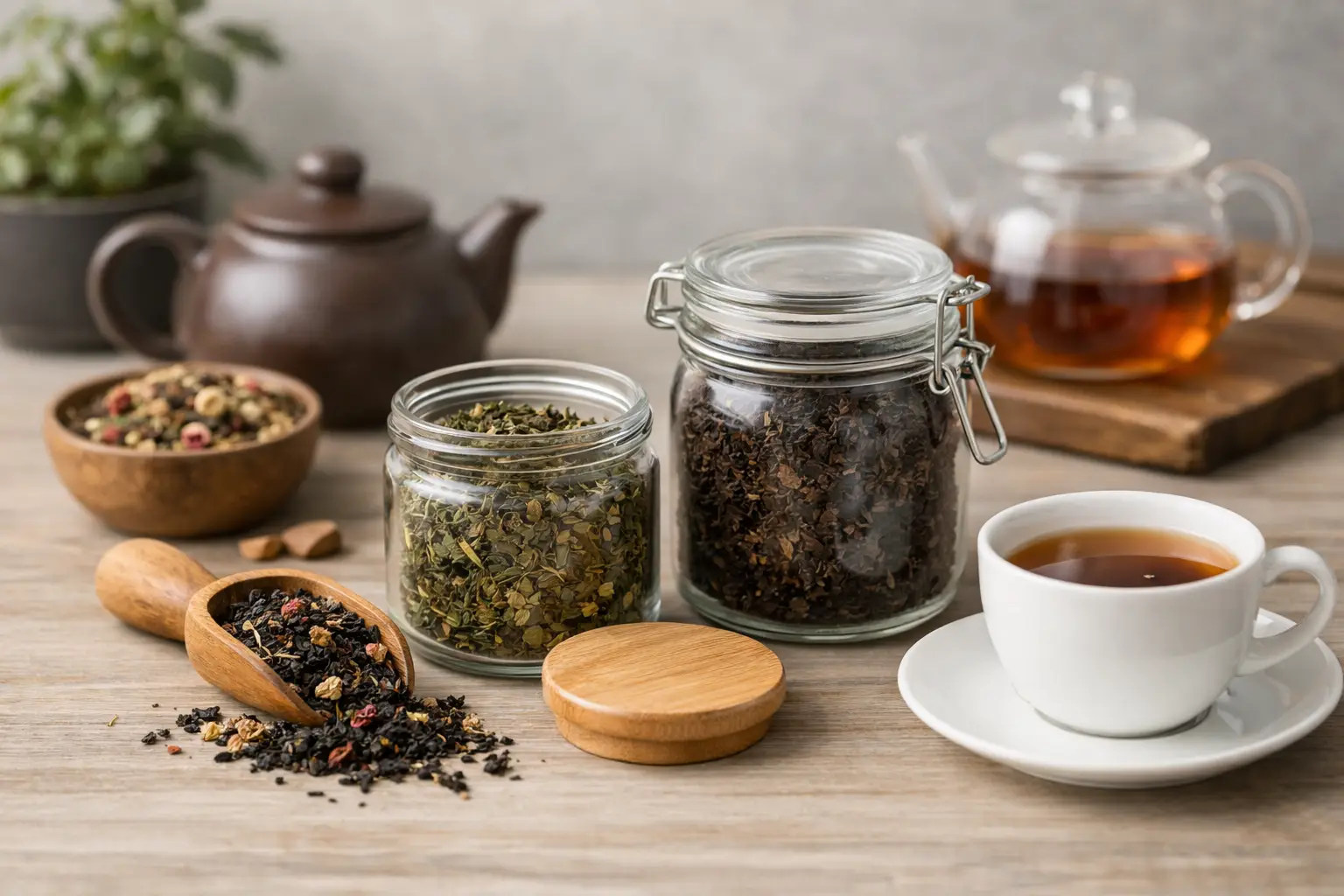
Clear glass jars are where many people go wrong. They can look great on a shelf or counter, but light exposure is not your friend. If you use glass for organization, it should be kept inside a closed cabinet, not next to a sunny kitchen window or under bright café lighting.
The five things that ruin tea
If you remember nothing else, remember these five risks: air, light, heat, moisture, and odor.
Air slowly strips away aroma. Every time the container is opened, fresh oxygen enters and starts working on the leaves. This does not mean you need vacuum equipment for daily use, but it does mean oversized containers are a poor choice for small amounts of tea. A half-empty canister has more trapped air than necessary.
Light is mostly a problem when tea is stored in transparent packaging or left out on display. Heat matters more than many people think. A shelf above an oven, near a coffee machine, or beside a kettle is convenient but counterproductive. Moisture is the most urgent risk because it can make tea clump, lose fragrance, and in extreme cases, create conditions for spoilage. Odor is the hidden one. Tea can absorb nearby smells from spices, onions, coffee, cleaning products, or scented wood.
Best containers for home users and cafés
For home use, the simplest choice is usually the best: keep tea in the original pouch if it is high quality and resealable, then place that pouch inside a cupboard away from heat. If the original packaging is flimsy or not resealable, transfer the tea to a small airtight tin. Smaller containers are useful because they reduce the amount of air around the leaves once the container is partly used.
For cafés, storage needs to balance freshness with speed of service. Daily-use tea can be kept in smaller working containers at the brew station, but back-up stock should stay sealed in its original wholesale packaging or in larger airtight containers stored in a cool, dry stock area. Refilling working tins in smaller batches helps limit repeated exposure of the full inventory.
This is one of those cases where convenience and quality can pull in different directions. A large open bin is fast. It is also a reliable way to lose aroma. A slightly more disciplined refill system usually pays off in cup quality.
Should you refrigerate or freeze tea?
Usually, no. Refrigerators introduce moisture, condensation risk, and a lot of surrounding food odors. Unless tea is packed extremely well, the fridge can do more harm than good.
Freezing is sometimes discussed for long-term storage of delicate teas, but it is not ideal for most buyers because the handling has to be precise. If frozen tea is opened before fully returning to room temperature, condensation can form on the leaves. For a typical home tea drinker or café operation, room-temperature storage in proper packaging is safer and more practical.
The exception is when you are holding a very large amount of tea that will not be used for a long time and you have truly moisture-proof, odor-proof packaging. Even then, it is more of a specialty solution than a standard recommendation.
Different teas, different storage priorities
Not every tea ages at the same rate. Green tea and lighter oolong generally reward tighter freshness control because their appeal often lies in high, fresh aromatics. White tea can be delicate too, though some styles develop over time. Black tea and darker oolong are more stable day to day, but they still benefit from protection from air and odor.
Herbal blends deserve just as much care. Ingredients like dried flowers, citrus peel, spices, or mint can lose their top notes surprisingly fast. Chai blends are especially vulnerable to odor crossover because they are aromatic to begin with. If you sell or brew multiple teas side by side, separate storage is worth the effort.
This is also why mixed storage in one drawer can be risky. Jasmine tea next to masala chai next to smoky black tea is asking for flavor migration if any package is not sealed well.
How long does loose leaf tea stay fresh?
There is no single expiration point that matches every tea, but freshness is usually best measured by aroma and cup quality rather than just the printed date. As a practical rule, many loose teas show their best character within 6 to 12 months when stored well after opening. Some delicate teas may peak sooner. More stable styles can still drink nicely beyond that.
For business buyers, turnover matters as much as storage. Buying too much tea to save a little on unit cost can backfire if the product sits too long and loses appeal. For home users, it is often smarter to buy smaller quantities more often, especially for teas you drink occasionally.
Common mistakes when storing loose leaf tea
The most common mistake is storing tea where you prepare drinks. It feels efficient, but counters near steam, heat, and sunlight are poor storage zones. Another mistake is using decorative jars that are not actually airtight. Good-looking storage should still be functional.
People also underestimate cross-odor contamination. Tea stored beside coffee beans, flavored syrups, or spices may not smell obviously damaged in the container, yet the brewed cup can taste muted or muddled. Finally, constant opening and handling can shorten freshness faster than expected, especially in busy café settings.
A simple label system helps. Mark the tea name and the date opened. That small habit makes stock rotation easier and gives you a clearer sense of when flavor starts to decline.
How to tell if your storage is working
The leaves should smell distinct when opened, not dusty or faint. The brewed liquor should taste clear rather than flat. If a tea that once had floral, grassy, malty, or spiced character now seems one-dimensional, storage is the first thing to check.
You do not need a lab test for this. Compare a fresh bag against one that has been open for a while. Brew them the same way. If the older tea lacks aroma or definition, your setup likely needs adjustment. Small changes – smaller containers, cooler placement, better sealing – often make a noticeable difference.
Treat tea the way you would treat any quality beverage ingredient: protect what makes it special before it reaches the cup. When storage is handled well, the last brew can still remind you why you bought that tea in the first place.