

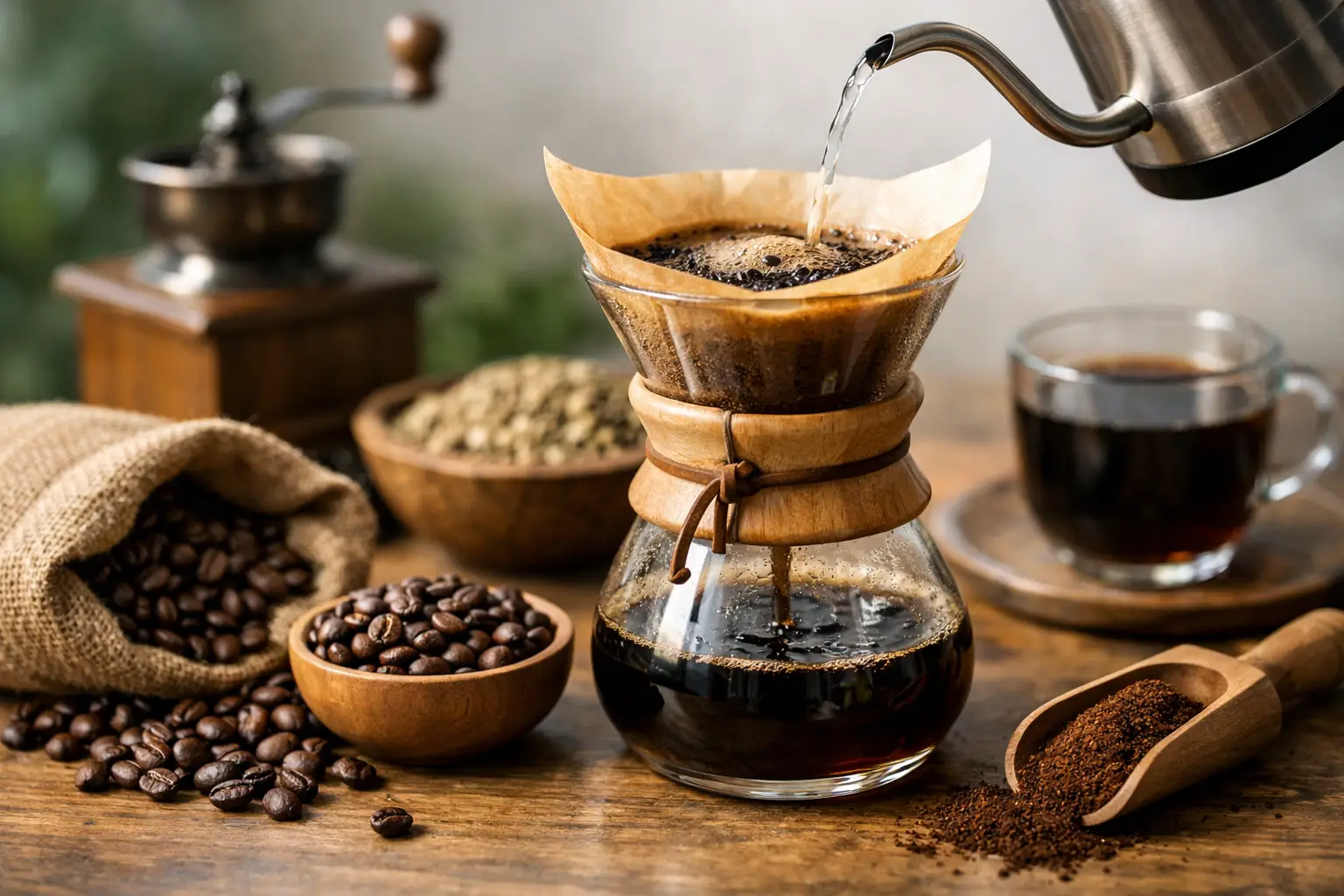
A single origin coffee can taste vivid one day and oddly flat the next, even when you swear you used the same recipe. That is exactly why learning how to brew single origin coffee matters. These coffees tend to show more of their growing region, processing method, and roast style, which means they can be rewarding, but they are also less forgiving when your grind, water, or pouring slips off target.
What makes single origin different
Single origin coffee comes from one producing country, region, farm, or cooperative rather than a blend built from multiple sources. In the cup, that often means more distinct flavor separation. You might notice floral notes, citrus acidity, berry sweetness, or chocolate depth more clearly because the profile has not been blended for uniformity.
That clarity is the main appeal, but it also changes how you should approach brewing. A blend is often designed to taste balanced across a wider range of methods. A single origin usually rewards a more deliberate setup. If you overextract, the brighter coffees can turn sharp and dry. If you underextract, the sweetness disappears and the finish can feel hollow.
How to brew single origin with the right mindset
The best way to brew single origin is not to chase tasting notes printed on the bag word for word. Those notes are a reference, not a guarantee. Your goal is to brew for balance first, then adjust toward clarity, sweetness, or body depending on the coffee.
Start by asking three practical questions. Is the roast light, medium, or medium-dark? Is the coffee washed, natural, or honey processed? Are you brewing for filter, immersion, or espresso? These variables affect how easily the coffee extracts and what kind of cup you should aim for.
Washed coffees usually show cleaner acidity and better note separation, so they often shine with pour-over methods. Natural coffees tend to be fruit-forward and heavier, which can become intense if brewed too fine or too hot. Medium to medium-dark single origins can perform very well in French press, AeroPress, or espresso, especially when the goal is sweetness and body over delicate aromatics.
Start with a simple recipe and control the basics
If you want repeatable results, control four things before anything else: dose, grind size, water temperature, and brew time. That sounds obvious, but most inconsistent cups come from changing two or three of these at once.
For manual filter coffee, a reliable starting point is 1:16. That means 20 grams of coffee to 320 grams of water. Use water around 200 to 204 degrees Fahrenheit for most light to medium roasts. Grind medium, closer to table salt than powder. Aim for a total brew time around 2:45 to 3:30 depending on your dripper and filter.
For immersion methods like French press, start slightly coarser and brew a little longer. For AeroPress, there is more flexibility, but it still helps to keep your ratio and steep time consistent while you learn how the coffee behaves.
If you are dialing in espresso, single origin beans can be more sensitive than house blends. Start with your usual ratio, but expect to fine-tune for acidity and finish. A bright espresso is not necessarily a bad shot. Sourness with no sweetness is the problem.
Choosing the best brew method for single origin
There is no single best brewer for every single origin coffee. The better question is what you want to emphasize.
Pour-over for clarity
If your coffee has floral, tea-like, citrus, or stone fruit notes, pour-over is often the cleanest path. V60, Kalita Wave, and similar brewers highlight separation and aroma. They also reveal mistakes quickly, so they reward attention.
Use a steady pour and avoid aggressive agitation unless the coffee seems hard to extract. Too much swirling can muddy a delicate cup. If the brew tastes thin but also bitter, your grind may be too fine or your pouring too uneven.
French press for body and sweetness
A French press suits single origins that lean chocolatey, nutty, spiced, or jammy. It preserves oils and texture, which can make a coffee feel fuller and more rounded. This is especially helpful if a light roast filter brew seems too sharp for your taste.
The trade-off is clarity. You may lose some high-note definition, but gain a richer and more forgiving cup.
AeroPress for flexibility
AeroPress works well when you want control without the fuss of a full pour-over routine. It can produce a bright, clean cup or a denser, more concentrated brew depending on your recipe. For home users and café teams testing small batches, it is one of the easiest ways to compare different single origins quickly.
Espresso for intensity
Some single origin coffees make excellent espresso, but not all are easy to dial in. If your audience or customers expect classic chocolate-heavy shots, a bright Ethiopian or Kenya may feel too sharp unless paired with milk or pulled carefully. Still, for cafés that want a rotating feature espresso, single origin can add interest and menu variety when the bar team has time to calibrate properly.
Grind size matters more than most people think
When people ask how to brew single origin coffee better, the answer is often grind adjustment rather than a new brewer. Grind controls extraction speed. Too fine, and water pulls out bitterness, astringency, and dryness. Too coarse, and the cup tastes weak, salty, or sour.
The hard part is that different single origins respond differently even at the same roast level. Bean density, processing, and roast development all affect how the coffee breaks apart in the grinder. That is why one medium roast may run perfectly at a setting that causes another to stall or underextract.
A burr grinder helps because it creates more consistent particle size. That consistency matters when you are trying to highlight the specific character of an origin. Blade grinders can still make coffee, but they make it harder to taste what makes the bean special.
Water quality can make or break the cup
Good beans brewed with poor water rarely taste good. If your water has heavy chlorine taste or very high mineral content, single origin coffee can come out muted, chalky, or harsh. If the water is too soft, the brew may taste dull and underdeveloped.
For most brewers, clean filtered water is the practical middle ground. You do not need to obsess over lab-style water recipes to make a strong cup at home or in a café, but you do need water that lets acidity and sweetness come through clearly.
This matters even more in markets where water quality can vary by location. For serious home brewers and beverage businesses alike, water is not a minor detail. It is part of the recipe.
How to adjust by taste, not just by numbers
Recipes get you close. Taste gets you the rest of the way.
If the coffee tastes sour, grassy, or empty, extract more. Grind finer, increase brew time slightly, or raise the water temperature a bit. If it tastes bitter, dry, or hollow in the finish, extract less. Grind coarser, shorten contact time, or reduce agitation.
If the cup is balanced but boring, the answer depends on what is missing. For more sweetness and body, use a slightly tighter ratio such as 1:15. For more clarity, go a little coarser or use a slightly more open ratio. Small changes work better than dramatic ones.
This is where café operators and home brewers share the same challenge. Consistency wins. Change one variable at a time, taste, and record the result.
Freshness, resting, and storage
Fresh coffee is good, but coffee that is too fresh can be difficult to brew well, especially for pour-over and espresso. Many single origins benefit from a short rest after roast. A few days can help the flavors settle and reduce excess gas that disrupts extraction.
After opening, store the coffee sealed, cool, and away from light and moisture. Avoid the refrigerator. Use what you need within a reasonable window while it still shows the character you paid for.
If you are buying for service, smaller more frequent orders often make more sense than overstocking. That is especially true for rotating single origin menus where freshness and cup quality affect customer trust.
Common mistakes when brewing single origin
One mistake is treating every single origin like it should taste bright and delicate. Some are syrupy, earthy, or cocoa-driven, and that is not a flaw. Another is chasing complexity so hard that the cup loses balance. Distinct flavor notes only matter if the coffee still tastes good.
A third mistake is changing brew method too quickly. If a coffee disappoints on your first attempt, try adjusting grind, ratio, or temperature before abandoning the method entirely. Many coffees need only a small correction.
For buyers building a home setup or café program, this is where dependable gear and consistent beans help. A solid grinder, a scale, and well-curated coffee will do more for quality than a long list of gadgets.
Single origin coffee is one of the clearest ways to taste what coffee can really offer, but it asks for a little attention in return. Give it a consistent recipe, adjust with purpose, and let the cup tell you what it needs.