
The coffee station usually gets judged in silence. A guest orders dessert, asks for a cappuccino, takes one sip, and suddenly your restaurant feels more polished – or less. That is why choosing a coffee equipment supplier for restaurants is not a side decision. It shapes speed, consistency, labor, menu range, and how your brand lands at the end of a meal.
For restaurants, coffee is rarely a standalone business like it is in a café. It has to work inside a kitchen-led operation, under real service pressure, with staff who may handle espresso, tea, cocktails, and dessert plating in the same shift. The right supplier understands that. The wrong one just sells you a machine.
What a coffee equipment supplier for restaurants should actually solve
A strong supplier does more than quote equipment prices. They should help you match machine capability to your traffic, beverage mix, and staff skill level. That matters because a machine that looks impressive on paper can become expensive dead weight if your team struggles to use it or if it slows down service.
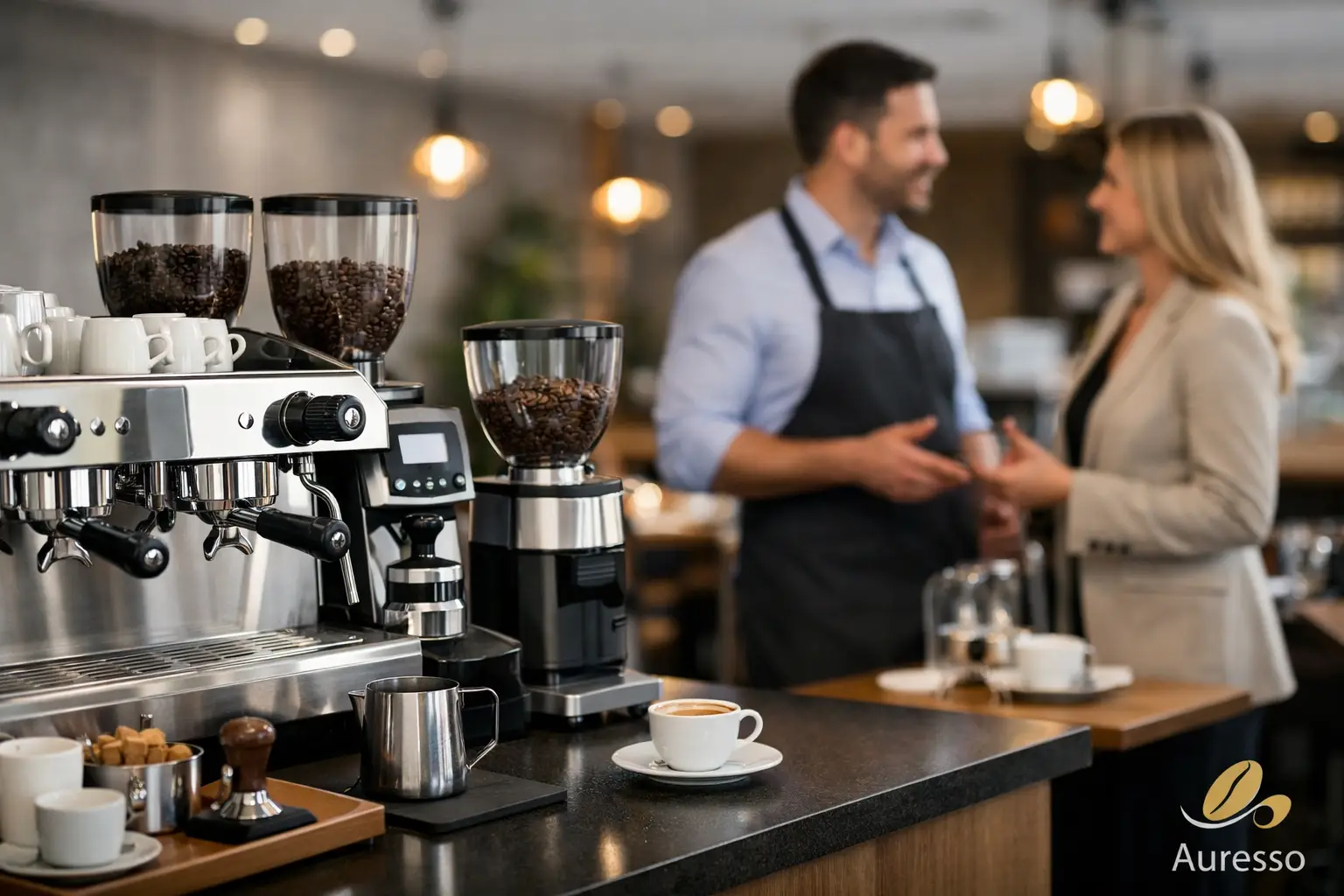
Restaurants have different needs from specialty coffee bars. In many cases, espresso is important but not the main event. You may need a setup that handles after-dinner coffee, brunch rushes, takeaway drinks, and the occasional spike from events or private dining. That usually means the best solution is not the most advanced machine. It is the one that holds temperature well, recovers quickly, and stays manageable during a busy shift.
A supplier worth keeping will also think beyond the machine itself. Grinder pairing, water filtration, layout, cup sizes, cleaning workflow, and menu suitability all affect performance. If those details are ignored upfront, the daily problems show up later.
Start with your restaurant model, not the equipment catalog
Before comparing brands or features, define how coffee functions in your business. A fine dining restaurant may need low-volume precision and a polished table-service finish. A brunch concept may need faster milk steaming and repeatable espresso output. A hotel restaurant may need broader coverage, from espresso drinks to brewed coffee for breakfast service.
This is where many buyers overspend. They buy for peak ambition instead of real demand. A two-group espresso machine may be perfect for one restaurant and unnecessary for another. A superautomatic machine may be ideal if labor is tight and drink complexity is limited, but it may feel restrictive if your concept depends on handcrafted beverages.
The right supplier should ask practical questions. How many coffee drinks do you serve per day? Who makes them? How much counter space do you have? Is your menu espresso-heavy, or do you need batch brew and tea support too? If the conversation jumps straight to model names and discounts, you are probably getting a sales pitch, not guidance.
Equipment fit matters more than headline features
Restaurants often get distracted by premium specs that sound useful but do little for actual operations. In practice, reliability and ease of use beat novelty most of the time.
For espresso service, think about recovery speed, steam power, temperature stability, and workflow. For grinders, think about consistency, retention, and how easy they are to adjust. For batch coffee, think about brew volume, holding quality, and how cleanly the brewer fits into service.
There is always a trade-off. A manual setup can produce better results in skilled hands, but it adds training demands and more room for inconsistency. An automatic system can reduce mistakes and speed up output, but it may limit drink customization or flavor control. The best choice depends on your team and your menu, not on what is trending.
A good supplier will explain those trade-offs clearly. They should also help you avoid mismatched setups, like pairing a capable espresso machine with an entry-level grinder that bottlenecks quality.
Service and support are part of the product
Restaurants do not just buy equipment. They buy uptime.
That makes support one of the most important selection criteria, especially if coffee is a revenue driver during breakfast, brunch, or dessert service. Ask what happens when a machine goes down. How quickly can parts be sourced? Is troubleshooting available? Do they offer installation guidance or operator training? Can they help your team dial in coffee after setup?
This is especially important for operators in Malaysia and Singapore, where imported equipment can be attractive but support access varies. A supplier with curated equipment, local availability, and dependable fulfillment often delivers better long-term value than one offering a lower upfront price with weak after-sales support.
Look for a supplier that understands beverage programs, not just machines
Restaurants rarely stop at espresso. Guests order tea, drinking chocolate, chai, matcha, and other café-style beverages more often than many operators expect. If your supplier can support that wider menu, ordering gets simpler and your beverage program becomes easier to manage.
That is one reason some operators prefer a sourcing partner with both equipment and ingredient coverage. Instead of juggling separate vendors for beans, grinders, tea, chocolate powder, and café mixes, you can build consistency around one buying relationship. It saves time, but more importantly, it reduces friction when you want to refine your menu.
Auresso fits naturally into this kind of setup because it brings together commercial coffee equipment, roasted coffee, teas, chai latte blends, matcha, hojicha, and other café beverage essentials in one place. For a restaurant team, that matters. It shortens the path from planning to service.
Price matters, but total operating cost matters more
A lower machine price does not always mean a better deal. Restaurants should look at total operating cost over time, including maintenance, parts, cleaning needs, staff training, and waste.
For example, a cheaper grinder that produces inconsistent doses can increase coffee waste and reduce drink quality. A machine with complicated cleaning routines may save money upfront but create labor drag every day. On the other hand, a premium unit only makes sense if your volume or positioning justifies it.
This is where supplier honesty counts. A dependable partner should be able to say, “You do not need that model,” when the economics do not support it. That kind of advice protects margins and builds trust.
Questions worth asking before you commit
The best supplier conversations are detailed. Ask how the recommended setup fits your daily volume, who the equipment is best suited for, and what common service issues to expect. Ask whether your staff can realistically operate it well after basic training. Ask what coffee and grinder pairing they would suggest, and why.
You should also ask about practical constraints that are easy to miss, such as water quality requirements, electrical needs, ventilation, and bench space. Restaurants often discover these issues too late, after a purchasing decision has already been made.
If the supplier can speak clearly about operations, not just features, that is a strong sign. If they avoid specifics, that is useful information too.
The best supplier relationship grows with your business
Your needs may change faster than you think. A dessert-led restaurant may add brunch. A casual concept may decide to push takeaway coffee. A second location may need a more standardized setup than the first. A supplier should be able to grow with that shift.
That means flexibility matters. Can they support a simple starter setup now and help you upgrade later? Can they recommend equipment across different service models? Can they help you maintain consistency if you expand? Those questions are often more valuable than getting the last small discount on day one.
A restaurant coffee program works best when the setup is practical, the supply is stable, and the advice is grounded in how service really runs. The right supplier helps you get there without overcomplicating the process. And when guests finish their meal with a coffee that feels just right, that quiet part of the experience starts doing real work for your brand.