

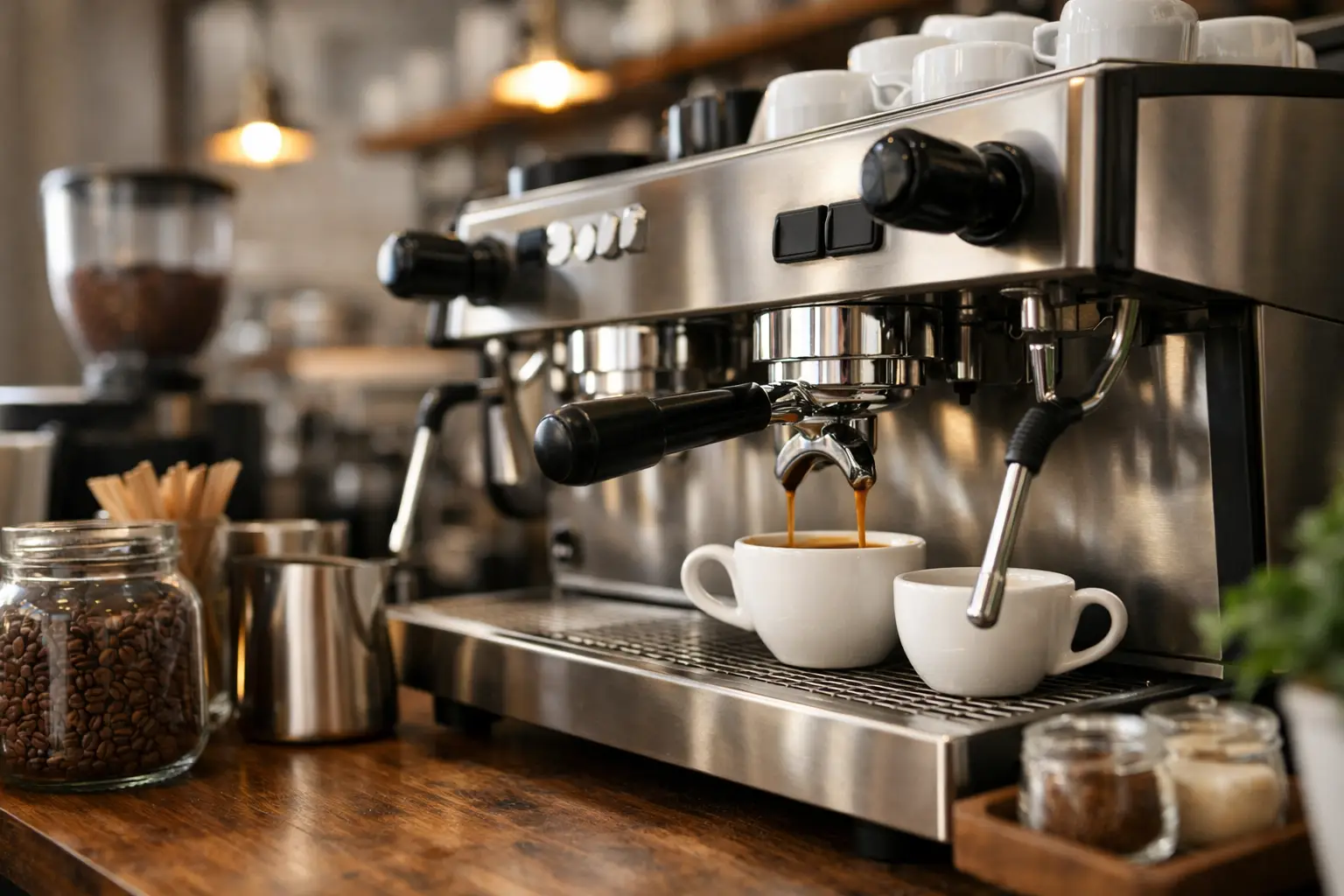
The wrong espresso machine usually shows its flaws at 8:15 a.m. – right when the line builds, milk orders stack up, and your barista starts losing seconds on every drink. Choosing a commercial coffee machine for small cafe service is not just about making good espresso. It is about keeping drinks consistent, protecting speed during rushes, and buying equipment your team can actually live with every day.
For a small cafe, the best machine is rarely the biggest or the most expensive. It is the one that matches your menu, staff skill level, daily volume, and service style. A machine that looks impressive on paper can still be a poor fit if it slows training, drives up maintenance, or takes too much power for your space.
What a small cafe really needs from a commercial coffee machine
Small cafes work with tighter margins and less room for error. That changes how you should evaluate a commercial coffee machine for small cafe operations. Capacity still matters, but efficiency matters just as much.
If your business serves mostly milk-based drinks, steam power deserves serious attention. A machine with stable boiler performance and strong recovery will do more for your workflow than extra features you rarely use. If your menu leans toward black coffee, espresso, and filter pairings, temperature stability and shot consistency may matter more than maximum steaming output.
You also need to think beyond peak cups per day. A cafe serving 120 drinks in a short breakfast window needs a different setup than a shop serving the same total volume spread across the day. Rush pattern, not just daily total, should guide your decision.
Single-group or two-group?
This is where many owners either overspend or underbuy. A single-group commercial machine can make sense for a very small footprint, a low-volume concept, or a business where espresso is secondary to other beverages. It keeps the upfront cost lower and can be easier to fit into compact counters.
But there is a trade-off. Once milk drinks begin to dominate orders, a single-group machine can create bottlenecks fast. Even with a skilled barista, drink production becomes sequential. That is manageable when volume is light. It is frustrating when five lattes land at once.
A two-group machine is usually the safer long-term choice for a dedicated cafe, even a small one. It gives your team more room to work, supports faster output, and helps maintain rhythm during busy periods. The higher purchase price often pays off in labor efficiency, customer wait time, and reduced service stress.
When a single-group machine makes sense
A single-group machine can still be the right move if you operate a bakery corner, brunch spot, dessert bar, or kiosk where coffee supports the main offer rather than leading it. It can also fit a startup that wants to enter the market carefully, provided the machine is commercial grade and not a home model stretched into professional use.
When two groups are worth the investment
If espresso is central to your brand, or if you expect regular takeaway traffic, a two-group machine is usually the more practical choice. It gives you capacity today and breathing room later. That matters when your business starts gaining traction and your original equipment suddenly feels small.
Automatic, semi-automatic, or super-automatic
This decision depends on the kind of cafe you want to run.
Semi-automatic machines remain the standard for specialty-focused cafes because they give baristas control over shot timing, recipe adjustment, and extraction quality. If your team has training and you want a hands-on coffee program, this setup offers the best balance between craft and consistency.
Automatic volumetric machines suit many small cafes because they reduce guesswork while keeping the traditional espresso workflow. You can program shot volumes, improve repeatability, and make training easier for newer staff. For many operators, this is the smartest middle ground.
Super-automatic machines work best when speed, labor simplicity, and menu standardization matter more than manual bar skills. They can be useful for convenience-led concepts, offices, or foodservice counters with limited coffee training. In a specialty cafe environment, though, they may feel restrictive, especially if you want more control over extraction and milk texture.
Features that matter more than marketing
A machine brochure can make every model sound essential. In practice, a few features do most of the work.
Temperature stability is one of them. Consistent heat supports consistent extraction, especially if you serve different coffees or dial in carefully. PID control, well-designed boilers, and stable group performance are worth paying attention to.
Steam performance is another. If your menu is heavy on lattes, cappuccinos, and flat whites, weak steam will slow service and frustrate staff. Dry, strong steam shortens milk prep time and helps with texture.
Volumetric dosing is valuable in busy environments because it improves repeatability. Pre-infusion can also be useful, especially if your coffee program aims for a more refined cup profile. Not every small cafe needs advanced pressure profiling, but most benefit from reliable, programmable consistency.
Then there is serviceability. This part gets ignored until something breaks. Machines with strong parts availability, straightforward maintenance access, and dependable technical support often create better long-term value than flashier models with niche components.
Do not choose the machine without choosing the grinder
A great machine cannot rescue poor grinding. If you are budgeting for a commercial coffee machine for small cafe use, budget for a proper espresso grinder at the same time. In many cases, the grinder has as much impact on cup quality and speed as the machine itself.
Look for fast grinding, low retention, easy adjustment, and burrs suited to your volume. If your menu includes decaf or multiple espresso options, you may need a second grinder from the start. That sounds like an extra expense, but it protects workflow and keeps your main hopper from becoming a compromise.
Water treatment matters too. Good water supports flavor, protects boilers, and reduces scale buildup. Skipping filtration can turn an expensive machine into a maintenance problem much sooner than expected.
Space, power, and counter workflow
Before you commit to any machine, measure everything. Not just counter width, but depth, height clearance, drain access, water connection, and power supply. Some small cafes buy for output and only later discover the machine blocks visibility, crowds the handoff area, or requires electrical work they did not plan for.
Think about how the barista moves. Where will the grinder sit? Where does milk go? Is there room for tamping, rinsing, and cup staging? A slightly smaller machine with a cleaner workstation can outperform a larger setup that creates awkward movement.
This is especially important in compact cafes across dense urban areas, where back bar space is expensive and every inch affects service. A practical layout often saves more time than an extra spec on the machine sheet.
New vs used equipment
A used machine can lower startup costs, but only if you know its history and condition. For an experienced operator with access to a trusted technician, used equipment may be a smart buy. For a first-time owner, it can become expensive fast if hidden wear, poor maintenance, or missing parts show up after installation.
New machines cost more upfront but offer clearer warranty support, predictable condition, and less uncertainty during opening. That peace of mind matters when your team is trying to launch smoothly and keep service reliable.
If you buy used, ask about service records, age, pump condition, boiler condition, and part replacement history. If those answers are vague, treat the deal carefully.
How to match machine size to your menu and growth
Buy for the business you expect to run over the next two to three years, not just the one you have on opening week. That does not mean overspending on a machine built for a high-volume flagship store. It means leaving enough room for growth so early success does not force a costly equipment replacement too soon.
A small cafe with an expanding breakfast crowd, delivery drinks, or a stronger specialty focus may outgrow entry-level equipment quickly. On the other hand, a quiet neighborhood concept with a curated, slower-paced service model may be better served by a compact, high-quality machine and a strong grinder than by a larger setup with unused capacity.
For many operators, the best buying decision is not the machine with the longest feature list. It is the one that balances speed, quality, ease of training, support, and realistic daily demand. If you are sourcing equipment, beans, and beverage ingredients together, working with a supplier that understands cafe operations can also simplify the process. Auresso, for example, serves both equipment and beverage program needs, which can make planning more practical for small operators who want fewer gaps between purchase and service.
The right machine should make your team faster, your drinks more consistent, and your mornings less chaotic. If it does those three things well, it is probably the right fit.