

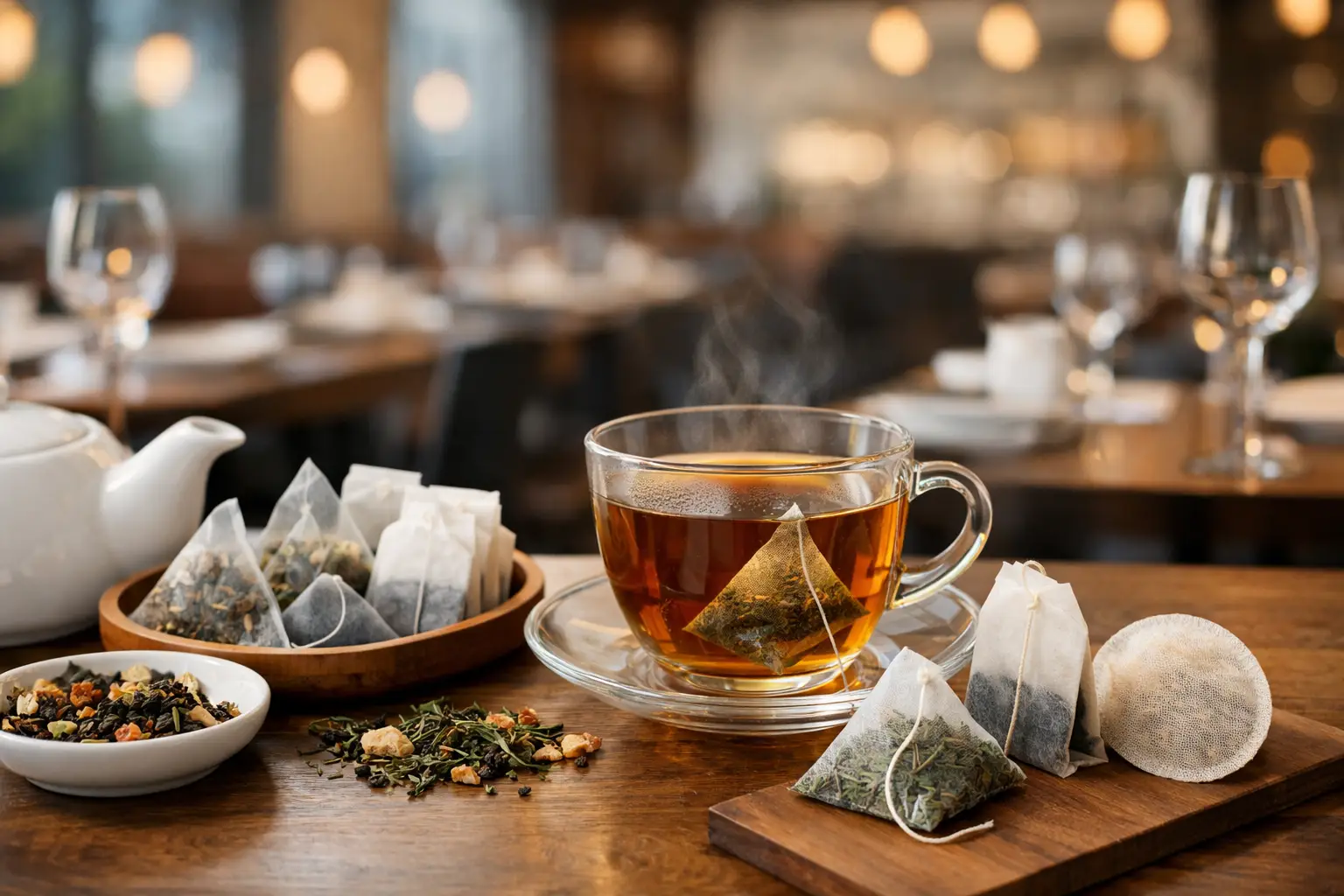
A rushed lunch service tells you everything you need to know about the best teabags for restaurants. If the tea takes too long to brew, tastes flat, or leaves staff guessing about steep time, it stops being a simple menu item and turns into friction. Good restaurant tea should be easy to stock, quick to serve, consistent cup after cup, and good enough that guests order it again instead of treating it like an afterthought.
For most restaurants, teabags make more operational sense than loose leaf. They reduce prep, control portioning, and keep service moving without asking front-of-house staff to become tea specialists. That said, not every teabag is restaurant-ready. Some are built for retail gifting and home use. Others are designed for foodservice, where reliability matters just as much as flavor.
What makes the best teabags for restaurants?
The right teabag for a restaurant sits at the intersection of taste, speed, and cost control. Flavor matters first, but in a commercial setting, flavor alone is never enough. You also need a tea that performs the same way during a quiet weekday afternoon and a packed weekend shift.
A strong restaurant teabag should brew cleanly and predictably. Guests may not describe tannin structure or aroma in detail, but they notice when black tea tastes thin, green tea turns bitter, or chamomile smells stale. Consistency builds trust. If one cup is great and the next tastes weak, the tea program starts to feel random.
Bag construction also matters more than many buyers expect. A poorly filled or low-quality bag can restrict infusion, leading to slow extraction and disappointing flavor. Pyramid sachets often allow better leaf expansion, but standard flat teabags can still work very well when the blend and cut are designed for foodservice. The better choice depends on your menu price point and service style.
Then there is labor. Restaurants usually need tea that can be served with minimal explanation. Clear steeping behavior, easy handling, and little mess all help. If a product looks premium but causes delays at the pass or confusion at the table, it may not be the right fit.
Start with your menu, not the tea catalog
Many operators shop tea the wrong way. They start by comparing brands before deciding what role tea should play on the menu. A better approach is to work backward from guest demand, daypart, and check average.
If your restaurant serves breakfast or brunch, English breakfast and Earl Grey are often the baseline. If you run an all-day casual concept, adding green tea, peppermint, and chamomile covers the most common preferences without overcomplicating inventory. If your guests expect a more premium beverage experience, a stronger range with jasmine green, rooibos, or fruit infusions may be worth the extra SKUs.
Tea also needs to match the menu. A heavy, savory menu may benefit from brisk black teas and clean herbal options. A lighter menu with salads, seafood, or desserts may support more delicate green or floral teas. The point is not to build the biggest tea list. It is to build one that fits your service and sells.
The core tea lineup most restaurants actually need
For many restaurants, a focused assortment performs better than a large one. Too many choices slow ordering, increase dead stock, and make reordering harder to manage. In practice, a compact tea menu often wins.
A dependable black tea is non-negotiable. It should have enough body to stand alone and enough balance to work with milk, sugar, lemon, or honey. English breakfast usually fills this role better than more delicate breakfast blends because it is familiar and versatile.
Earl Grey remains one of the safest premium-feeling upgrades. It gives guests a recognizable option with a slightly more aromatic profile, and it signals that the tea offering was chosen with some care.
Green tea is usually the next essential, but this is where selection becomes important. Some green teabags are too grassy or too easy to overbrew, which creates complaints from guests who simply wanted something light and refreshing. A restaurant-friendly green tea should be smooth, approachable, and forgiving enough for normal service conditions.
Peppermint and chamomile are the two herbal staples that cover most caffeine-free requests. Peppermint works year-round and often sells well after meals. Chamomile appeals to guests looking for something soft and calming, especially in hotels, bistros, and dinner-focused settings.
Beyond that, expansion should be intentional. A masala chai teabag may make sense for restaurants with a strong breakfast crowd. A fruit infusion may suit family dining or dessert service. But each added SKU should justify its shelf space.
Price matters, but cost per cup matters more
The cheapest case is rarely the smartest buy. Restaurant buyers need to think in cost per served cup, not just pack price. A low-cost teabag that produces weak tea can quietly damage value because guests either stop ordering it or see the beverage program as low quality.
A slightly better teabag can improve perceived quality without moving menu price much. That margin difference becomes meaningful when tea is served as part of a larger dine-in experience. Guests do not usually separate the tea from the overall impression of the restaurant. If the final cup feels thoughtful, the whole meal feels better finished.
There is also waste to consider. If certain flavors barely move, your cost per cup rises fast. This is why menu discipline matters. A smaller range of faster-selling, better-performing teas often outperforms a wider assortment of slow movers.
Packaging and service flow are easy to underestimate
The best teabags for restaurants are not only about what is inside the bag. Individual envelopes, clear labeling, and practical carton sizes all affect daily operations.
Individually wrapped teabags help with hygiene, storage, and table presentation. They are especially useful in restaurants where tea is offered tableside or where guests may browse a tea selection box. Wrapped bags also protect aroma better, which matters for delicate teas and herbals.
Bulk-packed options may reduce packaging cost, but they are not ideal for every operation. In high-volume back-of-house use, they can work well. In front-of-house service, they may feel less polished and can lead to faster quality loss if storage conditions are not controlled.
Carton size matters too. A large case may look economical, but if turnover is slow, freshness becomes a risk. For smaller operators, buying the right quantity at the right pace is often smarter than chasing the lowest unit price.
Premium vs practical: where restaurants should draw the line
Not every restaurant needs luxury tea sachets. Not every restaurant should settle for commodity tea either. The best choice depends on your concept and what guests expect from the rest of the menu.
If you run a premium dining room, boutique hotel café, or specialty-led brunch business, better leaf grade and stronger presentation are worth paying for. Guests in those spaces notice the details. A premium sachet can support a higher beverage price and align with the rest of the experience.
If you run a fast-casual or high-turnover family restaurant, practicality may matter more. In those settings, a solid black tea, a dependable green tea, and two herbal options in easy-to-store formats may be the sweet spot. The tea does not need to be theatrical. It needs to be good, dependable, and easy for staff to serve correctly.
This is where working with a beverage supplier that understands both product quality and commercial realities helps. A curated source like Auresso can make the selection process easier because the question is not just which tea tastes best in isolation. It is which one fits your menu, your margins, and your daily service rhythm.
How to test teabags before committing
The best way to buy well is to test in real conditions. Do not judge tea from a single tasting in a quiet office. Brew it the way your staff will brew it. Use your standard cups, your water setup, and your typical service timing.
Taste each tea at the recommended steep time, then again after an extra minute or two. This tells you how forgiving it is. In restaurants, that margin matters. A tea that becomes harsh the moment service slips is harder to manage than one that stays balanced.
It also helps to test with common guest add-ons. Try black tea with milk and sugar. Try chamomile and peppermint without sweetener. See how the tea holds up when it is not prepared by a tea enthusiast but by a busy team member handling five other tasks.
Pay attention to guest-facing details too. Does the bag look appropriate on the table? Is the label easy to identify? Does the aroma still read fresh when the wrapper is opened? These small cues shape perceived value.
Common mistakes when choosing restaurant teabags
The biggest mistake is treating tea as a minor line item. Tea may not lead sales like coffee or soft drinks, but it still affects guest satisfaction and menu credibility.
Another common error is overbuying variety. More options can feel impressive on paper, but they usually create complexity before they create revenue. A smaller, well-chosen range is easier to train, easier to stock, and easier to sell.
Some restaurants also underestimate water quality and brew instructions. Even excellent teabags perform poorly with badly scaled kettles, inconsistent water temperature, or no guidance for staff. Product choice matters, but execution matters too.
A good tea program should feel effortless to the guest. That usually means a lot of thoughtful decisions behind the scenes. Choose teas that fit the menu, work under pressure, and justify their place on the shelf. When that happens, tea stops being an overlooked extra and starts acting like what it should be – a reliable part of a better beverage experience.